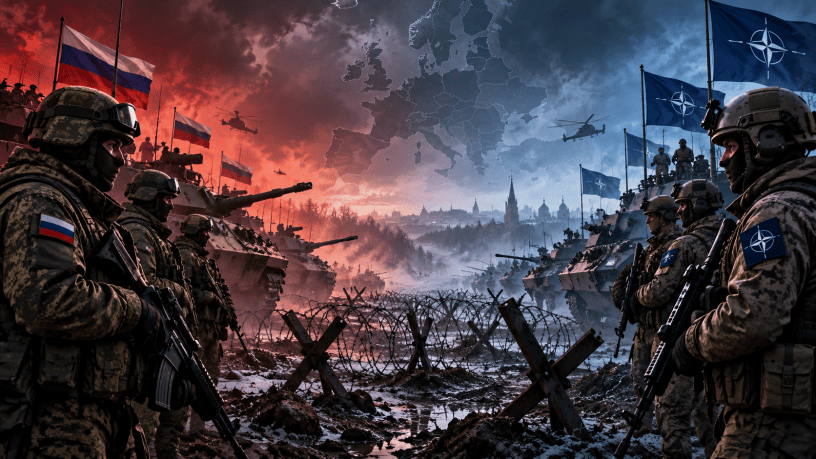
The Black Sea Is Getting More Dangerous—but the Evidence Still Points to Deterrence, Not Direct War
By Cliff Potts, Editor-in-Chief, WPS News
BAYBAY CITY, LEYTE, Philippines — Wednesday, October 21, 2026 — 07:07 PHT
Support WPS News — Patreon: https://www.patreon.com/cw/WPSNews
EDITOR’S NOTE
This analysis reflects publicly available information through October 19. NATO ambassadors were scheduled to discuss Black Sea security on October 20 after the latest drone incidents involving Romania and Bulgaria. Any material development from that meeting would require a separate update.
REPORTING: WHAT HAS ACTUALLY CHANGED
After weeks of examining NATO’s military buildup, Russia’s war in Ukraine and Europe’s expanding defense industry, the question is whether the confrontation has crossed into something fundamentally more dangerous.
It has become more dangerous.
It has not yet crossed the threshold into direct Russia-NATO war.
Romanian F-16 fighters shot down two drones over Romanian territorial waters on October 17. Romanian Defense Minister Radu Miruta said they were probably Russian-made Geran-4 drones. The incident followed drone attacks against commercial shipping near Romania and Bulgaria, including vessels sunk or damaged and sailors killed or reported missing (Reuters, 2026a; Reuters, 2026b).
Romania requested a North Atlantic Council discussion on Black Sea security. Bulgaria separately requested additional NATO combat aircraft and counter-drone capabilities (Reuters, 2026c).
These developments represent genuine escalation: weapons are reaching increasingly sensitive areas, NATO aircraft are destroying incoming drones, and commercial shipping is suffering casualties.
But the critical escalation threshold is higher.
WHAT WOULD ACTUALLY CHANGE THE ASSESSMENT
An isolated drone crossing, interception or accidental strike is not the same as war between Russia and NATO.
The decisive threshold would be sustained, deliberate and reciprocal combat.
That could include Russia intentionally striking NATO military facilities or forces, NATO responding with attacks against Russian forces, and those exchanges continuing rather than being contained as an isolated incident.
Intent matters.
Duration matters.
Reciprocity matters.
If Russian and NATO forces begin deliberately attacking one another over days or weeks, the confrontation has moved into a different category.
That has not happened.
NATO SAYS THERE IS NO IMMINENT ATTACK
On October 14, NATO Secretary General Mark Rutte said there was “no imminent military threat to NATO territory.”
Rutte said NATO believes it would detect the kind of buildup that preceded Russia’s full-scale invasion of Ukraine and characterized much of Russia’s activity against NATO countries as hybrid pressure rather than preparation for a conventional invasion (NATO, 2026a).
That does not make the Black Sea incidents harmless.
It means NATO itself does not currently see evidence that Russia is assembling forces for an immediate conventional attack on the alliance.
NUCLEAR SIGNALING HAS INCREASED
Russia continues using nuclear-capable forces as part of its military signaling.
On October 16, Russian Tu-22M3 bombers flew for more than four hours over neutral Baltic waters. Russia described the flight as planned, and foreign fighters monitored the aircraft during portions of the mission (Reuters, 2026d).
The Tu-22M3 is capable of carrying nuclear weapons.
There is no public evidence that nuclear weapons were carried during that flight or that Russia shifted its strategic nuclear forces onto an emergency wartime posture.
NATO is meanwhile conducting Steadfast Noon, its annual nuclear-deterrence exercise. The exercise began October 13 in Italy, involves 17 countries, was planned in advance and uses no live nuclear weapons (NATO, 2026b).
The nuclear activity deserves attention because of the political environment surrounding it.
But the important distinction is between signaling with nuclear-capable forces and changing nuclear forces in preparation for actual use.
Public evidence still points to the former.
THE BLACK SEA IS THE CURRENT PRESSURE POINT
The Black Sea now combines several sources of risk.
Russia continues attacking Ukrainian infrastructure and shipping routes.
Drones and debris repeatedly approach or enter NATO-controlled areas.
Commercial vessels have been hit.
Romania and Bulgaria are NATO members.
And NATO aircraft are increasingly required to destroy unmanned systems rather than merely monitor them.
The immediate danger is therefore miscalculation.
A drone strikes the wrong target.
A NATO aircraft destroys a Russian weapon and Russia retaliates.
A Russian strike causes substantial casualties inside alliance territory and governments must decide quickly whether the incident was accidental or deliberate.
Those situations can produce escalation even when neither side originally wanted a larger conflict.
ANALYSIS
WE ARE STILL BELOW THE DIRECT-WAR THRESHOLD
The indicators established earlier in this WPS News series have not converged.
Russia and NATO are not engaged in sustained reciprocal combat.
NATO has not begun large-scale wartime mobilization.
There is no publicly confirmed emergency change in strategic nuclear readiness.
And NATO itself says it sees no imminent conventional attack.
That means the confrontation remains one of armed deterrence, military pressure and increasingly dangerous spillover rather than open alliance warfare.
IS THE MONEY BEING WASTED?
Europe and NATO are spending enormous sums on defense.
If deterrence works, many weapons being purchased today may never be fired in combat.
That does not automatically make the spending pointless.
European governments entered the Ukraine war after decades in which ammunition production, air defenses, force strength and industrial capacity had been reduced following the Cold War.
Ukraine demonstrated how rapidly prolonged conventional warfare consumes artillery shells, missiles, drones, air-defense interceptors, vehicles and spare parts.
Some current spending therefore represents rebuilding capacity governments had previously decided they were unlikely to need.
Individual programs can still be inefficient or poorly designed.
But the broader military purpose is identifiable: make an attack on NATO costly enough that Russia chooses not to attempt one.
THE RHETORIC REMAINS PART OF DETERRENCE
NATO’s Supreme Allied Commander Europe, Gen. Alexus Grynkewich, has warned that an attack on the alliance would draw a powerful military response and that NATO would not necessarily restrict that response to the precise location attacked (Reuters, 2026e).
Russia continues issuing warnings of its own.
The language on both sides is increasingly severe because deterrence depends partly upon convincing an opponent that crossing certain lines will produce unacceptable consequences.
The danger begins when one side believes those threats are bluff—or when an accident is interpreted as deliberate aggression.
READER TAKEAWAY
The situation around the Black Sea has worsened.
That deserves attention.
But another drone incursion, bomber flight or nuclear exercise does not by itself mark the beginning of a Russia-NATO war.
The threshold to watch is sustained reciprocal combat: Russian forces deliberately attacking NATO forces or territory, NATO responding militarily, and those exchanges continuing.
We are not there.
For now, Russia and NATO are still trying to frighten one another away from crossing that line.
The danger is that somebody eventually crosses it anyway—deliberately or by mistake.
APA-Style Sources
NATO. (2026a, October 14). Speech by NATO Secretary General at Tallinn University of Technology.
Direct link: https://www.nato.int/en/news-and-events/events/transcripts/2026/10/14/speech-by-nato-secretary-general-at-tallinn-university-of-technology
NATO. (2026b, October 8). NATO holds annual nuclear exercise Steadfast Noon.
Direct link: https://www.nato.int/en/news-and-events/articles/news/2026/10/08/nato-holds-annual-nuclear-exercise-steadfast-noon
Reuters. (2026a, October 18). Romanian F-16 fighter jets shoot down two drones over Romanian territorial waters.
Direct link: https://www.reuters.com/world/romanian-f-16-fighter-jets-shoot-down-two-drones-over-romanian-territorial-2026-10-18/
Reuters. (2026b, October 15). Seven sailors missing after drones hit two ships near Romania.
Direct link: https://www.reuters.com/world/two-ships-ablaze-romanian-black-sea-waters-8-sailors-missing-2026-10-15/
Reuters. (2026c, October 16). Bulgaria seeks NATO anti-drone systems, says defence minister.
Direct link: https://www.reuters.com/business/aerospace-defense/bulgaria-seeks-nato-anti-drone-systems-says-defence-minister-2026-10-16/
Reuters. (2026d, October 16). Russia says strategic bombers made planned flight over Baltic Sea.
Direct link: https://www.reuters.com/world/russia-says-strategic-bombers-made-planned-flight-over-baltic-sea-interfax-2026-10-16/
Reuters. (2026e, October 12). NATO general sets out tough military response to any “foolish” Russian attack.
Direct link: https://www.reuters.com/world/nato-general-sets-out-tough-military-response-any-foolish-russian-attack-2026-10-12/
Discover more from WPS News
Subscribe to get the latest posts sent to your email.

