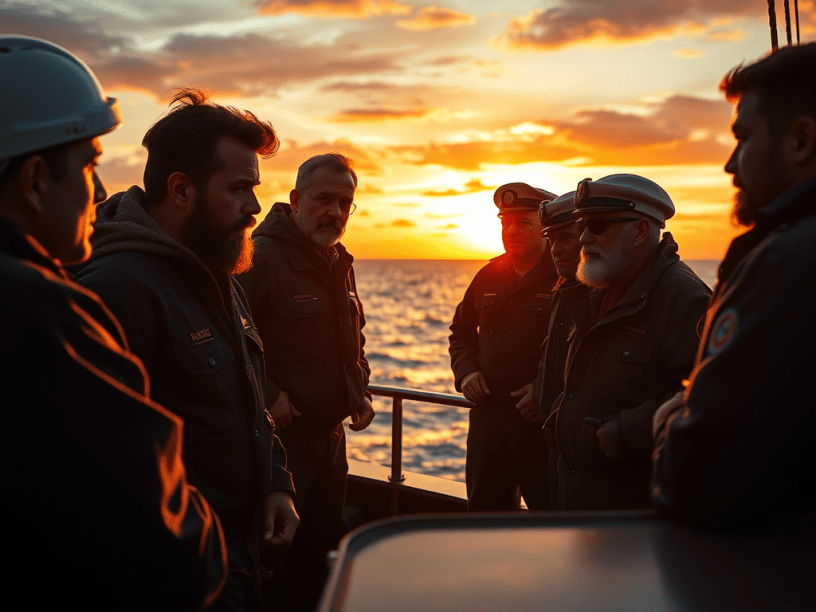
Chapter 17: Battling the Shadows – A Crew’s Guide to Resilience
When you sail the high seas, there’s more than just the roar of the waves and the stench of diesel fumes that can get under your skin. There’s the ever-looming threat of piracy, a horror show straight out of a bad Hollywood flick, but for some folks, it’s a grim reality. You put in the hours, the salt in your hair and the sun on your back, only to have some scallywags knock on your hull during the dead of night, trying to turn your ship into a scene from “Pirates of the Caribbean.”
But here’s the kicker: it’s not just the parley with a band of rogues that leaves scabs; it’s the lingering fear, the anxiety, the ghosts of what might have been that cling to your crew. So the question becomes—how do you get these brave souls back on their feet without turning them into nervous wrecks, or worse, giving up the seas entirely?
Enter “Psychological Resilience Training.” Sounds fancy, doesn’t it? But at its core, it’s about teaching these mariners how to cope with the mental strain of piracy and its aftermath. Kind of like building muscle, but instead of barbells, you’re lifting feelings.
You see, psychological resilience isn’t just a buzzword you cram into a corporate brochure to make it look like you care. It’s a lifeline tossed to the crew members who’ve stared death in the eye, whether it’s with a cohort of heavily armed buffoons or the more subtle violence of isolation and fear.
The training starts with creating a safe space—no, not one of those yoga studios where everyone pretends to chant in perfect harmony while sipping kale smoothies. We’re talking about a no-bull zone where sailors can spill their guts about what happens when the sun goes down and the world starts to feel like a cage. It’s essential for them to share their stories, to normalize their feelings and understand they’re walking this tightrope together. As they say in the business, “A problem shared is a problem halved,” even if it’s still giving you nightmares.
Next up comes the exposure part. Think of it like facing your fear of heights by climbing a ladder—one rung at a time. The program might involve discussions about scenarios they’ve encountered or might encounter, simulations that give them a proper look at the beast instead of just letting their imaginations run wild. Nothing beats the power of knowing what you’re up against, and that fear loses some of its teeth when confronted head-on.
Not all pirates come with eye patches and wooden legs; some wear suits and carry briefcases filled with legal jargon. Educating the crew about the different types of threats they can face—be they literal or figurative—is crucial. It’s about arming them with knowledge and strategies so they can spot trouble before it’s breathing down their necks. Awareness is empowerment, and when your crew knows the enemy, they can navigate those treacherous waters with a little more confidence.
And let’s not forget the practical tools—coping strategies, breathing exercises, the works. Because when the hull starts creaking and the sound of a motorboat cuts through the night silence, you want those crew members to have more in their emotional toolbox than just a prayer and a bottle of rum. Techniques like mindfulness can help ground the crew amidst the chaos. They learn to pull themselves back from dark thoughts, to focus on the moment at hand rather than a swirling vortex of anxiety.
You see, the beauty of psychological resilience training is that it not only prepares the crew for battle against external foes but also teaches them to confront their inner demons. It’s a truth universally acknowledged that the toughest fights often happen inside one’s own head. You can guard the ship, but if your mind has become the enemy, even the sturdiest hull can falter.
Now, I’m not saying this training is a magical cure-all. The mind is a tricky creature, like a particularly stubborn barnacle. It takes work, patience, and sometimes, a good dose of tough love. But the result? You’ll have a crew that doesn’t just survive but thrives—honestly facing their fears rather than becoming prisoners of them.
As part of the program, the crew members might also engage in team-building activities designed to foster trust and camaraderie. Imagine it: an obstacle course designed not just for physical fitness but to strengthen the bonds between crew members. When they face challenges together, they learn that they’re not alone in this fight. They laugh, they stumble, they conquer together. It builds morale and creates a support network that extends beyond the formal training sessions.
With resilience, these sailors can turn the tables on the pirates of the world, bouncing back after an incident like a rubber ball instead of spiraling into a psychological tailspin. They’ll remember that the sea is still theirs to conquer, that there’s beauty in the blue and camaraderie in the crew that surrounds them.
When the word spreads that a ship’s crew has undergone resilience training, it changes the narrative. Instead of fearful whispers or tales of terror, you get a ripple of respect among other sailors. They see that this isn’t just a bunch of lambs waiting to be led to slaughter. They are tough, forged in the fires of adversity, with a network behind them, ready to fight back against any inky shadows that dare cross their path.
It becomes a badge of honor. The more the crew engages with their psychological training, the more they build a reputation—not just for surviving piracy, but for thriving in its aftermath. They’re the ones who emerge from the darkness, their heads held high, telling their stories not as victims but as warriors defying the odds. They inspire those around them, reminding younger sailors that fear is a part of the game, but it doesn’t have to be the end of their journey.
Psychological resilience training isn’t just about preparing for the worst; it’s also about embracing the best that life at sea can offer. Those who’ve faced their fears often find a deeper appreciation for the ocean’s beauty, its vastness, its unpredictability. They learn to celebrate small victories—the laughter shared in the galley, the sunsets illuminating the horizon, the thrill of navigating through a storm. They no longer see the sea only as a battleground but as a canvas brimming with possibilities and adventures waiting to unfold.
And while every sailor knows the risks of going to sea, this newfound resilience creates a sense of empowerment that transforms their approach to both life and work. They are not just crew members; they become a tight-knit family, looking out for one another and sharing the weight of the world, as together they steer their vessel through uncharted waters.
Perhaps the most profound lesson they learn is that resilience isn’t a solitary journey. It is rooted in connection—with each other, their past experiences, and the communities that support them. They find strength in stories and solace in shared laughter, understanding that together, they can face the winds of uncertainty head-on.
So when the pirates show up, there’s no longer a sense of dread—a sense of power takes root instead. They are ready. They don’t just prepare for the worst; they live fully and joyfully in the moment, equipped with tools to tackle not only the threat of piracy but any storm that life throws their way.
At the end of the day, that’s what resilience training gives them: the ability to drop anchor in troubled waters and set sail again, not only as sailors but as steadfast champions of hope and courage. This is their ocean, their life, and no band of brigands will take that away from them. They’ll ride the waves, ever watchful, ever ready—not just to survive but to thrive, cannonballing into every chance the sea offers for adventure.
That’s the triumph of the crew’s spirit, one that acknowledges both the shadows of despair and the light of resilience. Facing down piracy is as much about heart and mind as it is about iron and steel, and when you nurture that spirit, you create a crew that fears nothing but mediocrity—a ship that sails boldly into the unknown, draped in strength, united by purpose, and forever ready to challenge whatever comes next. In the end, it’s not just the tales of terror that will echo through the salty air; it will be the stories of courage, resilience, and an unbreakable bond forged in the depths of the ocean gray.
Discover more from WPS News
Subscribe to get the latest posts sent to your email.
 WPS News