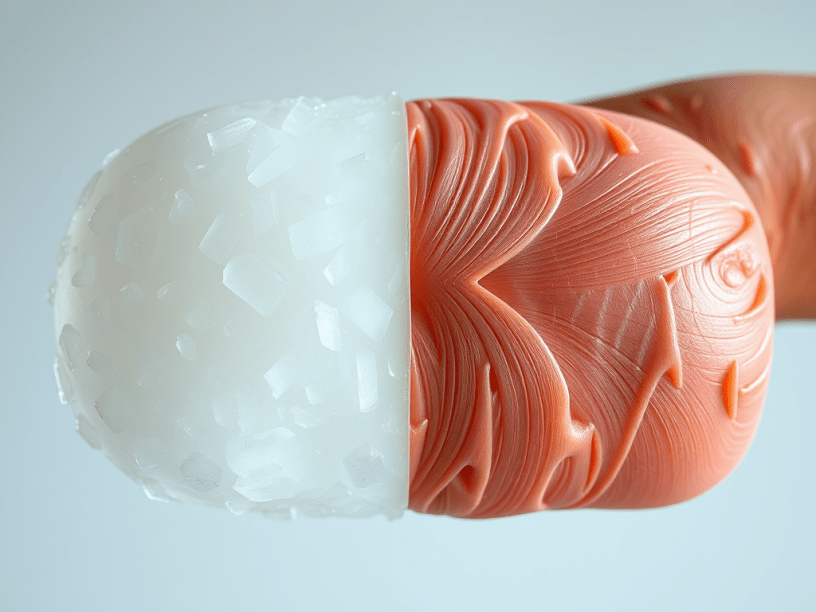
Ballistic gel is designed to closely simulate the density and viscosity of human and animal muscle tissue. It’s a standardized medium for testing the terminal performance of firearms ammunition. While it doesn’t perfectly replicate the complex structure and properties of living tissue, it provides a reliable approximation for most ballistics testing.
Here’s a breakdown of the similarities and differences:
Similarities:
- Density and Viscosity: Ballistic gel is formulated to match the density and viscosity of muscle tissue, which are crucial factors in how a projectile interacts with the material.
- Wound Cavity Formation: Both ballistic gel and flesh exhibit similar patterns of wound cavity formation when struck by a projectile.
Differences:
- Tensile Strength: Flesh has a higher tensile strength than ballistic gel, meaning it can resist tearing to a greater extent.
- Elasticity: Flesh is more elastic than ballistic gel, allowing it to deform and return to its original shape to a certain degree.
- Bone and Organ Interaction: Ballistic gel doesn’t account for the presence of bones and organs, which can significantly influence projectile penetration and deflection.
In conclusion:
While ballistic gel is a valuable tool for testing ammunition performance, it’s important to recognize its limitations. It provides a good approximation of how a projectile will interact with soft tissue, but it cannot fully replicate the complex dynamics of real-world scenarios.
Discover more from WPS News
Subscribe to get the latest posts sent to your email.

