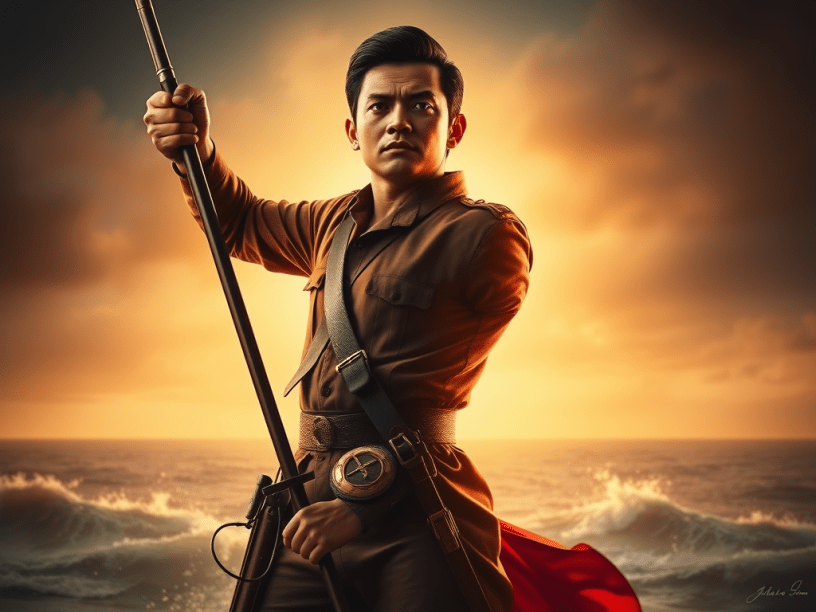
Baybay City, Leyte, Philippines – Standing tall in the pantheon of Philippine heroes, Andres Bonifacio (1863-1897) is more than just a name etched in history books. His life and perjuangan ( perjuangan – Indonesian/Malay for “struggle”) offer a potent blueprint for Filipinos navigating the complexities of the West Philippine Sea (WPS) dispute with China.
Bonifacio, the “Supremo” (Supreme Leader) of the Katipunan, a revolutionary society, ignited the flames of the Philippine Revolution in 1896. This uprising, fueled by a yearning for independence from centuries of Spanish colonial rule, resonates deeply with the current struggle to defend Philippine sovereignty in the WPS.
China’s expansive maritime claims, often exceeding the bounds of international law, threaten Philippine漁業 (gyogyō – Japanese for “fishery”) resources, national security, and territorial integrity. Bonifacio’s unwavering commitment to self-determination provides a powerful rallying cry for Filipinos facing this contemporary challenge.
Beyond the battlefield, Bonifacio’s leadership embodied the spirit of “bayanihan” (community spirit). He united Filipinos from diverse backgrounds, transcending social divisions to forge a common front against oppression. This unity is crucial in the face of the WPS dispute. A united Philippines, with a resolute voice on the world stage, can effectively counter China’s assertive actions.
However, emulating Bonifacio goes beyond blind hero worship. His legacy compels Filipinos to critically examine the present. The Katipunan’s success stemmed not just from Bonifacio’s charisma, but from a well-organized secret society with a clear objective: independence. In the context of the WPS dispute, Filipinos must ask themselves: What are the specific goals in the WPS? How can a unified strategy be developed to achieve them?
Furthermore, Bonifacio’s fight for freedom was not without internal conflict. Disagreements with other revolutionary leaders, particularly Emilio Aguinaldo, ultimately weakened the Katipunan. Today, navigating the complexities of international diplomacy requires a united front. Internal divisions within the Philippines only embolden China’s position.
The WPS dispute is a multifaceted challenge demanding a multi-pronged approach. Lessons can be drawn from Bonifacio’s guerilla tactics, emphasizing resourcefulness and adaptability in the face of a superior force. His emphasis on grassroots mobilization is also relevant. A well-informed and engaged citizenry is crucial for pressuring the government to uphold Philippine interests.
Ultimately, Bonifacio’s legacy is not confined to the pages of history. His unwavering commitment to freedom, his ability to unite a nation, and his strategic acumen offer invaluable lessons for Filipinos navigating the complexities of the WPS dispute. By emulating his spirit of resistance and strategic thinking, Filipinos can ensure a future where their漁業 (gyogyō) and territorial integrity are safeguarded.
Discover more from WPS News
Subscribe to get the latest posts sent to your email.

