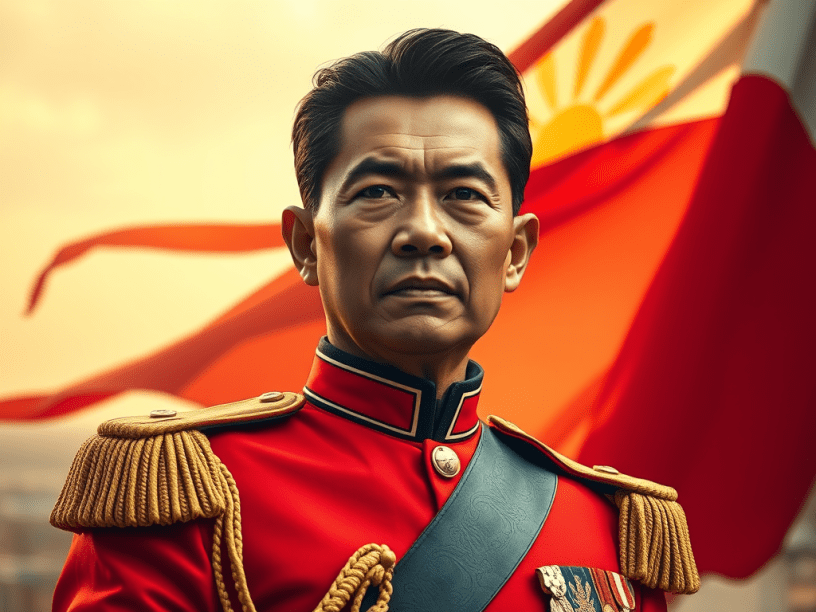
Baybay City, Leyte, Philippines – Emilio Aguinaldo (1869-1964), the visionary leader who spearheaded the Philippine Revolution and became the nation’s first president, stands as a towering figure in Philippine history. His legacy transcends mere historical significance; it offers valuable lessons for navigating the contemporary challenge of defending the West Philippine Sea (WPS).
Aguinaldo’s heroism stemmed from his unwavering commitment to national sovereignty. In the late 19th century, the Philippines languished under Spanish colonial rule. Determined to break free, Aguinaldo joined the Katipunan, a revolutionary society. His leadership qualities blossomed, and he quickly rose through the ranks. In 1896, the Katipunan launched an uprising, igniting the Philippine Revolution.
Aguinaldo’s brilliance lay in his ability to unite a fragmented nation. He established the revolutionary government in Tejeros, Cavite, and was elected president. Despite internal conflicts, Aguinaldo strategically led guerilla warfare against the better-equipped Spanish forces. This culminated in the 1898 Declaration of Philippine Independence, a momentous event that shattered centuries of colonial rule.
However, the fight for true independence wasn’t over. The United States, a rising power, intervened in the Philippine-Spanish War. The Treaty of Paris, signed in 1898, effectively transferred control of the Philippines from Spain to the U.S. Aguinaldo, unwilling to accept a new form of colonialism, led the Philippine-American War (1899-1902). Though ultimately defeated, Aguinaldo’s resistance underscored his unwavering commitment to national self-determination.
So, how does Aguinaldo’s legacy inspire the current struggle in the WPS? China’s aggressive maritime activities, including its disregard for the Philippines’ exclusive economic zone (EEZ), pose a significant threat to national sovereignty.
Aguinaldo’s resolute fight against foreign domination offers a blueprint for navigating this complex issue. His ability to unite a nation, even amidst internal differences, serves as a powerful reminder of the importance of a unified national voice. Today, Filipinos from all walks of life must stand together to safeguard the WPS.
Furthermore, Aguinaldo’s strategic approach to warfare, despite limited resources, provides valuable insights. The Philippines cannot match China’s military might head-on. Instead, a multi-pronged approach is needed, leveraging diplomacy, international alliances, and legal recourse through international tribunals.
Emulating Aguinaldo doesn’t mean replicating his every action. The context of the 21st century is vastly different. However, his unwavering commitment to national sovereignty, his ability to unite a nation, and his strategic approach to overcoming adversity offer invaluable lessons for the ongoing struggle in the WPS.
By drawing inspiration from Aguinaldo’s legacy, Filipinos can chart a course towards a peaceful and lasting resolution, ensuring the continued freedom and prosperity of the nation in the face of contemporary challenges.
Discover more from WPS News
Subscribe to get the latest posts sent to your email.

