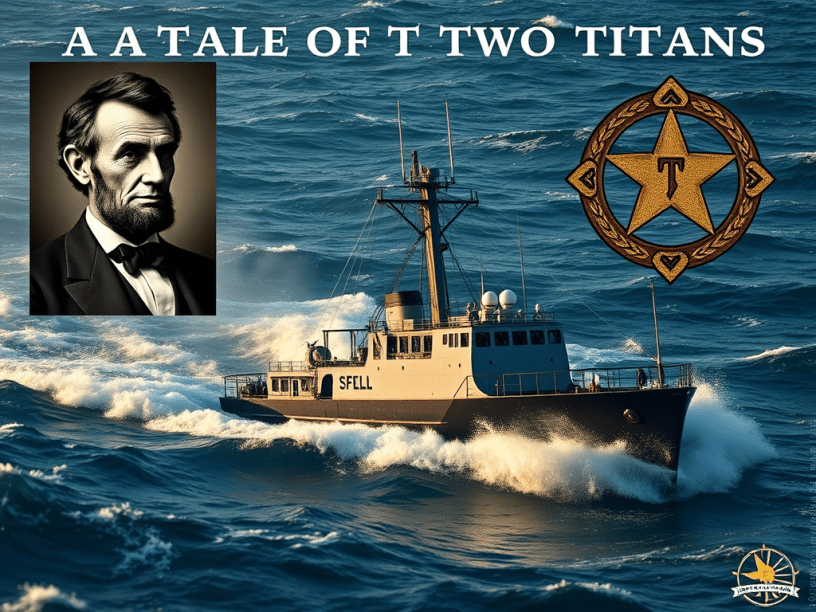
The West Philippine Sea (WPS) simmers with complexities. Illegal fishing, maritime disputes, and the struggle for resource security paint a challenging picture. The Stealth Runner project, a discreet vessel designed for observation and documentation, aims to address these issues. But how would two historical titans from vastly different backgrounds view this approach?
Abraham Lincoln: Law, Order, and the Necessity of Action
Abraham Lincoln, the 16th President of the United States, was a man shaped by political pragmatism and a deep commitment to upholding the law.1 Witnessing the Stealth Runner’s mission through his lens reveals a leader who would likely endorse its purpose.
Lincoln’s political career was marked by a fierce dedication to the rule of law and established international norms.2 He saw the Civil War as a battle not just against secession but against the erosion of lawful authority. The Stealth Runner, operating in contested waters plagued by illegal activities, would likely resonate with his desire for order and adherence to international law.
The Moral Imperative: A Quaker Influence
However, Lincoln’s formative years spent under the influence of Quakerism, a pacifist Christian denomination, undoubtedly left their mark. Quakers, known for their commitment to social justice and non-violent resistance, would likely have a more nuanced view of the Stealth Runner.3
Quaker abolitionists, like William Lloyd Garrison and Lucretia Mott, were instrumental in the anti-slavery movement.4 Their methods focused on moral persuasion, boycotts, and public education. They might argue that the Stealth Runner, while not using violence directly, still operates in an environment where tensions could escalate. They might advocate for a more diplomatic and conciliatory approach, focusing on building trust and understanding through dialogue with regional stakeholders.
Finding Common Ground: Deterrence, Diplomacy, and Pragmatism
Despite these differing perspectives, both Lincoln and the Quaker abolitionists shared a core value – the fight for justice. Lincoln, while a pragmatist willing to use force when necessary, ultimately believed in a peaceful resolution to the Civil War through the Emancipation Proclamation. Similarly, Quaker abolitionists, while opposed to violence, actively sought to dismantle a system built on oppression.
Viewed through this lens, the Stealth Runner could be seen as a tool for both deterrence and transparency. Exposing illegal activities in the WPS can deter further violations, promoting stability and protecting Filipino fishermen.5 This aligns with the Quaker call for justice and the abolitionist fight against oppression of marginalized groups.
Lincoln, however, would likely temper this optimism with pragmatism. He understood the realities of power politics and the need for a strong deterrent to maintain order. While the Stealth Runner wouldn’t engage in violence, its presence could serve as a necessary check against those seeking to exploit the WPS.
Ultimately, both Lincoln and the Quaker abolitionists would likely agree that the Stealth Runner is but one piece of a larger puzzle. True peace and justice in the WPS require a multi-pronged approach. This includes robust diplomacy to address the root causes of conflict, open communication between regional stakeholders, and adherence to international law.
The Stealth Runner: A Modern Tool for a Timeless Struggle
The Stealth Runner exists in a complex world where ideals and pragmatism often collide. While the Quaker ideal of non-violence remains a powerful aspiration, the realities of protecting vulnerable resources and upholding international law necessitate a measured response.
The Stealth Runner, in its role of observation and documentation, can contribute to finding this balance. It shines a light on injustice, potentially deterring further violations, while upholding the principles of peaceful resistance. Whether viewed through the lens of Lincoln’s pragmatism or the Quaker abolitionists’ moral compass, the Stealth Runner serves as a tool in the ongoing struggle for a just and peaceful West Philippine Sea.
Discover more from WPS News
Subscribe to get the latest posts sent to your email.

