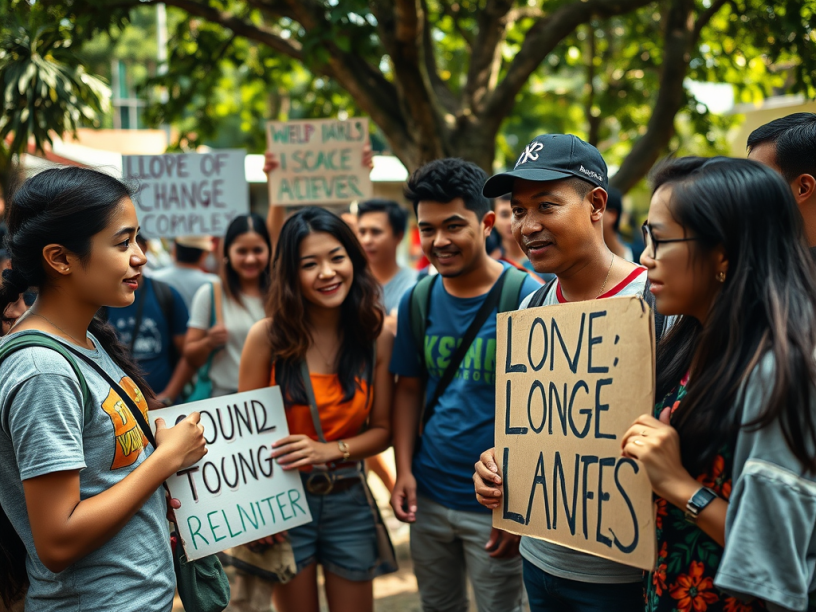
Baybay City, Leyte, Philippines — Grassroots movements are powerful forces for change, emerging from the local level and driven by the collective action of ordinary people. Here’s a breakdown for WPS.news readers:
What is a grassroots movement?
- A citizen-led, participatory effort to address a social, political, or environmental issue.
- Focuses on local concerns but can have national or even global impact.
- Relies on collective action, raising awareness, and mobilizing communities.
How to start a grassroots movement:
- Identify an issue: Something that directly affects you and your community.
- Build a network: Connect with others who share your concerns.
- Develop a plan: Define goals, strategies, and tactics.
- Raise awareness: Educate the public and garner support.
- Take action: Organize events, protests, petitions, or campaigns.
Effectiveness of grassroots movements:
- Can be highly effective due to their local focus and passionate supporters.
- Offer a powerful voice for marginalized communities often unheard by traditional power structures.
- Success depends on factors like organization, leadership, and media attention.
Past achievements of grassroots movements:
- The Civil Rights Movement in the US dismantled racial segregation laws.
- The Anti-Apartheid Movement helped end white minority rule in South Africa.
- The Environmental Movement has raised awareness of climate change and pollution.
Examples in the Philippines:
- The farmers’ movement for land reform.
- The indigenous peoples’ movement for ancestral domain rights.
- The women’s movement for gender equality.
Grassroots movements are a cornerstone of democracy, allowing citizens to shape their communities and societies. Remember, even small beginnings can spark significant change.
Discover more from WPS News
Subscribe to get the latest posts sent to your email.

