By Cliff Potts, WPS News, Editor & Chief
Baybay City, Philippines | January 1, 2025
Happy New Year! 🎉
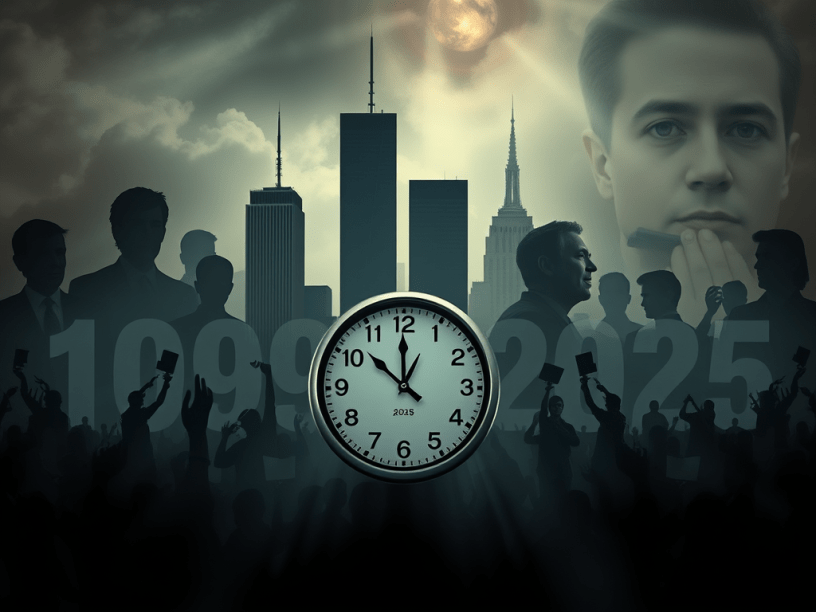
As we stand on the precipice of a new year, 2025, it’s a fitting moment to reflect on the tumultuous quarter-century that has passed since 1999. A period marked by both extraordinary technological advancements and profound societal challenges, the last 25 years have reshaped the global landscape in ways few could have imagined.
The Dawn of a New Millennium
The turn of the millennium was a time of optimism and anticipation. The world was poised on the brink of a new era, and many believed that the 21st century would be a time of unprecedented peace, prosperity, and progress. However, as the calendar flipped to 1999, a sense of unease began to grow over the looming Y2K problem. Fears of widespread technological failures and societal collapse circulated, but fortunately, the predicted catastrophe never materialized.
The 9/11 Attacks and the War on Terror
The early 2000s were a period of relative tranquility, but this was shattered on September 11, 2001, when al-Qaeda terrorists hijacked four commercial airplanes and carried out a series of coordinated attacks on the United States. The attacks, which resulted in the deaths of nearly 3,000 people, triggered a global war on terror. The U.S. invaded Afghanistan in 2001 and Iraq in 2003, launching two prolonged and costly wars that would shape the geopolitical landscape for years to come.
Economic Turmoil and Social Unrest
The late 1990s saw the rise of the dot-com bubble, a period of speculative investment in internet-based companies. When the bubble burst in 2000, it led to a significant economic downturn. The housing market boom of the early 2000s soon turned into a bust, triggering the global financial crisis of 2008. This crisis led to widespread economic hardship, job losses, and foreclosures.
The Great Recession, as it became known, had a profound impact on societies around the world. It exacerbated income inequality, eroded trust in financial institutions, and fueled political polarization. In the United States, the Occupy Wall Street movement emerged in 2011, protesting corporate greed and economic injustice. This movement inspired similar protests around the world, collectively known as the Occupy movement.
A Changing World Order
The Arab Spring uprisings of 2011, inspired by the Tunisian Revolution, swept across the Middle East and North Africa. While these revolutions initially brought hope for democratic change, many of them devolved into civil wars and authoritarian regimes.
The 2010s also witnessed the rise of China as a global economic and political power. China’s rapid economic growth and increasing assertiveness on the world stage challenged the traditional U.S.-led international order. Tensions between the two superpowers have escalated in recent years, leading to a new Cold War.
The COVID-19 Pandemic and Its Aftermath
The year 2020 marked a turning point in recent history. The COVID-19 pandemic, which originated in Wuhan, China, quickly spread across the globe, bringing economies to a standstill and disrupting daily life. Governments imposed lockdowns, travel restrictions, and social distancing measures to contain the virus.
The pandemic has had a devastating impact on public health, economies, and societies worldwide. It has exacerbated existing inequalities, strained healthcare systems, and fueled political polarization. While the development of vaccines has offered hope for the future, the pandemic has left a lasting mark on the world.
In the aftermath of the pandemic, the world is grappling with a host of challenges, including climate change, geopolitical tensions, and economic uncertainty. The next 25 years will undoubtedly be a period of significant change and transformation. The choices we make today will shape the future of our planet and humanity.
Discover more from WPS News
Subscribe to get the latest posts sent to your email.

