By WPS News Staff Reporter
Baybay City, Philippines | January 2, 2025
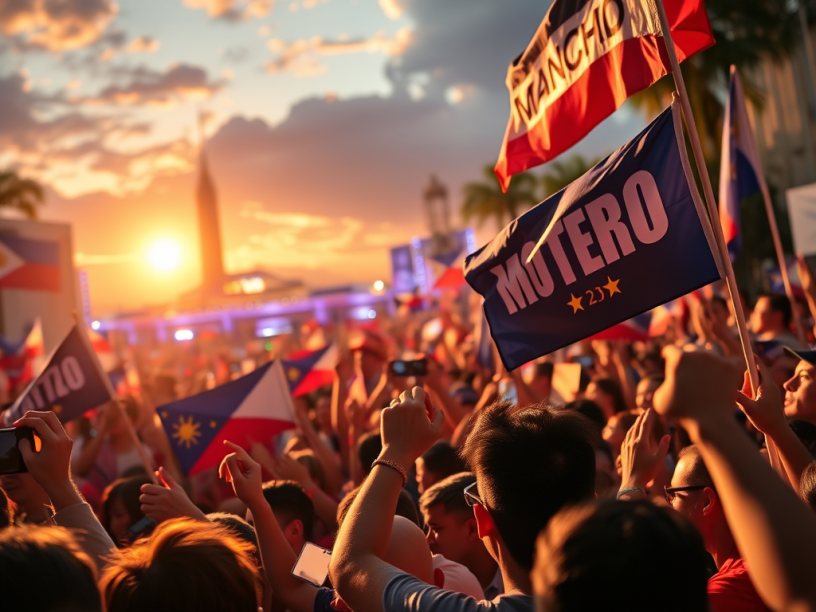
The political landscape of the Philippines is poised for a gripping contest as the nation heads towards its 2025 presidential election, slated for May 12. The upcoming election promises to be a defining moment in Philippine history as it sets the stage for a battle over political legacies and future governance.
Ferdinand Marcos Jr., who ascended to the presidency in the 2022 election, is set to complete his single six-year term. Although President Marcos Jr. is eligible for reelection, much of the attention is centered on potential rivals, adding intrigue to what many anticipate will be a highly contested affair. The electoral race is expected to be particularly fierce, reflecting the complex and intertwined histories of prominent political dynasties.
A key figure emerging as a formidable contender is Vice President Sara Duterte, daughter of former President Rodrigo Duterte. Known for her strong political acumen and public appeal, Duterte has gained traction as a frontrunner poised to succeed Marcos Jr. Her potential candidacy is already stirring considerable interest across the nation, highlighting the influential legacy of the Duterte dynasty in shaping contemporary political narratives.
The 2025 election is perceived as a proxy battle, emblematic of the enduring influence of the Marcos and Duterte families. Both families wield significant sway in the country, with distinct yet overlapping influences on the political ethos. Their political clout over recent decades has been characterized by both transformative policies and persistent controversies, providing a rich backdrop for the forthcoming electoral showdown.
Public discourse is expected to intensify as the election approaches, with various names being floated in media outlets and rampant speculation dominating social platforms. Analysts suggest that the coming months will see a surge in political campaigning, policy debates, and strategic alliances as candidates position themselves for leadership roles.
Voter engagement is likely to be high, as citizens consider a spectrum of possibilities regarding future governance and policy direction. Filipinos are keenly aware of the election’s significance in addressing crucial national issues, including economic recovery post-pandemic, infrastructure development, national security, and socio-political reforms.
Political parties and candidates are expected to leverage digital platforms extensively to reach a broad demographic, capitalizing on technology to engage with younger voters and ensure their messages resonate across diverse communities. This digital engagement is anticipated to drive increased political participation and informed decision-making among the electorate.
As the Philippine political sphere prepares for this pivotal election, observers worldwide are closely monitoring developments. The outcome not only holds domestic implications but is also of international interest given the Philippines’ strategic geopolitical position.
In conclusion, the 2025 presidential election in the Philippines is shaping up to be a contested battle grounded in the legacy of two powerful families: the Marcoses and the Dutertes. As potential candidates step into the spotlight and political strategies unfold, the race promises to captivate the nation, offering voters a meaningful opportunity to determine the future trajectory of their homeland. As the election date draws nearer, the attention will undoubtedly intensify, capturing the essence of a nation at a crucial crossroads.
Discover more from WPS News
Subscribe to get the latest posts sent to your email.
 WPS News