Baybay City, Leyte, Philippines, December 23, 2024 — Recent reports have highlighted a concerning trend regarding the military posture of China in the Indo-Pacific region, raising alarms among analysts and regional allies. Over the past six months, several indicators point towards a potential shift towards military action, prompting a reevaluation of defense strategies by U.S. allies.
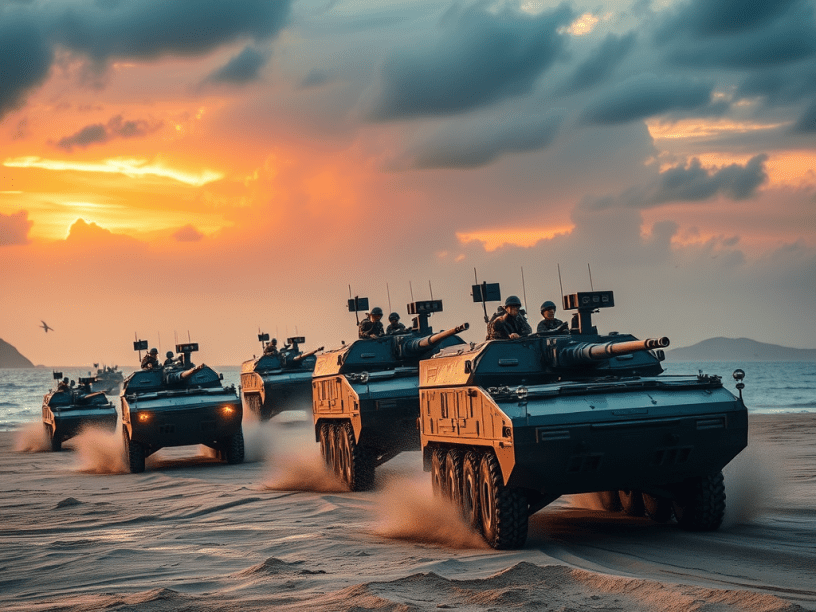
One of the most significant developments has been the intensification of amphibious brigade exercises by the People’s Republic of China. In an unyielding display of military readiness, China conducted extensive training involving 43 amphibious brigades, which included tactical maneuvers for breaching obstacles and simulating operations that suggest preparations for potential amphibious assaults in contested territories. Such activities are seen as direct signals of increasing military assertiveness.
In response to China’s increasingly aggressive military stance, U.S. allies throughout the Indo-Pacific are re-evaluating and adjusting their defense strategies. This collective response underscores the rising threat level perceived in the region and emphasizes the critical importance of cooperation on security measures. Countries historically aligned with the U.S. are bolstering their defense frameworks to address these evolving dynamics.
Adding to these concerns is the deepening military cooperation between China and Russia, characterized by arms sales and collaborative military initiatives that significantly enhance China’s capabilities. This development not only challenges the United States but also puts additional pressure on its allies, reshaping the balance of power in the region and provoking discussions about security preparedness.
China’s government has publicly called for greater clarity from the Biden administration regarding U.S.-China relations, demonstrating an urgent desire for clearer communication amid escalating tensions. This call for direction reflects a sense of unease within the Chinese leadership about the possibility of conflict, highlighting the precarious nature of contemporary diplomatic relations.
As to whether China is close to war against the Philippines and her allies, the answer currently leans towards no. While there are significant indicators of increased military activity and growing tensions, a full-scale conflict does not appear imminent. Based on initial AI projections and analysis of the current geopolitical climate, we are not necessarily inching closer to an Indo-Pacific war, but the situation requires careful monitoring to prevent further escalation.
Experts continue to emphasize the importance of tracking broader signs that may signal increased military action by China, including heightened military drills in disputed regions like the South China Sea and Taiwan Strait, a rise in aggressive rhetoric from Chinese officials, and strategic efforts to isolate geopolitical rivals. Additionally, any imposition of economic sanctions or trade restrictions could escalate tensions even further.
As the situation evolves, the Indo-Pacific region remains on high alert, with analysts urging vigilance and decisive action to address the growing complexities of international relations and their potential implications for regional stability and security.
Editor’s Note: Imminent means, “about to happen.” While the Indo-Pacific War is not imminent, our human instinct trumps AI in this regard.
If we are not engaged in the Indo-Pacific war by the end 2025, I will be very surprised. China is pushing for a provocation even if Marcos Jr. is not playing Xi’s bully games.
Discover more from WPS News
Subscribe to get the latest posts sent to your email.

