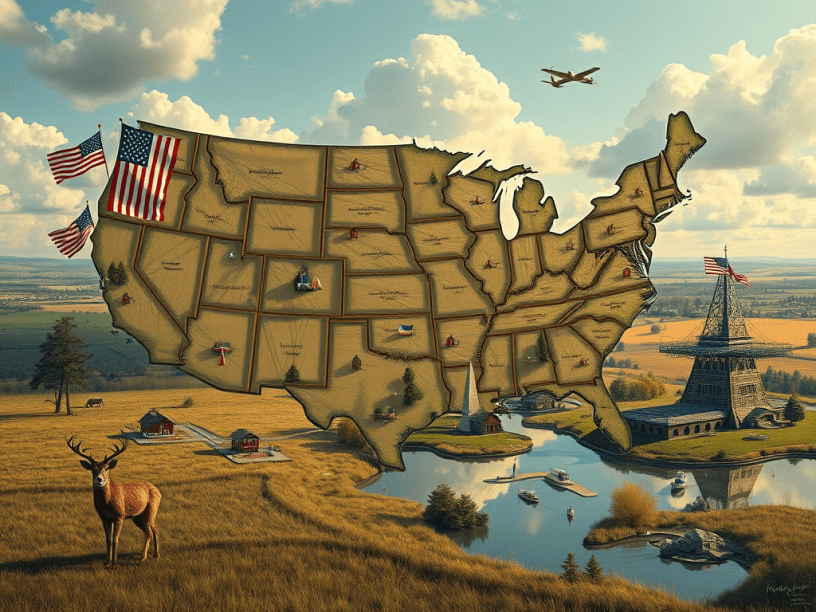
A Cautionary Reflection on American Myopia: The Risks of Cultural and Geopolitical Ignorance
By Cliff Potts, WPS News, Editor-in-Chief
Baybay City, Philippines | January 15, 2025
In an era marked by rapid globalization and interconnectedness, it is striking how often vast swathes of American society, both domestic and abroad, remain overlooked. The term “Flyover States” epitomizes the cultural dismissal faced by regions in the United States, often relegated to punchlines and caricatures. These states, which include much of the Midwest and parts of the South, are frequently ignored in the broader discussion about what it means to be American, with their complexities and contributions relegated to the margins of national consciousness. This cultural myopia poses not only a risk to understanding American identity but also to the nation’s ability to engage wisely with the rest of the world.
The media’s fascination with sensational stories, such as “Florida Man” antics or stereotypes associated with Texas, underscores a troubling trend. It highlights how easily the narratives around certain regions can devolve into ridicule, rather than meaningful engagement. Donald Trump’s rise to power tapped into the sentiments of individuals in these overlooked regions, who felt neglected by the political elite and the broader American discourse. The appeal to their frustrations revealed the depth of cultural and regional divides, a rift that often gets amplified in the nation’s political rhetoric.
On the global stage, America’s perspective seems similarly myopic. Europe, hailed as a significant ally, reduces Western civilization to a simple relationship with an “aging papa” in the UK. The complexities of the European Union, or the dynamic shifts within countries like Germany and France, often go unexamined. American media and politicians frequently focus more on sensationalized geopolitical drama involving Russia, particularly in light of the ongoing conflict in Ukraine, than on fostering deeper understanding and collaboration with European partners.
Meanwhile, relationships with major global powers like China are often portrayed in a simplistic binary: a trading partner to confront. The narrative surrounding Japan has faded significantly since the economic booms of the 1980s, morphing the country into a relic of past rivalries rather than a nation deserving renewed dialogue. Similarly, India is often viewed merely as a vast workforce of call centers, which ignores the country’s burgeoning tech sector, rich culture, and diverse population.
In North America, Canada is humorously depicted as the perennial “cold neighbor,” while Mexico is often stereotyped solely in terms of labor. Beyond the borders of these nations, the perception diminishes further. Countries in Central and South America are frequently overlooked, with only fleeting mentions in discussions around geopolitical strategy. Costa Rica may occasionally shine as a model of stability and environmentalism, but nations like Colombia, which are grappling with complex issues of governance and drug trafficking, are relegated to inconsequential status.
The myopic view extends to ambitious territorial conversations reminiscent of the 1950s, where plans for acquiring Greenland or even annexing Canada emerge, revealing a troubling lack of respect for the sovereignty and identity of neighboring nations. Such discussions not only perpetuate old colonial attitudes but disregard the complex realities of the present day.
This cultural and geopolitical blindness is a warning for not just Americans but for people everywhere. The ability to understand and appreciate complexity—both within one’s own nation and across the globe—is vital in an increasingly interconnected world. Dismissing vast regions and diverse cultures diminishes our collective human experience and undermines global cooperation needed to tackle issues like climate change, migration, and international security.
As Americans navigate their place in the world, it is crucial to embrace voices beyond their borders and regions. We must cultivate a richer understanding of the cultural fabrics that exist both within the U.S. and in the international community. Only through expanding our perspectives can we hope to foster mutual respect, empathy, and collaboration—qualities essential for progressing in our shared global future. Acknowledging and learning from the depth of the world’s cultures will prove invaluable in forging a more inclusive and informed society. The challenge lies not just in recognizing this myopia but actively working to transcend it.
Discover more from WPS News
Subscribe to get the latest posts sent to your email.

