By WPS News Science Reporter
Baybay City | February 24, 2026
The Philippines is an archipelago consisting of over 7,000 islands, rich in natural beauty and cultural diversity. However, to understand the unique characteristics of this nation today, one must delve into its prehistoric past. About 250,000 years ago, the archipelago was a vastly different place, inhabited by early hominins who played a crucial role in the evolution of human life in this region of Southeast Asia.
Climate and Geography
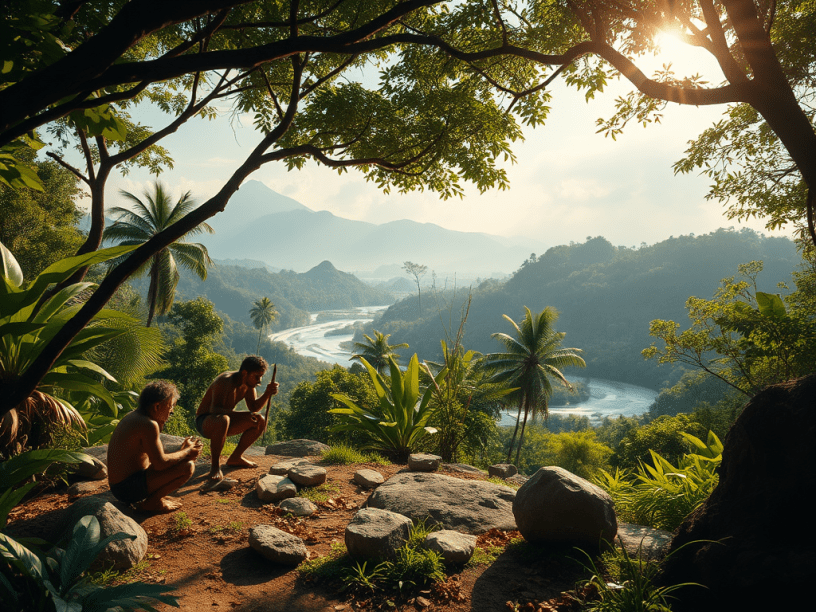
Around 250,000 years ago, during the Pleistocene epoch, the Philippines experienced climatic conditions that greatly influenced its biodiversity and human habitation. The climate was cooler and wetter than it is today, characterized by distinct wet and dry seasons. During glacial periods, lower sea levels revealed land bridges that connected some of the islands, facilitating the movement of species and human populations. The geography of the archipelago at that time would have included vast forests, mountainous terrains, river systems, and coastal areas, teeming with flora and fauna typical of a tropical rainforest.
Early Inhabitants
The early inhabitants of the Philippines, often referred to as “prehistoric Filipinos,” descended from migrant groups that arrived from the Asian mainland. Archaeological evidence suggests that these early people were part of the Homo erectus lineage, with potential influences from other hominin species over time. Tools and artifacts found in regions like the Callao Cave in Luzon, demonstrate that these early inhabitants were capable hunters and gatherers, adept in using stone tools for various purposes.
The most significant archaeological find relating to early human presence is the discovery of a Homo luzonensis skull in Callao Cave, which dates back to around 67,000 years ago. This find indicates that the Philippines was not only a site for early human habitation but also an area of significant evolutionary development that bears questions about human migration patterns throughout Asia.
Lifestyle and Culture
The lifestyles of the prehistoric inhabitants of the Philippines revolved primarily around hunting, gathering, and fishing. They likely had a deep understanding of their environment, utilizing various plants, animals, and fish for sustenance. Tools made from stones, such as hand axes, scrapers, and choppers, played a crucial role in their daily lives. These tools were not just for hunting and processing animal hides, but also for gathering plant materials, preparing food, and constructing shelter.
As these communities settled in small groups, they would have created social structures that facilitated cooperation for hunting and gathering. Early Filipinos likely engaged in rituals and traditions, although concrete evidence is scarce. Nonetheless, their deep connection to the land and nature would suggest a spiritual or animistic belief system, reflecting respect for the natural world they inhabited.
Fauna and Flora
The Philippine islands boasted rich biodiversity, home to many endemic species of plants and animals. The lush environment was dotted with ancient trees, vines, and a variety of medicinal plants. Large mammals, such as the Philippine elephant (now extinct), and various species of deer roamed these islands, providing both challenges and resources for early hunters. Moreover, the seas surrounding the islands were rich in marine life, including a variety of fish, crustaceans, and mollusks, which were vital for the diet of prehistoric Filipinos.
The ecosystem was less impacted by human activity at the time, allowing for the flourishing of ecosystems. Understanding the natural environment was essential for survival, and early Filipinos would have developed knowledge of edible species, seasonal patterns, and hunting techniques that ensured sustainability.
Technology and Tools
Stone tool technology significantly advanced during this period. Early inhabitants utilized flintknapping techniques to create sharper and more efficient tools that suited their needs. As time progressed, these technologies gradually evolved, leading to more sophisticated carvings and implements that allowed for better fishing techniques and resource gathering.
Bone and shell tools likely began to be used as well, enabling a broader range of activities, from sewing to crafting ornaments. Early Filipinos may have developed trade networks with neighboring regions as they began to establish more complex social structures, exchanging goods and ideas that influenced their technological advancements.
The Legacy of Prehistoric Filipinos
The era 250,000 years ago set the foundation for the rich tapestry of cultures that would emerge in the Philippines. Over thousands of years, these early communities gave rise to a multitude of cultures, languages, and practices as agricultural practices were introduced, and more socially complex groups began to form.
The prehistoric period is crucial to understanding the Filipino identity. Although much debate exists over the precise timeline and nature of migration patterns and cultural developments in the archipelago, it is clear that the Philippines played a significant role in the broader narrative of human evolution in Southeast Asia.
Conclusion
The Philippines, 250,000 years ago, was a land of contrasts, rich in biodiversity and inhabited by resilient early humans who adapted to their environment. Through their survival strategies, social structures, and advances in technology, these prehistoric Filipinos laid the groundwork for future civilizations. While the artifacts and fossil records provide a glimpse into their lives, they also serve as a reminder of the intricate relationship between humans and their environment that has persisted through time.
As the archipelago evolved, subsequent waves of migration and the introduction of agriculture transformed the landscape and culture of the Philippines into what we recognize today. The legacy of these early inhabitants continues to resonate through contemporary Filipino culture, particularly in their strong connection to nature, community, and diverse traditions.
Archaeological research continues to uncover more about prehistoric life in the Philippines, providing valuable insights into how early humans adapted and thrived in a challenging environment. Understanding this past not only enriches our knowledge of the Philippines but also highlights the resilience and ingenuity of early human beings in their quest for survival. As historians and scientists piece together this intricate puzzle, it becomes apparent that the story of the Philippines is not just one of an isolated archipelago but rather part of a larger human narrative that stretches across continents and millennia.
In conclusion, the prehistoric period of the Philippines, marked by its unique climate, rich biodiversity, and innovative early inhabitants, is an essential chapter in the history of human evolution. The adaptability and skills of these early Filipinos laid the foundations for the vibrant culture and history that would emerge in the centuries to follow. The study of this era not only helps us appreciate the origins of Filipino culture but also underscores the universal human experience of adaptation, survival, and the enduring connection to the land.
Discover more from WPS News
Subscribe to get the latest posts sent to your email.

