By WPS News history Correspondent
Baybay City | Marc 3, 2026
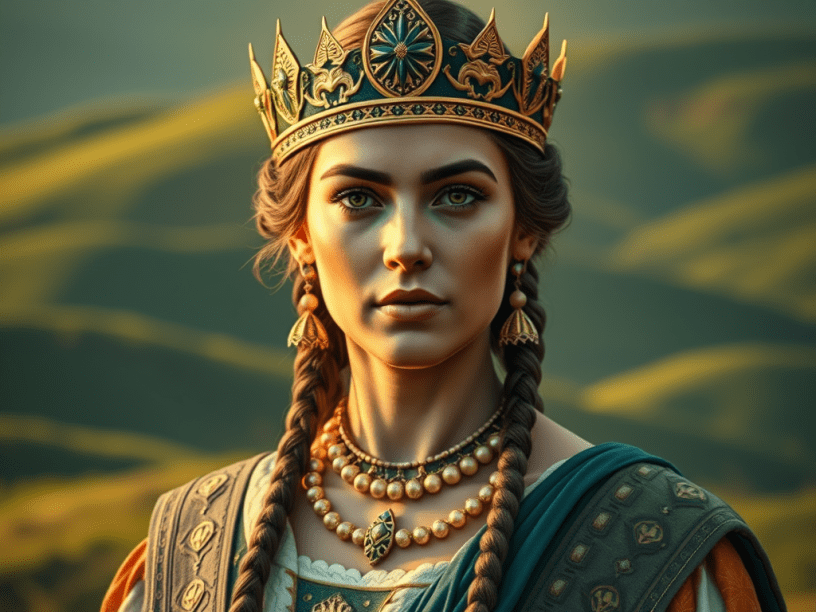
Queen Scotia, often regarded as a legendary figure in Irish and Scottish folklore, is an emblematic persona believed to have played a crucial role in the early history of Ireland and the establishment of Scottish heritage. While historical evidence for her existence is scarce, she has become an integral part of the cultural narrative shared between Ireland and Scotland.
According to legend, Scotia was a princess from Egypt, often associated with the ancient kingdom of Scota, who made her way to Ireland with a group of followers during a time of great turmoil. Her arrival is said to have occurred around the time of the Milesian invasion, a pivotal moment in Irish mythology when the Milesians, represented as the final waves of invaders, displaced the Tuatha Dé Danann, the divine race of beings believed to have inhabited Ireland before them.
Scotia is often depicted as a strong and benevolent ruler. Her leadership was characterized by a commitment to justice and the welfare of her people. She is credited with fostering the nascent Irish culture, promoting the establishment of laws, among them the tradition of hospitality that would become a hallmark of Irish society. Her lineage purportedly links to the ruling families of later Scottish clans, suggesting that her influence extended beyond the shores of Ireland to the land that would eventually become Scotland.
In Irish folklore, Scotia is sometimes identified with the Irish name “Scotia,” which is believed to derive from “Éire,” the ancient name for Ireland, and could also reference early notions of national identity. Some sources posit that Scotia’s arrival represented not just a literal migration, but a symbolic transition, establishing a connection between the ancient peoples of Ireland and the emerging identities of the Scots.
The legacy of Queen Scotia is notably preserved in the name of Scotland itself. Historians suggest that the name “Scotland” is derived from “Scoti,” the Latin term used by the Romans to refer to the Gaelic-speaking inhabitants of what is now Scotland, a reflection of the influence Scotia’s followers had in forming the foundations of Scottish society.
Throughout the centuries, Scotia has become a symbol of unity between Ireland and Scotland. Stories of her life have inspired poets, musicians, and artists who sought to capture the essence of her character and the themes of migration, identity, and cultural heritage. These narratives often emphasize her role as an archetypal queen, embodying the qualities of strength, resilience, and nurturing.
While historical documentation of Queen Scotia remains minimal, her influence on the cultural and national identity of the Irish and Scottish peoples persists. She serves not only as a monarch from a bygone era but as a catalyst for ongoing discussions about identity, migration, and nationhood in both Ireland and Scotland.
In popular culture, her story has been interwoven with themes from medieval literature, national folk tales, and modern interpretations, depicting her as a figure of hope and inspiration against adversity. The figure of Queen Scotia ultimately remains a potent symbol of the deep-rooted connections between the histories of Ireland and Scotland, embodying the shared past that continues to resonate in the contemporary identity of both nations.
Discover more from WPS News
Subscribe to get the latest posts sent to your email.

