By: WPS News Staff Reporter
Baybay City | November 15, 2025
In an era where technological advancements dictate the tempo of our daily lives, the late French philosopher Paul Virilio emerges as an essential voice for understanding our rapidly changing world. Renowned for his exploration of “dromology,” or the logic of speed, Virilio’s work delves into the intricate relationship between technology, warfare, and societal transformation. His insights resonate profoundly as we navigate the complexities of modern existence.
Born in 1932 in Paris, Virilio’s early experiences during World War II profoundly influenced his worldview. Growing up amid the chaos of war fostered a unique perspective on the connection between technology and human experience. He argued that advancements in speed, particularly in warfare technology, create a societal structure characterized by heightened urgency and immediate gratification, often at the expense of deeper human connections.
Virilio’s concept of dromology posits that the acceleration of information and societal processes leads to a disintegration of traditional experiences and relationships. He asserts that war, driven by technology, ceases to be merely a violent confrontation between armies. Instead, it transforms into a race governed by speed—a contest for control over information and movement that can devastate social fabrics.
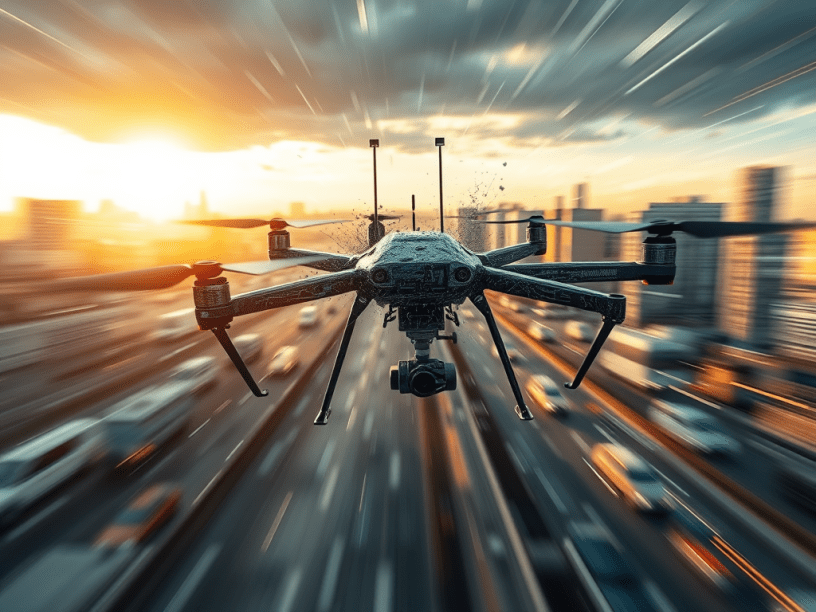
One of Virilio’s most profound assertions is that every technological advancement comes with its own form of “accident.” This idea transcends a simple correlation of improved speed with progress; rather, it speaks to the potential dangers and ethical dilemmas posed by accelerated technological growth. Automatic warfare, drones, and cyber-attacks exemplify the unforeseen consequences Virilio warned against, where the very tools designed for security can undermine the foundations of society.
In his book War and Cinema, Virilio highlights the profound changes in the depiction of war through the lens of new media. The convergence of cinema and warfare creates a spectacle that can both fascinate and alienate the viewer. He argues that the mediated experience of the battlefield shapes public perception, desensitizing individuals to the realities of violence. The obsession with speed and spectacle leaves little room for the contemplation of ethical implications—transforming tragedy into entertainment.
As globalization and technology penetrate every aspect of life, Virilio’s ideas take on a renewed significance. The instantaneous nature of online communication, while fostering connection across vast distances, dilutes the quality of interactions. A culture of immediacy emerges, one where thoughtful deliberation is often sacrificed for rapid responses. In this sense, dromology offers a lens through which we can examine the erosion of authentic human relationships, replaced instead by superficial engagements facilitated by screens.
Virilio also provocatively asserts that the transformation of the urban landscape by technology alters human behavior. He refers to this phenomenon as “the construction of speed,” arguing that modern cities are designed to facilitate rapid movement, leading to a detachment from local environments and communities. The architectural focus on speed—through the design of highways and transport systems—encourages transient lifestyles, resulting in communities that are less connected. The implications are profound: neighborhoods become mere thoroughfares, and social bonds weaken under the pressure of our fast-paced existence.
Moreover, Virilio’s examination of the accelerated pace of life does not only focus on social repercussions but also highlights the ongoing psychological impacts. The constant rush creates an atmosphere of anxiety and stress, where individuals strive to keep up with the relentless demands of time and technology. This acceleration is not just a social phenomenon; it penetrates the psyche, manifesting in symptoms of burnout and alienation.
In a world increasingly mediated by technology, Virilio’s prophetic voice urges us to reflect critically on the consequences of our swift advancements. The increasing reliance on artificial intelligence, automated systems, and digital interfaces raises questions about agency, ethics, and human connection in a landscape driven by speed.
Virilio’s legacy beckons future generations to engage with these critical issues. As we chart a course through the uncontrollable currents of technological evolution, it is imperative to consider the implications of our choices. A slowing-down or recalibration of our relationship with technology—what Virilio might call a “dromological adjustment”—could foster a more sustainable and humane experience.
In conclusion, Paul Virilio’s philosophy of technology and speed offers an essential critique of contemporary society. His exploration of dromology reveals how the transformation of warfare and urban life shapes human relationships and highlights the potential dangers of a world that values speed over depth. As we face unprecedented technological changes, entering an age where speed thrums at the heart of our existence, understanding and addressing these profound insights becomes crucial for nurturing both society and the human spirit.
Discover more from WPS News
Subscribe to get the latest posts sent to your email.

