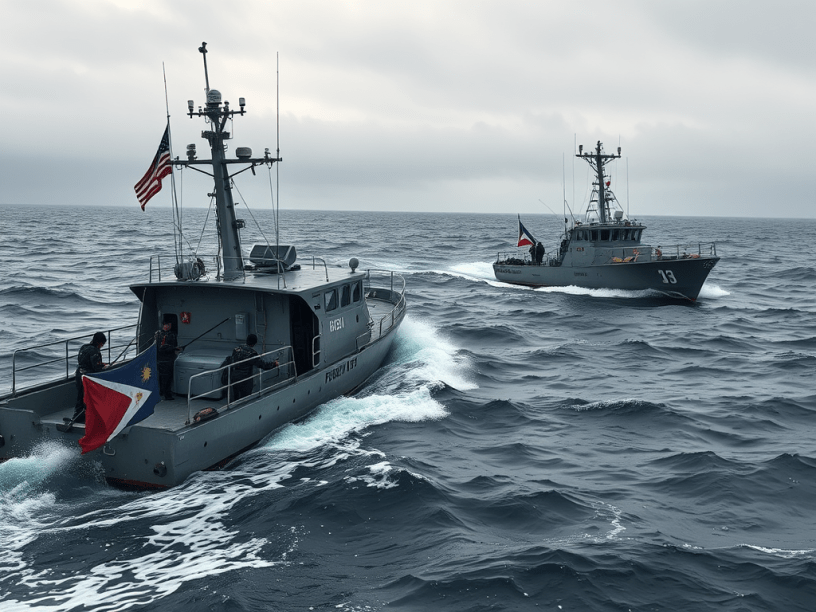
WPS.News Report: Tensions Rise in the West Philippine Sea Amid Chinese Aggression
Dateline: February 18, 2025
In the critical timeframe from February 1 to February 18, 2025, the West Philippine Sea has been marked by heightened tensions stemming from a surge in Chinese incursions into Filipino territorial waters, particularly around Scarborough Shoal and Second Thomas Shoal. Reacting strongly, the Philippine government has condemned these actions as “repeated aggressive, unprofessional, and illegal.”
On February 5, reports surfaced from Philippine security officials indicating that Chinese coast guard vessels had not only blocked but also sideswiped Philippine boats that were engaged in patrols to safeguard local fishermen. A Philippine security official poignantly articulated the gravity of the situation, stating, “China is pushing us to the wall,” which highlights the urgent need for a decisive response to these provocations. The official elaborated, warning that “all options are on the table” for Manila in light of the escalating aggression in the South China Sea.
In a significant development, the Philippine Air Force, collaborating closely with the United States, undertook joint patrols over the South China Sea. This strategic maneuver has elicited strong reactions from Beijing. A statement from the Chinese coast guard alleged that Philippine ships had ventured into Chinese waters without authorization, further exacerbating the diplomatic tensions in the area.
Filipino officials have actively communicated with their American counterparts regarding the situation. The US Secretary of State has reaffirmed Washington’s commitment to uphold international law in the South China Sea, articulating support for the Philippines as it faces Chinese aggression. In a recent statement, the Secretary emphasized the crucial need to maintain peace and stability in the region, particularly given China’s rising assertiveness.
Additionally, remarks from Chinese officials have linked the South China Sea tensions to the situation in Taiwan, insinuating that any military actions taken by the Philippines could potentially have repercussions for Taiwan’s security. This connection raises alarm in Manila regarding the broader geopolitical consequences arising from the ongoing tensions.
Weather Conditions:
Throughout this period, the West Philippine Sea has experienced powerful northeast monsoonal winds, reaching speeds of 30 to 35 knots. A low-pressure area was identified, yet it was assessed to have a minimal chance of developing into a tropical cyclone. The weather conditions have been relatively stable, despite the region still being influenced by prevalent seasonal weather patterns.
Seismic Activity:
Significant seismic activity has also been evident in the Philippines during this timeframe. Notably, on February 14, a magnitude 5.1 earthquake struck near Claveria, Masbate, and another earthquake of magnitude 3.5 was recorded in Samar on February 16. These incidents serve as a reminder of the region’s ongoing geological activity, a routine occurrence given the Philippines’ position along the Pacific Ring of Fire.
Discover more from WPS News
Subscribe to get the latest posts sent to your email.
 WPS News