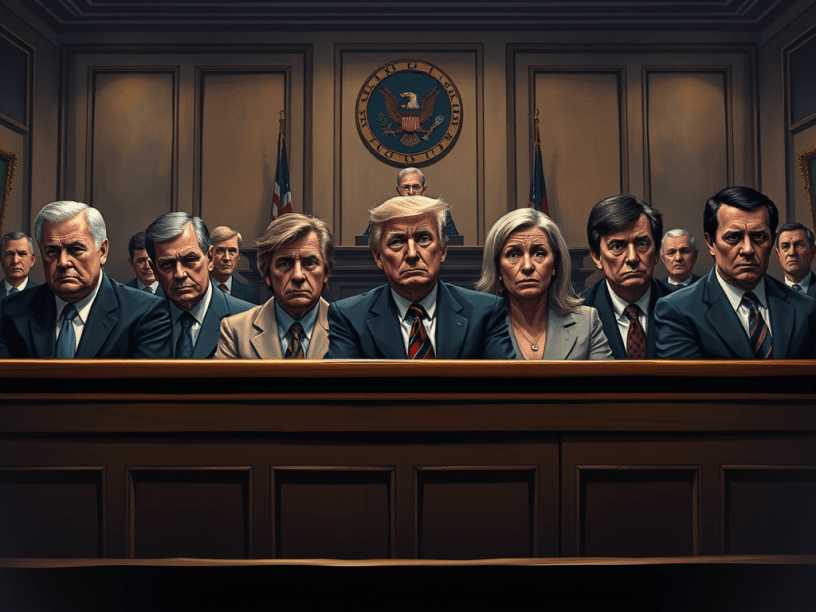
Over the past few years, from 2017 to 2023, some supporters of former President Donald Trump have found themselves in legal trouble. These cases were widely covered in the news, and it’s important to know who these individuals are and understand the legal process they went through.
Key Individuals and Their Convictions
- Michael Flynn: Michael Flynn was Donald Trump’s first National Security Advisor. He was one of the first people to face legal action. In 2017, Flynn pleaded guilty to lying to the FBI about his conversations with a Russian ambassador. However, in 2020, Flynn was pardoned by President Trump, which means he was forgiven for his crime.
- Paul Manafort: Paul Manafort was Trump’s campaign chairman in 2016. Manafort was convicted in 2018 of tax fraud, bank fraud, and failing to report foreign bank accounts. He was sentenced to prison but was later released to home confinement due to health concerns during the COVID-19 pandemic.
- Roger Stone: Roger Stone, a long-time friend of Trump, was charged with lying to Congress, witness tampering, and obstructing an official proceeding. In 2019, Stone was found guilty and sentenced to prison. However, in July 2020, President Trump commuted his sentence, which means Stone did not serve his prison term.
- Steve Bannon: Steve Bannon, who was a chief strategist and senior counselor to Trump, was arrested in 2020. He was accused of defrauding donors in a fundraising campaign called “We Build the Wall.” Bannon pleaded not guilty and was pardoned by Trump just before Trump’s term ended.
- The Capitol Rioters: On January 6, 2021, many Trump supporters stormed the U.S. Capitol building. This was a serious event that resulted in multiple arrests. Some of these individuals were convicted of various crimes, such as trespassing and assaulting law enforcement officers. Legal proceedings are still ongoing for many involved.
- George Papadopoulos: George was a foreign policy advisor for Trump. He pleaded guilty in 2017 to making false statements to the FBI about his contacts with Russians. Papadopoulos served a short prison term and was later pardoned.
- Allen Weisselberg: While not directly a supporter in the typical sense, Allen Weisselberg, the Trump Organization’s CFO, was accused of tax-related crimes. In 2021, he pleaded not guilty to charges, and as of the end of 2023, his case was still being pursued.
Understanding Due Process
When we talk about whether these individuals were denied “due process,” we’re discussing a fundamental principle of fairness in the legal system. Due process means that everyone gets a fair trial, is presumed innocent until proven guilty, and has the right to defend themselves.
In all these cases, the individuals were taken to court and had the opportunity to defend themselves against the charges. They were represented by lawyers, and their trials were held in open court where evidence was presented by both sides. They had the chance to appeal decisions if they believed there were legal errors. This is what due process is all about.
However, some might argue that the legal system was influenced by political factors, or that media coverage biased the proceedings. These arguments are common in high-profile cases, and they bring up important questions about fairness and justice.
In conclusion, some supporters of former President Trump were convicted of crimes between 2017 and 2023. Each case went through the legal process, which is designed to be fair for everyone. Whether or not they were denied due process is often a matter of personal opinion and perspective. It’s essential to remember that due process is a cornerstone of our justice system, ensuring that every individual has the right to a fair hearing.
The Lack of Due Process
In a concerning turn of events, the Trump Administration, operating under the leadership of President Donald Trump, sworn in as the 47th President of the United States on January 20, 2025, is drawing significant criticism for its approach toward due process rights. Recent remarks from President Trump have raised serious concerns as he has openly questioned whether individuals in the U.S. deserve the essential protections afforded by due process. This fundamental right, deeply embedded in the Constitution, is vital for ensuring that every person receives fair treatment within the legal system.
Critics are particularly alarmed by the administration’s policies in the immigration arena, asserting that these initiatives jeopardize due process. Immigration attorneys and former judges have expressed their fears that the administration’s accelerated deportation efforts are prioritizing expediency over the legal entitlements of individuals. This troubling trend not only threatens the rights of immigrants but also establishes a precarious precedent that could extend its reach to all citizens.
As the administration forges ahead with its contentious agenda, the ramifications of limiting due process could echo through the very core of American justice. It is imperative for citizens to remain alert and actively advocate for the protection of due process rights for all, ensuring that the pursuit of justice remains an accessible right for everyone, rather than a privilege reserved for a select few.
Perspective
Andrew Jackson, the seventh President of the United States (1829-1837), is a controversial figure in American history, particularly regarding his policies towards Native American tribes. His presidency is most notable for the enforcement of the Indian Removal Act of 1830, which aimed to relocate Native American tribes living east of the Mississippi River to designated “Indian Territory” west of the river.
Jackson justified this policy as a means of providing land and the opportunity for Native Americans to maintain their way of life separate from white settlers. However, this often resulted in significant hardship and suffering for the tribes involved. The term “resettlement” is frequently used to describe this forced relocation, although many Native Americans viewed it as a form of ethnic cleansing.
A critical moment in this saga was the Supreme Court case Worcester v. Georgia (1832), which upheld the rights of the Cherokee Nation to their lands and ruled that they were a distinct community with self-governing rights. Despite the Court’s ruling, Jackson famously refused to enforce the decision, allegedly saying, “John Marshall has made his decision; now let him enforce it!” This dismissal of judicial authority led to the forced removal of thousands of Native Americans, particularly during events such as the Trail of Tears, where many suffered from exposure, disease, and starvation during their relocation.
Jackson’s legacy is complex; while he is remembered for his populist leadership and expansion of democratic participation, his Indian removal policy has left a lasting impact on Native American communities and is often viewed as a dark chapter in U.S. history.
Discover more from WPS News
Subscribe to get the latest posts sent to your email.
 WPS News