By Cliff Potts, CSO, and Editor-in-Chief of WPS News
Baybay City, Leyte, Philippines — April 25, 2026
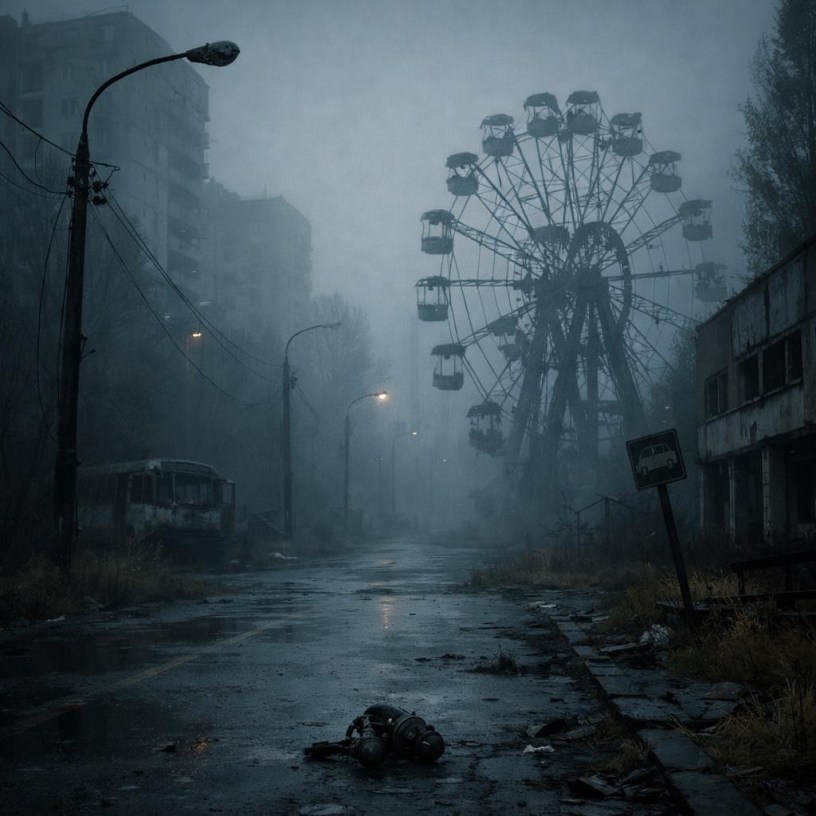
On April 26, 1986, Reactor No. 4 at the Chernobyl Nuclear Power Plant exploded during a late-night safety test. The test was supposed to answer a technical question. Instead, it answered a human one.
What happens when people push a complex system past its limits?
At Chernobyl, the answer was immediate and permanent.
What actually happened
The reactor was a Soviet-designed RBMK, a system known to be unstable at low power. Operators were running a test to see whether the turbine could provide enough residual energy to keep cooling systems running in the event of a power loss.
To do that, they disabled multiple safety systems and forced the reactor into a condition it was not designed to handle. Power levels dropped too far, then surged. Control rods were inserted to shut the system down, but due to design flaws, that action accelerated the reaction instead of stopping it.
Within seconds, the reactor became uncontrollable. Steam explosions tore it apart. The graphite core ignited. Radioactive material was released into the atmosphere and carried across much of Europe.
The test ended. The consequences did not.
The immediate cost
Two workers died that night. Dozens more, firefighters, plant staff, and emergency responders, were exposed to extreme radiation in the hours that followed. Many of them did not survive.
The nearby city of Pripyat was evacuated, but not immediately. For hours, people went about their day under a radioactive plume they could not see. Within days, more than 100,000 people were relocated. Entire communities were erased from the map.
The area around the plant remains restricted decades later.
The long tail
Chernobyl did not end in 1986. It stretched across years and borders.
- Large regions of Ukraine, Belarus, and Russia were contaminated
- Agricultural land was lost or restricted
- Long-term health impacts remain debated in scale, but not in existence
- Cleanup and containment have cost hundreds of billions over time
The site itself is still being managed. The problem was never “fixed.” It was contained.
Why it failed
There is no single cause.
- A reactor design with known instability
- A test procedure that ignored safe operating conditions
- Operators under pressure to complete the test
- A culture that discouraged stopping the process once it began
- A system that allowed multiple safeguards to be disabled at once
None of these alone guarantees disaster. Together, they did.
Chernobyl was not one mistake. It was a chain of decisions, each one narrowing the margin for error, until there was no margin left.
What it shows
Chernobyl was not a verdict on nuclear power as a concept. Other countries run reactors safely under different designs and regulatory systems.
What it was is a clear example of how complex systems fail.
They do not usually fail because one thing goes wrong.
They fail because several things go wrong at the same time, and the people involved believe they still have control.
At Chernobyl, control was assumed long after it was lost.
The human factor
The people in that control room were not trying to destroy a reactor. They were trying to complete a test.
That matters.
Disasters of this scale rarely begin with intent. They begin with confidence.
Confidence that the system will respond.
Confidence that safeguards will hold.
Confidence that someone would stop the process if it became dangerous.
At Chernobyl, those assumptions proved false.
Forty years later
The reactor is entombed. The surrounding zone is still monitored. The cost continues to accumulate in maintenance, containment, and lost land.
Chernobyl did not end. It became a condition.
It is now part of the long-term landscape, both physical and historical.
Analysis
Chernobyl is often reduced to a single phrase: human error. That is not wrong, but it is incomplete.
The deeper lesson is that humans operate complex systems with incomplete information, under pressure, and with a tendency to believe that problems are manageable until they are not.
That pattern is not unique to one country or one political system. It is a recurring feature of how large, technical systems are handled.
Chernobyl did not require malicious intent. It required a sequence of ordinary decisions made under the assumption that the system would behave as expected.
It did not.
Bottom line
Chernobyl stands as a durable reminder that when complex systems fail, they do not fail small.
They fail all at once, and the consequences extend far beyond the point of origin.
That is the lesson that remains, forty years later.
For more information about the WPS News project and its long-term archive mission, visit: https://cliffpotts.org
For more commentary, please see Occupy 2.5 at https://Occupy25.com
If this work helps you understand what’s happening, help me keep it going: https://www.patreon.com/cw/WPSNews
References
International Atomic Energy Agency (IAEA). “Chernobyl Accident 1986.”
World Nuclear Association. “Chernobyl Accident 1986.”
United Nations Scientific Committee on the Effects of Atomic Radiation (UNSCEAR). Reports on Chernobyl.
World Health Organization (WHO). “Health Effects of the Chernobyl Accident.”
OECD Nuclear Energy Agency. “Chernobyl: Assessment of Radiological and Health Impacts.”
Discover more from WPS News
Subscribe to get the latest posts sent to your email.
 WPS News