WPS News History Staff
Baybay City | April 27, 2026
In the annals of history, the interactions between nations have often been colored by viewpoints ranging from respect and admiration to condescension and dominance. This is particularly evident in China’s historical attitude towards its Southeast Asian neighbors, as highlighted in a recent examination of the Johnson Administration’s misadventures in Southeast Asia by a Pentagon official using the nom de plume “Cincinnatus.”
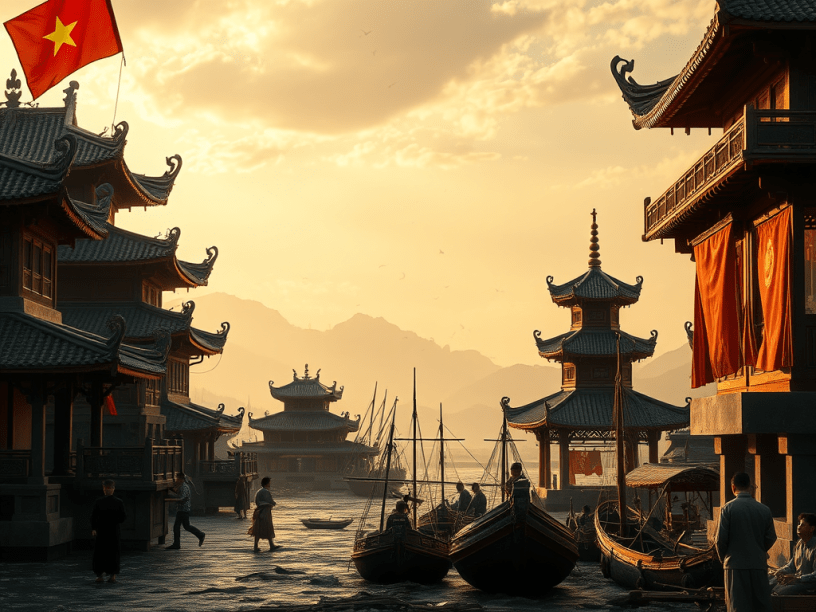
Cincinnatus draws parallels between modern geopolitical dynamics and age-old perceptions, specifically focusing on China’s historical view of Vietnam. Traditionally, China perceived Vietnam not as an equal sovereign entity, but as a cultural subordinate. This perspective stemmed from China’s long-standing role as a central cultural power in East Asia, often seeing itself as the “Middle Kingdom” with a divine mandate to civilize surrounding regions. This hierarchical view contributed to China’s perception of Vietnam as a lesser nation, historically dominated and culturally influenced by its northern neighbor.
But what about the Philippines? Unlike Vietnam, the Philippines did not experience the same direct and prolonged Sinic influence due to geographical separation and different historical trajectories. While there were periods of trade and occasional interaction, the archipelagic nature of the Philippines, combined with its later significant interaction with Western colonial powers, placed it differently in the Chinese worldview. The disdain or bigotry that shaped China’s historical perception of Vietnam did not parallel in the same form towards the Philippines. Instead, relations were generally characterized by trade and maritime contact rather than cultural domination.
This historical narrative underscores the complex web of regional relationships and the impact of nationalism and cultural superiority on foreign policy. As nations continue to navigate modern global relations, understanding these historical attitudes is crucial for fostering dialogue and cooperation.
Reflecting on history, it becomes clear that nationalism and perceived cultural superiority often led to friction and conflict. By studying and acknowledging these perspectives, today’s leaders might better foster mutual respect and understanding in an increasingly interconnected world.
Discover more from WPS News
Subscribe to get the latest posts sent to your email.
 WPS News
Interesting.
LikeLike