By Cliff Potts
Editor-in-Chief, WPS News
Baybay City, Leyte, Philippines — May 3, 2026
Christianity presents itself as a faith grounded in revealed truth. Yet from its earliest centuries, it has been equally grounded in argument—over texts, authority, interpretation, and power. These debates are not modern intrusions or signs of decline. They are structural. Christianity has never existed without human hands deciding who speaks for God, what counts as Scripture, and how certainty is enforced.
That tension matters, because claims of absolute authority still shape law, culture, and politics. If those claims rest on historical processes rather than self-evident divine transmission, then authority itself must be examined honestly.
This essay emerges from the long arc of questions explored in SpiritFlight (https://www.amazon.com/dp/B0DKXPLBXL)—not as answers delivered, but as questions finally allowed to be asked. That work does not claim theological authority, nor does it attempt to replace belief with certainty. Instead, it traces how faith survives once institutional explanations fail, and how Scripture becomes more complicated—not weaker—when its human transmission is taken seriously. The questions raised here are not academic abstractions, but the product of lived experience, historical study, and decades spent inside the tension between belief and authority.
Who Decided What Counts as Scripture—and When?
The New Testament did not arrive as a finished book. For the first several centuries after Jesus, Christian communities circulated letters, gospels, homilies, and apocalyptic texts with no universally agreed canon. Some texts were read aloud in worship; others were disputed, ignored, or rejected outright.
Formal canonization unfolded gradually, primarily between the fourth and sixth centuries. Councils and church leaders weighed criteria such as apostolic attribution, doctrinal consistency, and liturgical usefulness. These were not neutral filters. They reflected theological priorities and institutional needs—especially once Christianity became aligned with imperial power.
What is often forgotten is that Paul’s letters were not universally treated as Scripture for generations. They circulated as correspondence and instruction, not as settled holy writ. Their later elevation required interpretation, translation, and theological framing long after Paul himself was gone.
The Meaning of a Canon Codified Centuries Later
The fact that the biblical canon was finalized long after Jesus raises a basic problem for claims of immediate, self-authenticating authority. Whatever one believes about inspiration, the form of Scripture believers now hold is the result of historical decisions made by fallible people responding to specific contexts.
This does not negate faith—but it does undermine certainty claims that pretend the Bible simply “fell from heaven” complete and unambiguous. The canon reflects continuity and conflict, preservation and exclusion. Some voices were elevated; others were silenced.
Catholic and Protestant Bibles: One Authority or Many?
The differences between Catholic and Protestant canons expose the fragility of claims to a single, self-evident authority. The inclusion or exclusion of the Deuterocanonical books was not settled by revelation but by institutional allegiance.
If Scripture were truly self-interpreting and universally obvious, such divergence would be inexplicable. Instead, it reveals that authority is mediated—transferred through churches, traditions, and power structures that assert legitimacy after the fact.
On What Basis Did Reformers Redefine Scripture?
Reformers claimed the right to alter or redefine Scripture by appealing to conscience, original languages, or divine mandate. Martin Luther removed books he judged theologically suspect. Henry VIII asserted ecclesiastical authority largely to resolve a dynastic crisis.
Their appeals to Scripture over church authority were themselves acts of authority. They did not escape power; they relocated it. The Reformation did not eliminate institutional control—it multiplied institutions.
Inerrancy and the Problem of Missing Originals
Modern claims of “inerrancy in the original manuscripts” collapse under their own logic. No original manuscripts exist. What remains are copies of copies, shaped by translation choices, scribal errors, and theological agendas.
Inerrancy functions less as a historical claim than as a doctrinal safeguard—a way to protect authority by relocating perfection to an unreachable past. It asks believers to trust certainty that cannot be examined.
Scripture, Tradition, and Institutional Power
Early Christianity relied heavily on oral tradition. Written texts gained authority gradually, often in response to heresy disputes and administrative needs. Orthodoxy and heresy were not discovered; they were defined.
This process was deeply influenced by philosophy. Plato shaped Christian metaphysics indirectly through thinkers like Augustine of Hippo, whose synthesis of Greek thought and Christian doctrine profoundly influenced Western theology. These developments were responses to empire, culture, and intellectual inheritance—not fresh revelation descending intact.
Faith Versus Institutional Authority
None of this demands the abandonment of faith. Belief can remain meaningful without pretending that authority is pure, singular, or immune to history.
What must be questioned is certainty—especially when it is enforced rather than lived. Institutional claims of divine authority often mask human struggles for control, legitimacy, and continuity. Scripture may inspire faith, but institutions define how that inspiration is constrained.
Christianity’s debates over authority are not signs of corruption. They are foundational tensions. Honest faith does not deny them—it confronts them.
If authority is humanly transmitted, how much certainty can it honestly claim?
If you read this and it matters, help me keep it going: https://www.patreon.com/cw/WPSNews
Discover more from WPS News
Subscribe to get the latest posts sent to your email.
 WPS News
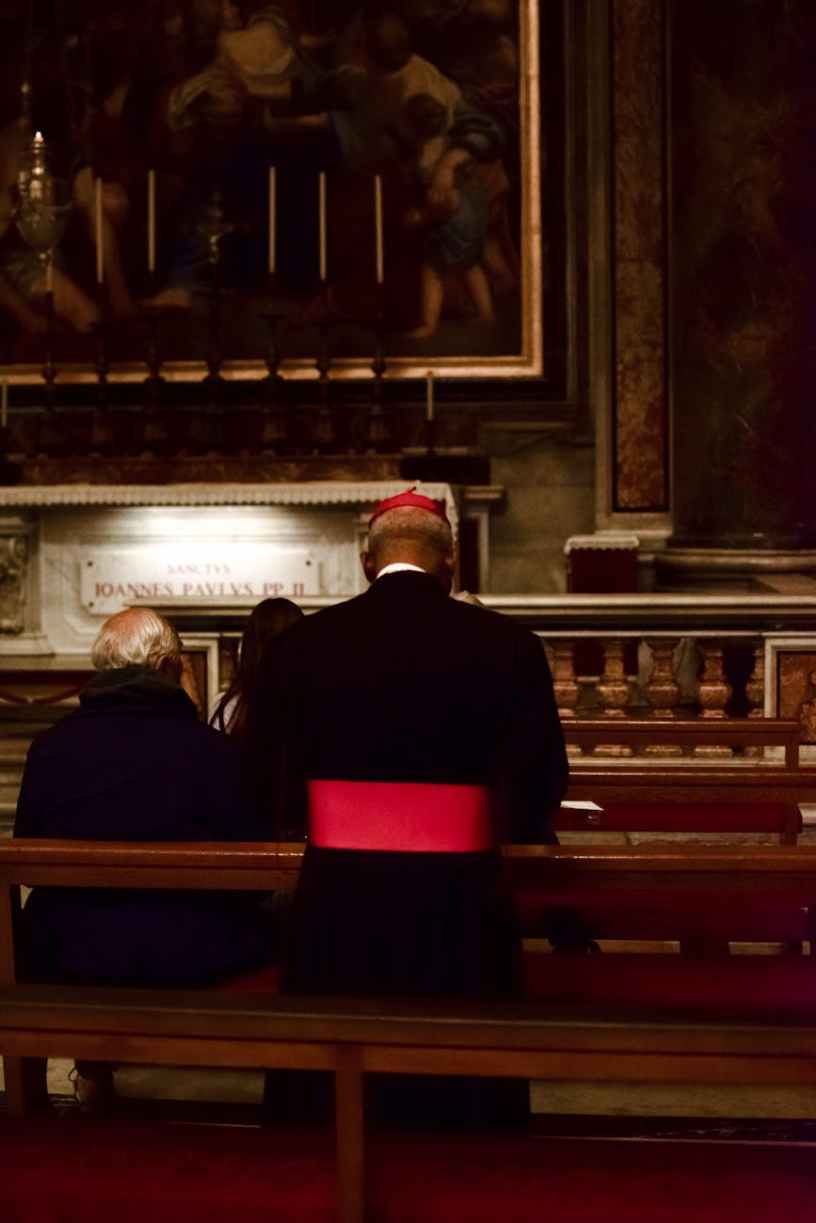
I don’t understand how this fits with the rest of your content. Your unconvincing statements about Christianity are based on the worst of those who have used religion to suit their own needs and who had no interest in the authority of God. Many scholars have studied the scriptures over the past several thousand years and many very intelligent ones say that the Bible is, without question, on a bookshelf by itself. I would agree with much of what you have stated here if you were referring to the Catholic church (the picture looks Catholic) as that organization is responsible for many people thinking they will get to heaven by their own merit. The gospel message is not the message taught by the Catholic hierarchy. Thank God for the Reformation when people got back to the words like those we learn in Ephesians 2:8,9. My experience with Christians has been generally very positive though I know they are sinners just like you and me. And in our time, and in past centuries, there have been fakes that have done nothing by cause problems to for many. If I have to choose between your words and the words of Jesus, I will choose the words of Jesus and the apostles every time.
LikeLiked by 1 person
Thanks for taking the time to respond. I do want to comment on a few things, though, because I think you’re reading my argument through a very specific Protestant lens.
When you say my critique only applies to the “worst” of Christianity, that’s not really what I’m doing. I’m looking at how institutions and interpretations of Christianity have functioned over time, not just individual bad actors. That includes Protestant traditions as much as Catholic ones. The idea that the problems are confined to one branch of the Church doesn’t hold up historically.
On the Catholic point, I’d be careful with that characterization. The Catholic Church does not teach salvation by personal merit alone; that’s a common Protestant critique, but it’s not an accurate representation of Catholic theology. So if we’re going to have this conversation, it helps to start from what each tradition actually teaches rather than how it’s often framed in debate.
As for the Reformation, it’s not as simple as “things got fixed.” It solved some problems, but it also introduced others, including fragmentation and competing claims to authority that still exist today. So I don’t really see it as a clean reset back to some pure form of Christianity.
You’re right that many scholars take the Bible seriously, and I’m not dismissing that. But scholarship isn’t as unanimous as you’re suggesting. There’s a wide range of interpretations, including among people who are deeply committed to the text.
Finally, I’m not asking anyone to choose my words over the words of Jesus. What I am doing is questioning how those words have been interpreted, taught, and used. Those are not the same thing, and that distinction matters.
If we’re going to have a meaningful discussion, I think it has to include the full history and complexity of Christianity, not just the version that comes from one tradition. And the point of the essay is to encourage this kind of discussion.
LikeLike
“That tension matters, because claims of absolute authority still shape law, culture, and politics. If those claims rest on historical processes rather than self-evident divine transmission, then authority itself must be examined honestly.”
I would agree with you here. Men have been making this attempt for thousands of years now and for you to paint such a broad skeptical brush over their efforts doesn’t give them credit for their laborious efforts.
“Thanks for taking the time to respond. I do want to comment on a few things, though, because I think you’re reading my argument through a very specific Protestant lens.”
I appreciate the welcome and I am responding through a Protestant lens but you need to know that on my blog I have been more critical of Protestants than I have been on Catholics over the years.
“When you say my critique only applies to the “worst” of Christianity, that’s not really what I’m doing. I’m looking at how institutions and interpretations of Christianity have functioned over time, not just individual bad actors. That includes Protestant traditions as much as Catholic ones. The idea that the problems are confined to one branch of the Church doesn’t hold up historically.”
I’m glad you explained this and I agree with it. However, you have been so critical in such a short amount of space that I don’t think such a broad brush approach is helpful in light of history.
“On the Catholic point, I’d be careful with that characterization. The Catholic Church does not teach salvation by personal merit alone; that’s a common Protestant critique, but it’s not an accurate representation of Catholic theology. So if we’re going to have this conversation, it helps to start from what each tradition actually teaches rather than how it’s often framed in debate.”
I did not state that Catholic theology believes in salvation by personal merit alone. I merely said that it is part of their salvation message, and I believe it to be wrong. The more I learn about Catholic theology, the more I see that it doesn’t line up with scripture.
“As for the Reformation, it’s not as simple as “things got fixed.” It solved some problems, but it also introduced others, including fragmentation and competing claims to authority that still exist today. So I don’t really see it as a clean reset back to some pure form of Christianity.”
The Reformation certainly wasn’t a complete fix and there will never be one this side of heaven. As long as sinners such as you and I (and everyone else) continue to have opinions there will be problems. Do you think that the Reformation had any positive effect at all? Of course, there was no reset back to the days of the Apostles, but the common man was more able to study the scriptures for themselves to decide on what they would believe. I would consider this to be a huge change in circumstances as the Catholic church had such a stranglehold on power and what was taught to the masses for centuries. And my understanding is that corruption was particularly bad in the few centuries leading up to the Reformation.
“Finally, I’m not asking anyone to choose my words over the words of Jesus. What I am doing is questioning how those words have been interpreted, taught, and used. Those are not the same thing, and that distinction matters.”
I’m glad to hear that. You can question if the words of Jesus that we have today were really His words all you want. You can question how the words that have gotten through to us have been interpreted and taught all you want. I am so glad we have the freedom we do to speak our minds and have our opinions. I also hope that you respect my right to disagree with you on most of what you have written here. I admit that I have no scholarly credentials when it comes to the Bible but that I have been reading about it and about those who are very educated about its history and accuracy for years. Do you have any credentials that I should know about?
“If we’re going to have a meaningful discussion, I think it has to include the full history and complexity of Christianity, not just the version that comes from one tradition. And the point of the essay is to encourage this kind of discussion.”
I would be up to that attempt, but it would last for years given the full history and complexity of thought regarding Christianity. I am also not the best resource for such a discussion, but I would be willing to give it a start at least. Any meaningful discussion does not allow for name calling because that can usually shut a conversation down faster than anything. I am in no hurry to discuss anything so any replies to you might take time. I wouldn’t even know where to start such a discussion so, if you really want to do this, you can have the first comment.
LikeLike