The American Civil War: Civic Life Series (Part 5 of 18)
By Cliff Potts, CSO, and Editor-in-Chief of WPS News
Baybay City, Leyte, Philippines
May 19, 2026
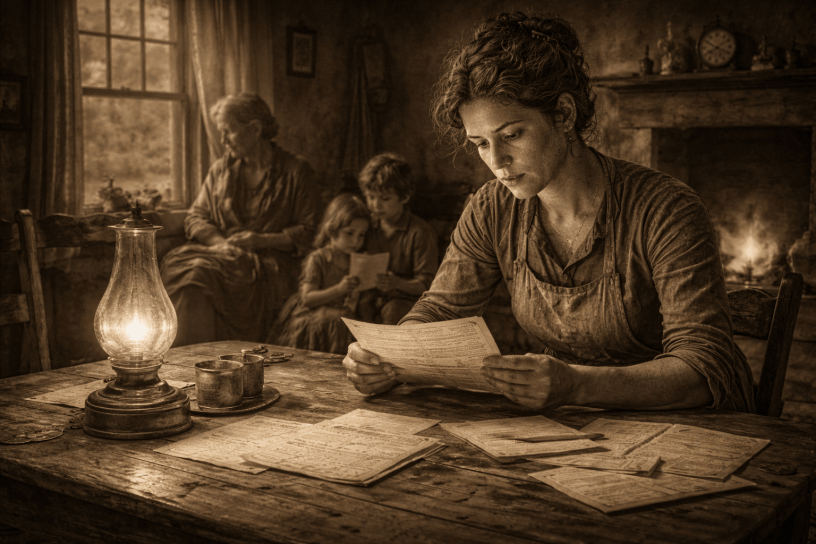
The Civil War moved at the speed of bodies, horses, and paper. For families separated by the conflict, the most persistent companion was not noise or spectacle, but waiting.
Letters were the only reliable bridge between home and front. They carried reassurance, instruction, money, faith, and fear—often all at once. But they also carried delay. A message written in confidence might arrive after circumstances had changed, after battles had been fought, after injuries or deaths had already occurred. Time itself became an adversary.
Writing Into Uncertainty
Civilians wrote without knowing when—or if—their words would be read. They described harvests, illnesses, births, and debts with careful restraint, attempting to protect loved ones from worry while quietly asking for reassurance in return.
This self-censorship was common. Letters softened hardship and minimized fear, not because conditions were manageable, but because emotional stability felt like a duty. To alarm someone already living under threat seemed cruel.
As a result, correspondence often presented a curated version of reality—hopeful, orderly, and incomplete.
Delays as a Daily Condition
Mail routes were disrupted by troop movements, damaged infrastructure, and shifting front lines. Letters might arrive weeks or months late, or not at all. Families learned to measure time not by calendars, but by the absence of news.
Silence took on meaning. A missed letter suggested illness, capture, or death. A sudden gap could provoke panic. Even when messages arrived, they were often outdated, describing circumstances that no longer existed.
Information lag reshaped decision-making. Households acted on incomplete knowledge, making financial and personal choices based on assumptions that might soon be wrong.
The Emotional Economy of the Mail
Receiving a letter was an event. It could steady a household for days. It could also destabilize it. News of injury or hardship at the front might arrive after weeks of anxious speculation, collapsing relief into grief.
The act of waiting demanded emotional regulation. People learned to live with uncertainty as a permanent condition. Anxiety did not disappear; it was managed, rationed, and postponed.
In this way, the war trained civilians in endurance through ambiguity.
Letters as Civic Infrastructure
Beyond personal communication, letters carried civic functions. They transmitted money, instructions, and authorization. Wives sought consent for decisions they were already forced to make. Soldiers requested supplies, documentation, or intervention with authorities.
When letters failed, informal networks stepped in. Neighbors relayed rumors. Newspapers filled gaps with speculation. Churches shared news from the pulpit. None of these substitutes were reliable, but they reduced isolation.
The postal system, strained and imperfect, became a quiet backbone of wartime civic life.
When Answers Never Came
For some families, the waiting never resolved. Letters stopped. Official notices arrived late or not at all. Confirmation of death could take months. Burial locations were unknown. Closure was postponed indefinitely.
This unresolved grief shaped the postwar world. Families learned to live with questions unanswered, with futures altered by absence rather than certainty. The war did not only take lives; it suspended them in limbo.
Looking Back
The Civil War is often remembered through decisive moments and clear outcomes. Civilian life experienced it differently—through delays, silence, and partial information. Letters connected households to the war, but they also reminded people how little control they had over events unfolding far away.
This is the fifth truth of civic breakdown: when communication slows and certainty collapses, people adapt not by knowing more, but by enduring longer.
The war traveled home one envelope at a time. And for many, the most devastating message was the one that never arrived.
References (APA Style)
McPherson, J. M. (1988). Battle cry of freedom: The Civil War era. Oxford University Press.
Faust, D. G. (2008). This republic of suffering: Death and the American Civil War. Alfred A. Knopf.
Mitchell, R. B. (2007). The vacated chair: The northern soldier leaves home. Oxford University Press.
Blight, D. W. (2001). Race and reunion: The Civil War in American memory. Harvard University Press.
Library of Congress. (n.d.). Civil War letters and diaries. Manuscript Division. https://www.loc.gov/collections/civil-war
Library of Congress. (n.d.). Chronicling America: Historic American newspapers. https://chroniclingamerica.loc.gov
Discover more from WPS News
Subscribe to get the latest posts sent to your email.
 WPS News