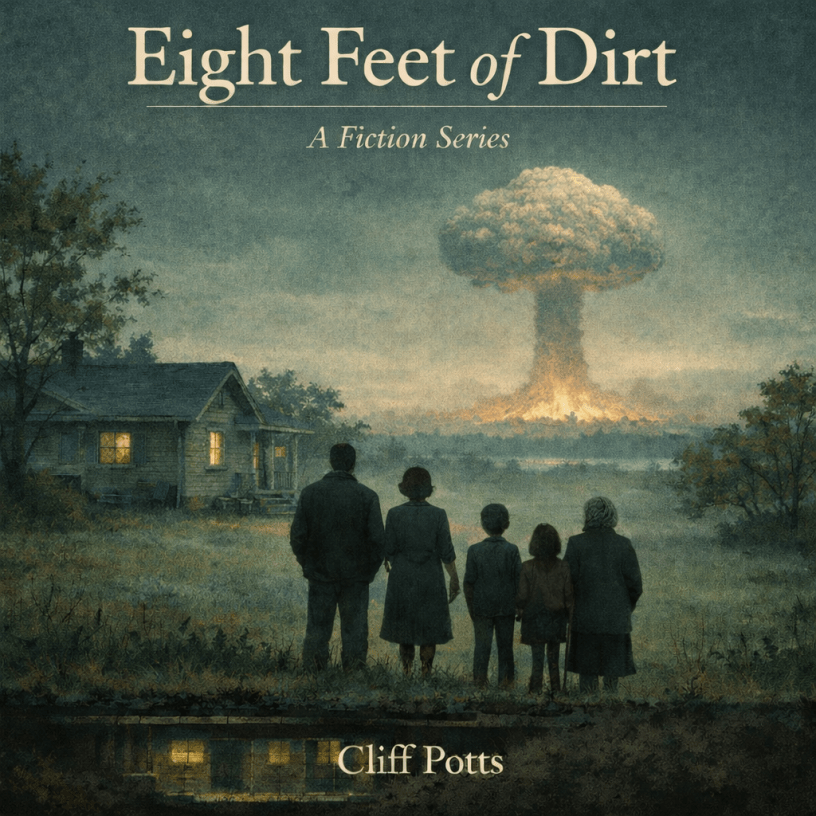
A Fiction Series
Chapter 4: The Impact
By Cliff Potts
Lieutenant Colonel Mark Bragg did not look away from the scope.
He did not need to.
“Range one-two-zero nautical miles,” Carter said.
“Bearing?”
“Still tracking due south.”
“Altitude?”
“Angels two-seven-point-five.”
“Speed?”
“Four-eight-zero knots, steady.”
Bragg nodded once.
The numbers were steady.
That was the problem.
“Interceptor status?”
“Engaged. Multiple contacts. Ammo running low.”
“Nike?”
“Still reloading.”
Bragg exhaled once, slow.
Then:
“Keep tracking.”
Over northern Illinois, the sky had lost any sense of order.
Sabres cut through the formation again, firing short bursts, conserving what they had left. Tracers reached out, but not as many now. Not as long.
A Mustang came in behind a damaged bomber, firing in measured bursts. The rounds struck, walked, but did not finish the job.
The bomber kept going.
A Corsair tried a head-on pass, guns blazing.
The bomber flew through it.
“Control, they’re not breaking!” a pilot shouted.
Another voice cut in, tighter:
“We’re Winchester! Repeat, Winchester!”
Out of ammunition.
The word hung in the air like a verdict.
One bomber fell, trailing fire, breaking apart before it could reach the city.
Another dropped lower, engines failing, turning away without meaning to.
But three remained.
Three held their line.
Three continued south.
In the shelter, the radio hissed.
“…repeat… take cover immediately…”
Then nothing.
Mike sat near the set, one hand resting on the table, listening to static like it might turn into something useful if he waited long enough.
Helen kept the kids close.
Tommy tried not to look scared.
Carol did not try at all.
Margaret stood near the wall, still as something carved.
The lights were still on.
That was all they knew for certain.
Against the far wall sat the extra containers Mike had dragged down over the last two weekends. Covered pails. A couple of metal cans. One old military surplus water can with the paint half gone. Empty, waiting, because he had always figured that if the line held after the strike, even for a little while, they would fill everything they had.
If the line held.
The first bomb fell clean.
No parachute.
No delay.
It detonated just above the target.
Union Station.
At roughly one thousand feet.
The city did not see it.
The city felt it.
A white flash erased the shape of the rail yards in an instant, light slamming into steel, brick, glass, and flesh without distinction. Near the center, the tracks sagged and fused, steel losing its shape under heat too intense to imagine. Beyond that, rails tore loose and bent under the force of the blast, ripped upward and sideways as the shockwave rolled through the yards.
Buildings collapsed.
Windows shattered across miles.
The pressure wave rolled outward, faster than sound, faster than understanding.
In the shelter, the world hit them.
Not as sound.
As force.
The ground slammed.
The walls shuddered hard enough to throw dust from seams and corners.
Carol screamed.
Tommy grabbed the edge of the table.
Helen held them both, pulling them in tight.
The lights flickered.
Then steadied.
Mike did not move.
He just counted.
The second bomb came seconds later.
Stockyards.
Another low airburst.
Another white flash.
Another expanding wall of pressure and heat.
Structures that had stood for decades simply ceased to exist. Steel softened, bent, and dropped where the heat was strongest. Beyond that center, beams twisted under the blast and whole buildings folded into themselves. The city’s ability to move food, process it, ship it, and feed itself was crippled in one stroke.
The second shockwave followed the first, overlapping, reinforcing, turning damage into destruction.
Back in the sky, the third bomber was already damaged.
It had taken hits earlier, fuel leaking, one engine coughing.
But it had held together long enough.
Long enough to complete its run.
The bomb fell.
The aircraft turned too late, too slow, beginning its death spiral toward Indiana.
The detonation came lower than the others.
Not perfectly placed.
Still close enough.
Another flash.
Another concussion.
Another piece of the city erased.
In the radar room, the scope changed.
Not gradually.
Abruptly.
Returns vanished.
Others smeared.
Interference crept in, then surged.
Carter adjusted controls that stopped meaning anything.
“We’ve lost clean tracking,” he said.
Bragg nodded.
Of course they had.
There was not anything left to track that mattered.
In the shelter, the second shock hit harder than the first.
Or maybe it just felt that way.
The structure groaned, a deep, low sound that came from everywhere at once.
Dust drifted from the ceiling.
Carol buried her face in Helen’s side.
Tommy clenched his jaw, eyes wide.
“Is it over?” he asked.
No one answered.
Because no one knew.
The radio crackled.
For a moment, something came through.
“…Chicago… multiple… remain sheltered…”
Then it dissolved back into static.
Mike leaned closer.
Nothing.
Minutes passed.
Or seconds.
It did not matter.
Time had lost its shape.
The lights flickered again.
Held.
Helen looked at Mike.
“Is that it?”
Mike did not answer right away.
He listened.
Not to the radio.
To everything else.
The silence above them.
The absence of sirens.
The way the structure had settled.
Finally, he said:
“For now.”
Then he looked toward the containers lined against the wall.
“Tommy,” he said quietly. “Bring me the can.”
Tommy looked at him, then at the old water can.
“That one?”
“Yeah.”
Helen understood before the boy did.
“You think the line’s still live?”
“I think if it is, it won’t be forever.”
Tommy brought the can over.
Mike took it, set it beside the half-bath door, and looked at the faucet without touching it yet.
Not until the shaking had fully stopped.
Not until he was sure the house above them was done moving.
Margaret opened her eyes.
She had not moved.
Not once.
Not during the impacts.
Not during the shaking.
She looked at the door.
Then at the ceiling.
Then at nothing in particular.
Her voice was calm.
Flat.
Certain.
“That was only the beginning.”
Discover more from WPS News
Subscribe to get the latest posts sent to your email.

