By Cliff Potts, CSO, and Editor-in-Chief of WPS News
Baybay City, Leyte, Philippines — May 24, 2026 — 21:05 PHST
The United States will observe Memorial Day on May 25, 2026. Across America, flags will be raised, cemeteries will receive visitors, and old photographs will briefly return to kitchen tables and social media timelines. Some families will remember fathers, mothers, sons, daughters, brothers, sisters, and friends who never came home from war. Others will simply enjoy the long weekend without thinking much about how the holiday began.
But Memorial Day is not uniquely American.
Almost every country eventually creates a day for its honored dead. The names are different. The flags are different. The uniforms change. The language changes. The cemeteries look different from one continent to another. Yet the pattern repeats itself throughout history with almost mechanical regularity. Nations send young people into war. Many do not return. Time passes. The survivors grow old. The arguments that began the conflict fade into textbooks and political speeches. Eventually, only the names remain.
From the Philippines, Memorial Day carries a different atmosphere than it does inside the United States itself. The Pacific still remembers the Second World War in ways that parts of America sometimes no longer visibly do. Across Southeast Asia and the Pacific islands, the war never fully became abstract history. It remains tied to geography, family stories, old ruins, shipwrecks, and cemeteries spread across islands that once became battlefields for empires.
Memorial Days Around the World
In the United States, Memorial Day emerged after the American Civil War and gradually evolved into a national day honoring military personnel who died in service (U.S. Department of Veterans Affairs, 2025). In the United Kingdom and Commonwealth nations, remembrance traditions center around Remembrance Day on November 11, tied to the end of the First World War. Australia and New Zealand observe ANZAC Day every April 25, remembering soldiers who fought at Gallipoli during World War I and later conflicts (Australian War Memorial, 2025).
France maintains extensive memorial traditions connected to both world wars. Germany developed a more restrained remembrance culture after the catastrophe of Nazism and the Second World War, often emphasizing mourning, responsibility, and the warning of “never again” rather than military celebration (Federal Agency for Civic Education, 2024).
The Philippines carries its own layered history of remembrance. Filipino and American forces fought together during the Second World War against Imperial Japan. The islands became one of the war’s major battlegrounds. Entire cities were destroyed. Civilian casualties were enormous. Even today, the remains of the war occasionally reappear physically through wreckage, unexploded ordnance, abandoned fortifications, and old memorial sites spread across the archipelago.
Every nation remembers differently because every nation experienced war differently.
What Happens After the War Ends
Most wars eventually become difficult for later generations to emotionally understand.
The soldiers who fought them age and disappear. Political slogans lose their force. Borders change. Governments change. Entire ideologies collapse. What once felt immediate and existential becomes archival material stored in libraries, museums, family attics, and digital databases.
This creates an uncomfortable reality surrounding memorial holidays throughout the world. The people being honored often died for causes, strategies, alliances, or geopolitical disputes that later generations barely understand. Some wars are still viewed as necessary. Others remain controversial decades later. Yet memorial traditions usually continue regardless of changing political interpretations.
That may be because Memorial Day is ultimately less about governments than about absence.
A missing chair at a family table. A folded flag in a closet. A name engraved in stone. A photograph slowly fading at the edges.
The political reasons for wars may continue to be debated for generations. The dead themselves usually do not get to explain what they believed they were sacrificing for.
The Pacific Still Remembers
Living in the Philippines changes how an American sees military history.
The Pacific theater of World War II was vast beyond modern comprehension. Millions died across thousands of miles of ocean and islands. Entire communities were pulled into the machinery of global conflict. Leyte itself remains historically connected to one of the largest naval battles in human history during the liberation of the Philippines in 1944 (Britannica, 2025).
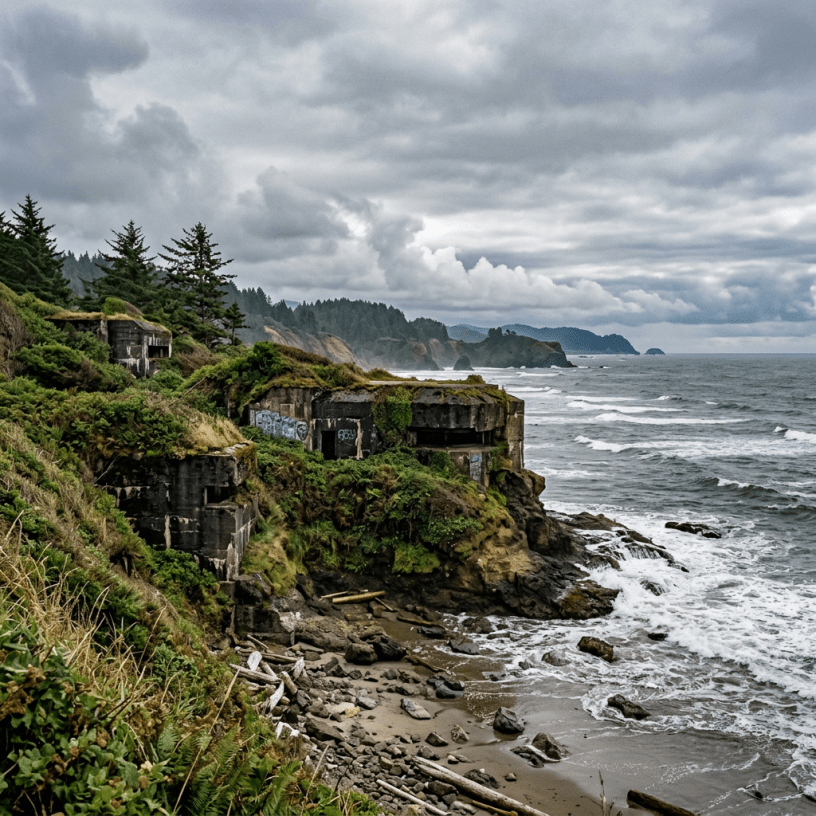
Even now, there are places across the Pacific where the war still feels physically close beneath the surface. Old airfields remain visible. Memorials stand quietly beside modern roads. Elderly residents still carry family memories connected to occupation, liberation, hunger, bombings, and displacement.
History never completely leaves places where large numbers of people died violently.
It settles into the landscape.
The Archivist’s Problem
One of the uncomfortable truths about memorial observances is that memory itself eventually becomes fragile.
Most people who died in twentieth-century wars are no longer remembered personally outside their own families. In another generation, many of those family memories will disappear as well. Records survive longer than people do. Archives survive longer than conversations. Eventually, history depends almost entirely upon preservation.
That is part of the reason archives matter.
Without archives, the dead disappear twice: first physically, then historically.
Memorial holidays serve as temporary interruptions in that process. For a brief moment each year, societies pause and attempt to remember people who were gradually being absorbed into the past.
After the Flags Are Folded
The modern world often treats holidays as commercial events. Memorial Day sales, travel weekends, and entertainment campaigns now dominate much of the public atmosphere surrounding the American holiday. Similar commercialization exists elsewhere around the world as well.
Yet beneath all of that noise, something older still survives.
At cemeteries across many nations this month and throughout the year, visitors will continue placing flowers beside graves. Old veterans will continue attending ceremonies in shrinking numbers. Families will continue telling stories that younger generations only partially understand. Somewhere, someone will unfold an old letter or look at a faded photograph and remember a person the rest of the world has forgotten.
Eventually, nearly every war becomes history. Then memory. Then silence.
But for at least one day, many nations still stop long enough to remember the honored dead who gave up everything they had, whether or not later generations fully understand why.
If this work helps you understand what’s happening, help me keep it going: https://www.patreon.com/cw/WPSNews
For more from Cliff Potts, see https://cliffpotts.org
References
Australian War Memorial. (2025). ANZAC Day. https://www.awm.gov.au
Britannica. (2025). Battle of Leyte Gulf. https://www.britannica.com
Federal Agency for Civic Education. (2024). German remembrance culture after World War II. https://www.bpb.de
U.S. Department of Veterans Affairs. (2025). History of Memorial Day. https://www.va.gov
Discover more from WPS News
Subscribe to get the latest posts sent to your email.

