By Cliff Potts, CSO, and Editor-in-Chief of WPS News
Baybay City, Leyte, Philippines — May 24, 2026 — 10:05 PHST
One of the stranger things about living outside the United States is that American holidays sometimes sneak up on you unexpectedly.
This year, Memorial Day announced itself to me through a YouTube advertisement for a furniture sale.
That felt appropriate somehow.
Modern America often treats Memorial Day as the unofficial beginning of summer. Mattress sales. Appliance discounts. Car dealership promotions. Barbecue weekends. Travel traffic. Most of the original religious and cultural meanings surrounding remembrance of the dead have faded into the background.
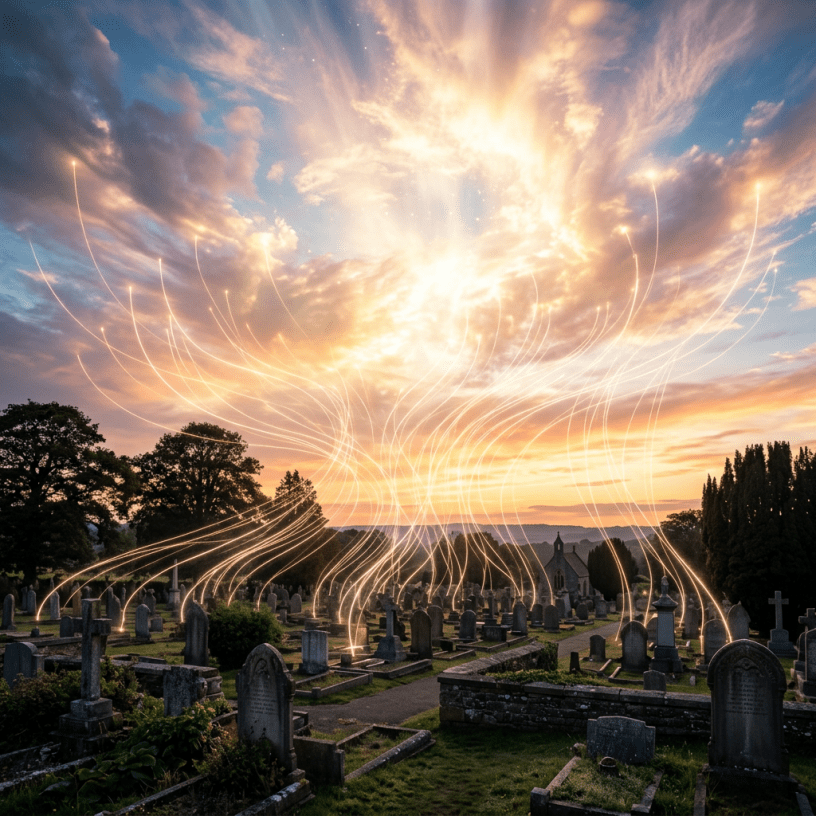
Yet for much of my childhood, Memorial Day meant cemeteries.
Every year my mother and I visited the graves of family members across Chicago. We did not usually bring flowers. Flowers were expensive, and my parents were never wealthy. My mother worked two jobs much of the time to keep our family functioning. Money went toward survival first.
As a child, I never fully understood why we went.
As an adult Catholic, I understand now that I misunderstood the entire purpose of the ritual.
The Purpose Was Never Decoration
Many people today treat cemetery visits as symbolic gestures or public displays of remembrance. Flowers become visible proof that someone cared enough to stop by.
Catholic tradition approaches graves differently.
The point is not primarily to leave something behind for the living to admire. The point is prayer.
In Catholic theology, many souls undergo purification after death before entering heaven completely. This state, traditionally called purgatory, is not viewed as eternal damnation but as a process of spiritual cleansing and preparation (Catechism of the Catholic Church, 1994).
The living pray for the dead because the dead are still understood as spiritually connected to the living.
That was what my mother was doing all those years.
Not decorating graves. Not performing grief publicly. Not maintaining appearances.
She was praying for the dead.
The Book Protestants Removed
The scriptural foundation for prayers for the dead comes primarily from the Second Book of Maccabees, specifically 2 Maccabees 12:46:
“Therefore he made atonement for the dead, that they might be delivered from their sin.”
That passage appears in Catholic and Orthodox Bibles but not in most Protestant versions of scripture. During the Reformation, Protestant traditions removed several books from the Old Testament canon, including 1 and 2 Maccabees, Tobit, Judith, Sirach, Wisdom, and Baruch. Catholics refer to these as the Deuterocanonical books.
This difference matters because it shaped how Christians understood death itself.
Without Maccabees, prayers for the dead become much harder to justify theologically. With it, cemetery visits become part of an ongoing spiritual relationship between the living and the dead.
The Dead Remain Part of the Family
I did not understand any of this as a child walking cemetery rows beside my mother.
I thought we were visiting places.
She believed we were helping people.
That is a very different thing.
Catholicism often treats death less as total separation and more as transition. The dead remain spiritually connected to the living through prayer, memory, and intercession. A cemetery therefore becomes something more than a storage field for bodies. It becomes a place where obligations of love continue beyond death.
Seen through that lens, flowers become optional.
Prayer is the important thing.
What Gets Forgotten
Modern secular culture often struggles to understand older religious rituals because it interprets them psychologically instead of spiritually.
People assume cemetery visits exist mainly to comfort the living.
Historically, Catholics often understood the visits differently. The prayers were intended to aid the dead themselves.
That distinction changes the entire emotional meaning of Memorial Day.
My mother was not merely remembering her parents, relatives, and family members. She believed she still owed them something.
Looking back now, I think that belief gave those cemetery visits their seriousness and consistency. Even when money was tight. Even when life was exhausting. Even when nobody else in the family came along.
The Quiet Work of Remembering
As I get older, I increasingly believe one of the great hidden fears of human life is disappearance.
Not merely death. Disappearance.
To be forgotten. To become unreachable. To vanish beneath overgrown grass and flat stones nobody can locate anymore.
Perhaps that is why Catholic prayers for the dead still resonate so deeply with me now.
They reject the idea that the dead simply become irrelevant.
The prayers say instead: you are still part of us, and we are still responsible for you.
That is what my mother was trying to teach me all those Memorial Days, even if I only finally understood it decades later.
If this work helps you understand what’s happening, help me keep it going: https://www.patreon.com/cw/WPSNews
For more from Cliff Potts, see https://cliffpotts.org
References
Catechism of the Catholic Church. (1994). Part one: The profession of faith. Libreria Editrice Vaticana.
Holy Bible, Revised Standard Version Catholic Edition. (1966). 2 Maccabees 12:46.
United States Conference of Catholic Bishops. (2025). Purgatory and prayers for the dead. https://www.usccb.org
Discover more from WPS News
Subscribe to get the latest posts sent to your email.

