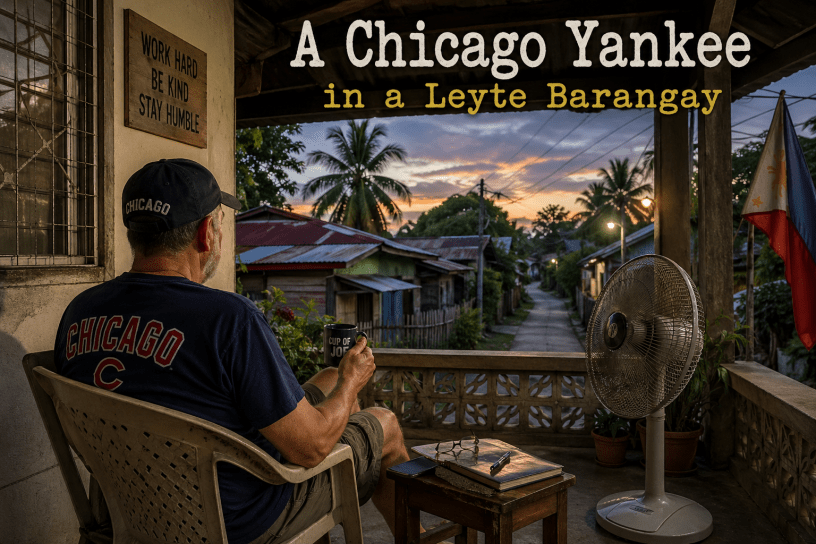
By Cliff Potts, CSO, and Editor-in-Chief of WPS News
Baybay City, Leyte, Philippines — June 2, 2026
The first 30 days in the Philippines are not a transition. They are a reset.
If you arrive expecting a softer, cheaper version of the United States, you will spend that first month confused, frustrated, and tired. Nothing is quite where you expect it to be. Systems do not behave the way you are used to. Small tasks take longer. Simple things are not simple anymore.
This is not failure. This is the adjustment period.
The System You Just Entered
The Philippines operates on a different rhythm. It is not broken. It is not inefficient by its own standards. It simply prioritizes different things.
Paperwork takes time. Offices may require multiple visits. Processes that would be handled digitally in the United States often require physical presence and patience. The Bureau of Immigration is part of that reality. Visa extensions are routine, but they are not instant. You will learn quickly that preparation matters, and so does showing up early.
Cash is still widely used. Not every place accepts cards. ATMs exist, but they are not always where you expect them, and they are not always working when you need them. Plan ahead.
Daily Life: What Changes Immediately
You notice it within days.
Water is not always hot, especially at night. Internet service may work well one hour and struggle the next. Power outages happen. None of this is unusual locally, but it is unfamiliar if you are coming from a highly standardized system.
Supplies are the quiet surprise. Things you assumed were universal are not. The grocery store carries what people here use, not what you used back home. You begin to understand that “normal” is regional, not global.
Food: Adapt or Get Frustrated
Food is one of the first places expectations collide with reality.
You can find familiar items, but not always the exact version you remember. Recipes change because ingredients change. You learn to substitute or you learn to go without.
There are anchors. Places like Shakey’s Pizza in Baybay City offer something close enough to familiar to steady you. It is not identical to what you had in the United States, but it does not need to be. It serves a different purpose here.
Local chains matter more. Jollibee is effectively the Filipino counterpart to McDonald’s. Fried chicken with rice is the standard, spaghetti is sweeter than what Americans expect, and the burgers are smaller and messier. It works, and it fills the gap. Fried chicken in general is a national constant. When in doubt, fried chicken will carry you.
For quick bites, Dunkin’ is everywhere. For local flavor, roadside vendors and small shops often provide better value than anything branded.
If you make it to Tacloban City, even McDonald’s feels different. Ingredients are fresher, preparation is tighter, and in some cases, it is better than what you remember in the United States.
And if you like seafood, the wet markets will make that clear immediately. If you do not, you learn to navigate around them.
Provincial Life vs. Manila
Where you live matters.
In Leyte and other provincial areas, life is slower and simpler. Selection is limited. If something is not locally available, you either wait, substitute, or plan a trip.
Manila is different. It is where systems converge. If you need something specific—documents, imported goods, specialized services—there is a strong chance it exists there. Over time, you will hear the same advice repeated:
If you need to get something done, you may need to go to Manila.
That is not a complaint. It is a logistical reality.
Getting Around
Transportation is one of the first systems you have to learn, and it is not always obvious.
The Jeepney is one of the most recognizable parts of that system. Originally built from modified World War II U.S. military jeeps, they were repurposed and expanded into public transportation. What started as necessity became a national symbol. They are practical, colorful, and still widely used.
In Leyte, you will also encounter buses, vans, and what locals call “public cars.” These are typically modified pickup trucks—often Isuzu—with two long bench seats in the back and a covered top to keep passengers dry. They are not designed for comfort, especially if you are a larger American, but they are inexpensive and efficient.
A typical ride from a barangay to downtown Baybay can run around 20 pesos. Round trip, about 40 pesos. All you need to do is reach the main road, flag one down, and it will stop. There are designated stops, but the system is flexible.
You learn quickly: transportation here is less about schedules and more about movement.
Daily Anchors in Baybay
You build routines around what is available.
In Baybay City, places like Metro Mall, Price Mall, and Puregold become regular stops. They do not replicate American retail, but they provide enough consistency to stabilize daily life.
Smaller chains and local vendors fill in the rest.
What You Will Miss
It is not what you expect.
You will miss consistency. You will miss predictability. You will miss knowing exactly how long something will take and being right.
You may also miss having someone nearby who understands the system without explanation.
That absence is not always obvious at first, but it becomes clear as you navigate daily life.
Workarounds
This is where the first 30 days start to pay off.
You begin keeping lists. What you cannot find locally goes on a future Manila run. You identify which stores carry which items. You learn which times of day are more reliable for errands.
You start building small systems to replace the larger ones you no longer have.
You adapt.
The First Month, Defined
The first 30 days are not about mastering anything. They are about recalibrating expectations.
You are not replicating your previous life in a different place. You are constructing a new version of it using what is available here.
The sooner you accept that, the easier everything becomes.
If this work helps you understand what’s happening, help me keep it going: https://www.patreon.com/cw/WPSNews
For more from Cliff Potts, see https://cliffpotts.org
References
Bureau of Immigration. (n.d.). Philippine immigration services and visa extensions. Government of the Philippines.
Department of Tourism. (n.d.). Travel and living information for foreign nationals in the Philippines. Government of the Philippines.
Numbeo. (2026). Cost of living in the Philippines. Retrieved 2026.
World Bank. (2025). Philippines economic and infrastructure overview. World Bank Publications.
Discover more from WPS News
Subscribe to get the latest posts sent to your email.

