By Cliff Potts, CSO, and Editor-in-Chief of WPS News
Baybay City, Leyte, Philippines — June 13, 2026, 9:05 p.m.
After writing about what today’s ten-year-old may encounter by 2035, one more thought would not leave me alone.
This coming world is not just something that will happen to the Philippines.
It is something the Philippines can seize, if we are serious about it.
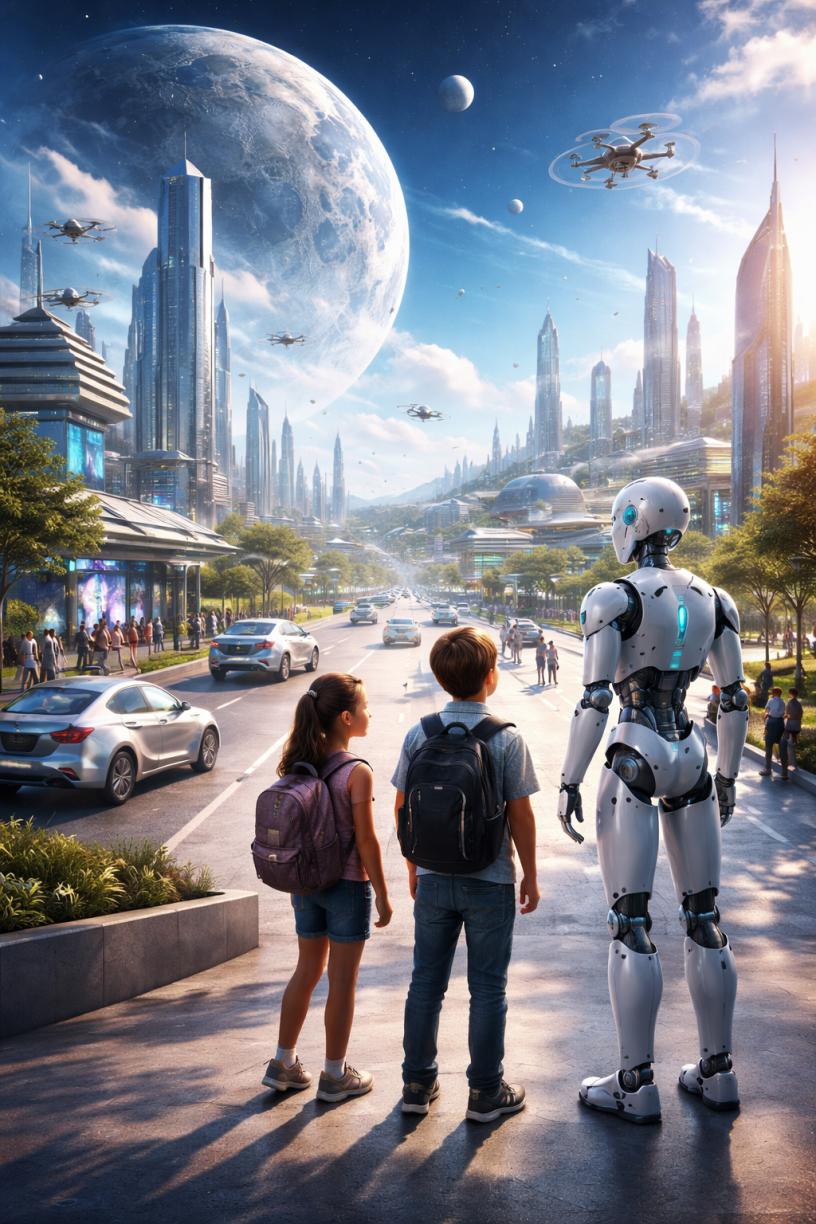
That is the point I want to drive home. We should not teach our children merely to adjust to the future. We should not prepare them only to survive inside systems built by other countries. We should teach them how to help build those systems. We should teach them how to take part in technology, infrastructure, energy, medicine, communications, and the new industries that may shape the next ten years.
If we do not do that, someone else will, and we will once again be left using what other people built.
Many Filipinos are used to the idea that our role is to adapt. We are good at adapting. We are good at hardship. We are good at enduring. But endurance should not be the highest goal of a nation. It is not enough to be good at handling shortages. It is not enough to be good at carrying on while everything is difficult. A nation must also know how to claim the future.
That is what the Philippines should be discussing now.
If artificial intelligence becomes a normal part of daily life, then Filipino children must not only know how to use it. They must know how to examine it, manage it, and protect themselves from the lies and manipulation it can produce. They must know the difference between help and control. They must know how to think even in a time when a machine offers answers to everything.
If energy becomes more important to every nation, then the Philippines must take it seriously as an archipelagic country. Reliable electricity is no longer just a convenience. It is a foundation. If the young of the future are going to live in a world powered by data, automation, communications, and digital systems, then we cannot keep treating brownouts, weak grids, and poor infrastructure as if they are normal parts of life. They are not normal. They should not be accepted.
If medicine becomes more digital, more continuous, and better at spotting illness early, then there must be Filipino children who grow up to be nurses, engineers, technicians, programmers, researchers, and doctors who are not merely users of imported systems. There must be Filipinos who can build, run, repair, and understand those systems. A country that lives only by using what others created will always stand lower on the ladder.
If the world of 2035 becomes more connected, then the question is not only whether we are online. The question is what we do with that connection once we have it. Will we use it to expand education? To strengthen local business? To build a stronger research culture? To connect cities, provinces, and regions more effectively? Or will we use it only for endless entertainment and wasted noise?
That is the kind of choice that makes a difference for a nation.
The Philippines has many young people. That is a strength. The Philippines also has many people who can function in more than one language. That is a strength too. The country has experience with hardship, migration, adaptation, and living in the middle of larger global forces. That can also become a strength, if we know how to use it. But strength means little without direction. And there is no direction without serious attention to education, infrastructure, and national thinking.
I do not mean every child must become an engineer. That would be foolish. What I mean is that the whole system must stop teaching the young that their highest purpose is simply to find a place inside a story written by someone else. They should be taught that they can help write their own chapter of the future.
That begins in school, but it does not end there.
Children must be taught how to think, not only how to memorize. They must be taught how to write clearly, examine information, identify lies, work with others, and look at problems larger than their own household. They must be taught that technology is not magic. It is a system. And systems are built by people. If people build them, people can also change them.
That is the kind of lesson that builds a country.
There is something else we need to face. The future will not wait until we feel ready. It will not say, “Take your time, Philippines. Catch up later and I will come back for you.” That is not how history works. Other countries are moving now. They are strengthening schools, research bases, energy systems, logistics, and digital capacity. We are not going to win by hoping. We need action. We need will. We need adults who are serious when they talk about the young.
Because the truth is that too many adults like to talk about children while refusing to do what children actually need.
That must stop.
If we want Filipino children to become major players by 2035, then we need to begin now by telling the truth. Their future is not guaranteed. The world is not fair. Technology can be a tool of help or a tool of domination. The climate may grow harsher. The labor market may become harder and less patient. Even so, there is still a place we can claim, if we choose to take it.
I am not saying this will be easy. I am not saying the Philippines will suddenly become the center of everything. I am saying there is an opening. And other countries may recognize that opening faster than we do. That is why we need to return to the serious idea of preparing the next generation not only for survival, but for building.
The child in Baybay today, in Cebu today, in Manila today, in Davao today, and anywhere else in the Philippines today should not be taught only how to follow the future.
They should be taught how to claim it.
If we fail, they may become workers inside systems designed elsewhere.
If we succeed, they may become some of the people who help build the next world.
That is the difference.
And that is worth fighting for.
This essay is written by Cliff Potts, Editor-in-Chief of WPS News. WPS News has been active in one form or another on the internet since 2009; for more information, visit https://cliffpotts.org
If this work helps you understand what’s happening, help me keep it going: https://www.patreon.com/cw/WPSNews
APA References
UNESCO. (2024). Guidance for generative AI in education and research.
UNICEF. (2024). The state of the world’s children: The future of childhood in a changing world.
World Economic Forum. (2025). The future of jobs report 2025.
Discover more from WPS News
Subscribe to get the latest posts sent to your email.
 WPS News