By Cliff Potts
Baybay City, Leyte, Philippines — June 17, 2026
This was written on March 20, 2026, but it didn’t feel like something that belonged to March. It felt like something that needed to sit for a while, like a bad taste you don’t quite get rid of.
I joined an expat group on Facebook.
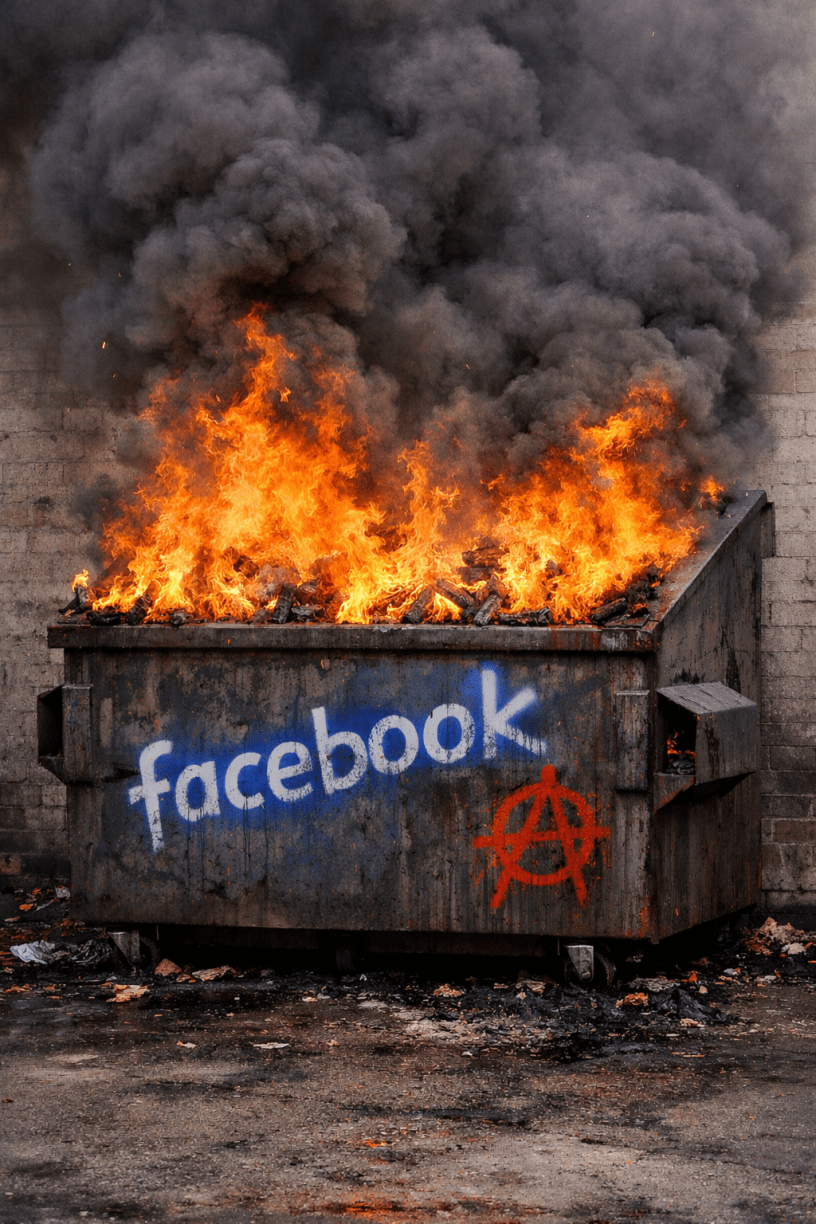
Let’s not pretend we don’t know what Facebook is. It’s the internet’s long-running dumpster fire—still burning, still attracting people, still somehow considered normal.
I introduced myself. I said my wife had died. People offered condolences. That part was human. That part was real.
And then it turned.
They went after my profile picture.
They went after a typo.
A typo.
I said I was a professional writer, and because one word slipped through wrong, suddenly that was the story. Not the introduction. Not the loss. Not the fact that I was a human being trying to connect.
The typo.
Then came the follow-up hits—because once it starts, it never stays at one.
“Nobody cares what you do for a living.”
More comments about the typo.
Pile-on behavior. Cheap shots. Low-effort cruelty dressed up as humor.
And somewhere in the middle of that, someone decided the appropriate response was to tell me they were horny and wanted to cam.
That’s the internet we built.
Not “they.” Not “them.”
We.
Because this didn’t come out of nowhere. It was trained into the system early. The first generation that grew up online—Gen X as teenagers and young adults—normalized sarcasm, mockery, and one-upmanship as the default tone. Not because they were uniquely bad, but because the environment rewarded it. If you could dunk on someone, you got attention. If you got attention, you got status.
And nobody ever hit the brakes.
What started as edgy became normal. What was once occasional became constant. And what used to be limited to certain corners of the internet spread everywhere.
Now it’s not even a choice—it’s reflex.
Say something real, and someone will try to break it.
Make a mistake, and someone will try to define you by it.
Show up as a human being, and someone will try to turn you into content.
That’s not community. That’s performance.
I left the group.
A few people reached out afterward, trying to connect, trying to be decent. And that matters. It means the rot isn’t total.
But here’s the hard truth: the decent people are playing defense in a system built for the worst behavior.
And that system isn’t broken.
It’s working exactly as designed.
So no, this isn’t about one bad Facebook group. It’s about the environment we’ve normalized. It’s about the expectation that if you step into a public online space, you should expect to be picked apart, misread, or turned into a joke.
That’s not inevitable.
That’s learned.
And anything learned can be unlearned.
But only if people stop pretending this is just “how the internet is.”
It’s not.
It’s how we allowed it to become.
And it’s exactly why WPS News exists—to document reality without turning people into targets for sport.
Discover more from WPS News
Subscribe to get the latest posts sent to your email.
 WPS News