By Cliff Potts, Editor-in-Chief, WPS News
BAYBAY CITY, LEYTE, Philippines, July 7, 2026 — 0700 PHT
Support WPS News:
https://www.patreon.com/WPSNews
The Trial Begins
Vice President Sara Duterte’s impeachment trial opened Monday in the Philippine Senate, and the cleanest way to describe Day 1 is this: the corruption charges are serious enough to require a real examination, the political stakes are obvious enough to make neutrality difficult, and the country is now watching both a legal proceeding and a dynastic power struggle at the same time.
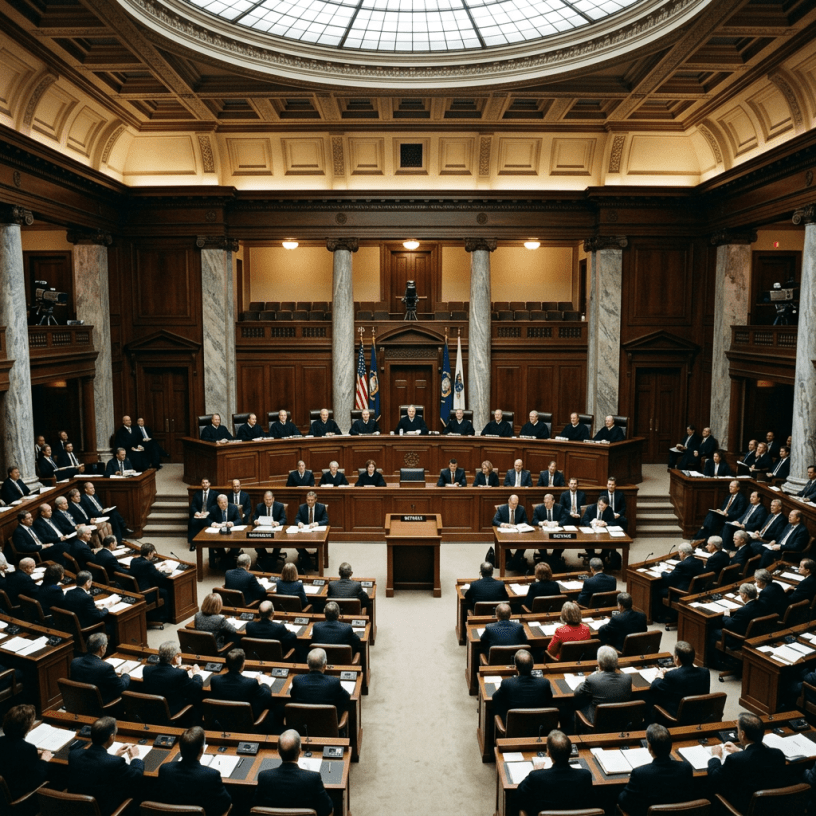
The Senate convened as an impeachment court on July 6, with senators serving as judges in the case against Duterte. The proceeding is historic because it is the first impeachment trial of a sitting Philippine vice president. Duterte did not personally appear at the opening session and was represented by her lawyers. Security around the Senate was heavy, with more than 6,000 police officers deployed and protesters outside calling for her conviction.
Opening day was not just about evidence. It was also about procedure, control, and credibility. Reuters reported that the trial began amid Senate divisions, with Duterte allies and rival lawmakers clashing over procedural rules, including the election of the presiding officer, which delayed the start of proceedings.
What Duterte Is Accused Of
The charges against Duterte fall into four broad areas: alleged misuse of public funds, unexplained wealth, bribery or corruption, and alleged threats against President Ferdinand Marcos Jr., First Lady Liza Araneta Marcos, and a former House speaker. Prosecutors framed the charges as connected parts of one larger case about public trust, not separate political complaints thrown into one basket.
That distinction matters. If prosecutors can prove the allegations, this is not just a paperwork dispute. It becomes a direct challenge to whether Duterte should remain in office. If prosecutors cannot prove the allegations, then the trial risks looking like exactly what Duterte’s camp says it is: a political operation aimed at removing a powerful rival before 2028.
That is the hard part. Both things can be true at once. A corruption case can be real, and politicians can still use it for advantage. Political motivation does not automatically make evidence false. But serious allegations do not erase the need for a fair process.
The Confidential Funds Question
The confidential funds issue sits near the center of the case. Earlier impeachment complaints and related filings have focused on funds connected to the Office of the Vice President and the Department of Education, which Duterte previously headed. One complaint alleged that Duterte failed to fully disclose assets in her Statements of Assets, Liabilities, and Net Worth and may have amassed unexplained wealth disproportionate to lawful income.
The broader controversy includes allegations over hundreds of millions of pesos in confidential funds, questioned liquidation, and disputed documentation. ABS-CBN reported in April that the Commission on Audit denied a petition related to a notice of disallowance involving ₱73.287 million in confidential funds, raising the question of whether Duterte and other officials may have to return the money.
These are still allegations in the impeachment context. They are not convictions. But they are not minor bookkeeping issues either. Confidential funds are already difficult for the public to audit because they involve sensitive spending. That makes accountability even more important, not less. If money was properly spent, the defense needs to show that. If money was improperly spent or falsely liquidated, the Senate needs to take that seriously.
The Threat Allegation
The most explosive allegation involves Duterte’s public remarks about having Marcos, the First Lady, and Romualdez killed if she herself were killed. Prosecutors argue that this is not ordinary political speech but a threat against constitutional order. Reuters reported that the prosecution described Duterte’s own recorded public statements as a major part of the evidence.
That part of the case may be easier for the public to understand but harder for the Senate to judge cleanly. The remarks were public. The dispute is over meaning, intent, legal weight, and whether they rise to the level of impeachable conduct. Duterte’s defense argues that the case is politically driven and that impeachment should not be abused as a weapon against an elected official.
The Defense Argument
Duterte’s legal team is not simply saying “not guilty.” It is attacking the process itself. The defense argues that the trial is an attempt to undo the choice of more than 32 million voters and remove a vice president through politics rather than evidence. Duterte has denied wrongdoing and described the impeachment as politically motivated.
That argument will matter because impeachment is not a normal criminal trial. The Senate is not deciding whether Duterte goes to prison. It is deciding whether she should be removed from office and potentially barred from holding public office. Conviction requires 16 votes out of 24 senators.
That means the verdict will depend on evidence, yes, but also on credibility. The process has to look fair. If the Senate appears to be rushing toward a predetermined outcome, even a conviction based on serious evidence may fail the public legitimacy test. If the Senate gives the defense room to answer the charges and prosecutors still prove the case, then the result will be much harder to dismiss as pure politics.
The Politics Are Impossible to Ignore
The political background is not subtle. Marcos and Duterte ran together in 2022, joining two of the most powerful political names in the country. That alliance has collapsed into open warfare. Duterte is the daughter of former President Rodrigo Duterte, who was arrested last year on an International Criminal Court warrant and transferred to The Hague. Sara Duterte has blamed Marcos for her father’s arrest and handover.
The timing also matters. Marcos is constitutionally barred from seeking another presidential term when his term ends in 2028. Sara Duterte has been widely seen as a major 2028 presidential contender, and Reuters reported that she has said she plans to run for president. If she is convicted and disqualified, the impeachment would not merely remove a sitting vice president. It could reshape the next presidential election before voters even get there.
That is why this smells political even if parts of the case are legitimate. It is not paranoid to notice the political stakes. It would be naive not to notice them. The question is whether the political stakes are driving the case, or whether a real accountability case happens to have enormous political consequences.
More Pressure Around the Senate
The atmosphere around the trial became even more charged when Duterte ally Sen. Rodante Marcoleta was arrested on a plunder charge just hours before the Senate trial opened. Reuters reported that Marcoleta, who was due to sit as a senator-judge, was accused by the Ombudsman’s office of accepting ₱75 million from private donors during his 2025 Senate run, allegedly violating anti-corruption laws. Marcoleta said he would face the charges.
Reuters also reported that Sen. Jose “Jinggoy” Estrada, another Duterte-aligned senator, had been detained last month on plunder charges related to alleged kickbacks from infrastructure projects and suspended from Senate duties.
Those cases are separate from Sara Duterte’s impeachment, but politically they land in the same moment. Supporters of Duterte will see pressure. Critics will see long-delayed accountability. The public will have to sort through both possibilities without pretending the timing does not matter.
The Earlier Legal Fight
This trial also comes after an earlier impeachment battle was stopped by the Supreme Court. In 2025, the Court ruled that a House impeachment complaint against Duterte was barred by the one-year rule and said due process and fairness apply during all stages of impeachment. The Court also stated that it was not absolving Duterte of the charges, and that any later complaint could only be filed starting February 6, 2026.
That matters because Duterte’s side can argue process, while prosecutors can argue that the Court did not clear her on the merits. In plain English: the earlier case was blocked on constitutional procedure, not because the allegations were proven false.
What To Watch Next
The real test now is whether the Senate can keep the trial focused on evidence. The public should watch for documents, witness testimony, audit findings, and how the defense answers each claim. The public should also watch whether senators behave like judges or like campaign operatives wearing robes.
For now, the safest conclusion is this: Sara Duterte’s impeachment trial truly began Monday. The charges are serious. The politics are unavoidable. The corruption allegations deserve scrutiny. The defense deserves a fair hearing. And the Senate has to prove this is a constitutional trial, not just another round in the Marcos-Duterte war.
That is the line. If the evidence is there, follow it. If the evidence is weak, say so. But nobody should pretend this is happening in a political vacuum. It is not.
APA-Style Source List:
Associated Press. (2026, July 6). Philippine Senate opens the impeachment trial of Vice President Sara Duterte.
Reuters. (2026, July 6). Impeachment trial of Philippine VP Sara Duterte opens in fractious Senate.
Reuters. (2026, July 6). Duterte ally arrested over plunder charge ahead of impeachment trial.
Philippine News Agency. (2026, February 18). 4th impeachment complaint vs. VP Sara filed.
Supreme Court of the Philippines. (2025, July 25). House impeachment complaint vs VP Duterte barred by 1-year rule; due process or fairness applies during all stages of impeachment process.
ABS-CBN News. (2026, April 14). COA denies Sara Duterte petition to review notice of disallowance over ₱73-M confidential funds.
Discover more from WPS News
Subscribe to get the latest posts sent to your email.

