By Cliff Potts, CSO, and Editor-in-Chief of WPS News
Baybay City, Leyte, Philippines — July 11, 2026
Chicago is a great place to be from.
That is not an insult. It is not a backhanded compliment. It is one of the highest compliments I know how to give the city. Chicago is the kind of place that gets into your bones. It teaches you scale, weather, noise, movement, timing, class, hustle, contradiction, architecture, and appetite. It can harden you, sharpen you, wear you out, and still leave you loving it long after you know you can no longer afford to live there or walk it the way you once did.
I cannot live in Chicago again. Not really. Not the way Chicago is meant to be lived.
Chicago is a city you have to be able to walk through.
That is part of what makes it Chicago.
A City of Motion
You do not really experience Chicago through a windshield.
You can pass through it in a car. You can commute through it. You can get trapped in traffic in it. But to know it, you have to move through it on foot, on trains, on platforms, on sidewalks, through stations, under wind, over slush, past storefronts, around corners, and across neighborhoods that each feel like they belong to a slightly different country.
Chicago is not a city that presents itself all at once. It unfolds block by block.
That is part of why it sticks with people. The city teaches itself to you physically. You learn where things are because your body learned them first. You remember the smell of a place before you remember the address. You remember what corner turned cold in winter, what stretch of sidewalk always felt lively, which neighborhood had the good food, where the buses dragged, where the “L” platforms felt exposed, where the light hit a building just right in late afternoon.
That kind of knowledge is hard to explain to people who have only visited.
It is not tourism. It is imprint.
The Real Chicago Was Never Downtown Alone
I am not knocking Taste of Chicago. If you have never been to Chicago, it is great. Go. See it. Eat your way through it. Take in the lake, the skyline, the crowds, the heat, the noise, and the whole downtown circus. It is a real event, and if it is your first exposure to the city, it is a fine one.
But if you lived there, it was still great in a different way.
The real Chicago was never only downtown. The real Chicago was in the neighborhoods, in the storefronts, in the places people remembered by corner, smell, and habit more than by marketing plan. If you wanted pizza, the city had you covered all year. If you wanted Polish food, Italian beef, hot dogs, gyros, or diner food, you did not need a civic festival to prove Chicago knew how to feed people. The city had already done that block by block for generations.
That is still true now. Pizza Lobo is still in Logan Square on Fullerton. Festa Pizza is still on Fullerton farther west. Red Apple is still serving Polish food on Milwaukee. Bobo’s is still doing Italian beef. The names shift, some of the old joints disappear, and some places change ownership, but the larger point remains: Chicago’s real food culture was always a neighborhood fact before it was ever a downtown event.
And the memory side of that matters too. I still think about the old places by Hansen Park, the little stand over by St. Louis and Fullerton, King’s 2 back when it was still King’s 2, and all the little joints that never needed prestige because they already had regulars. That was the real city to me. Not polished. Not branded. Just there, feeding people.
That is the Chicago I still miss.
A City You Carry With You
Some places stay where they are. Chicago does not. Chicago comes with you.
It stays in your standards. It stays in the way you judge food, pace, weather, architecture, distance, and noise. It stays in your sense of what a city ought to feel like when it is alive and not posing for tourists. Once you have really lived there, a lot of other places start feeling either too small, too slow, too soft, or too fake.
That is not always fair to those other places, but it is true.
Chicago leaves a mark because it demands participation. It does not simply ask whether you liked it. It asks whether you could keep up with it. If you could, then some part of that rhythm stays with you long after you have left.
That is one reason people who are really from Chicago, or who really lived there long enough for it to take hold, tend to talk about it with a particular tone. They are not just talking about a location. They are talking about an internal measure.
You Can Love a Place You Can No Longer Live In
This is the part younger people may not understand until later.
You can love a place and still know that your life no longer fits inside it.
I cannot afford Chicago anymore. That is one truth.
My body is another.
Chicago is a walking city, and I do not mean that as poetic shorthand. I mean it literally. You have to be able to move through it. You have to be able to handle stairs, platforms, blocks, weather shifts, long crossings, and the casual physical demands of urban life. Even if you use transit well, the city asks things of your body. It always did.
There was a time when that was part of the pleasure. Now it is part of what tells me the city belongs to my past tense more than my future tense.
That hurts more than I like admitting.
Because when you know what a city gave you, and you know you cannot fully step back into it anymore, the loss is not abstract. It is physical. It is like looking at a life you can still understand but can no longer occupy in the same way.
That is aging too, whether we like it or not.
It Is a Great Place to Be From
That phrase holds a lot.
A great place to be from is a place that formed you strongly enough that you carry it without needing to possess it. It is a place that remains part of your vocabulary, your instincts, your standards, your sense of humor, your appetite, your memory, and your emotional weather even after you have gone elsewhere.
That is Chicago for me.
It taught me scale. It taught me contradiction. It taught me that beauty and ugliness often share a block. It taught me that neighborhoods matter. It taught me that food is not trivial. It taught me that weather is not scenery. It taught me what an actual city feels like when it is alive and not pretending.
And maybe most importantly, it gave me something that cannot be replaced by later disappointment: the knowledge that I got to be there. I got to live in it. I got to move through it. I got to know what it was like from inside the machine, not just from postcards or television.
A lot of people never get that with any city.
I did.
Memory Is Not a Lesser Form of Love
There is a temptation, especially when life narrows, to think memory is a poor substitute for participation.
Sometimes that is true. Memory can become a trap if all you do is live backward. But memory can also be a form of gratitude. It can be a way of saying: this mattered, I was there, and I know what that was.
That is how I mean it here.
I am not writing about Chicago because I think the city needs my praise to survive. It does not. I am writing about Chicago because when I look back over my life, it remains one of the places I can point to and say without qualification: yes, that was real. Yes, that mattered. Yes, I loved that place.
Not in a tourist way. Not in a brand-loyalty way. In the way people love a place that shaped them and does not stop shaping them just because they had to leave.
The Part Nobody Can Take Away
There are losses that come with age. Mobility. Range. Options. Illusions. Sometimes cities too.
But one thing age does not automatically take is witness.
Nobody can take away the fact that I was there.
Nobody can take away the food I ate, the streets I walked, the weather I endured, the trains I rode, the neighborhoods I knew, the skyline I carried, or the sense that Chicago was one of the places where my life happened in full scale.
That counts for something.
More than something, really.
Chicago is a great place to be from because even after you are gone, it stays in you. It remains part of the internal map. It becomes one of the places from which you continue to measure the rest of the world.
And if you were lucky enough to have the real thing — not just the image, not just the festival, not just the skyline on a postcard, but the actual city, in weather and motion and hunger and scale — then you know exactly what I mean.
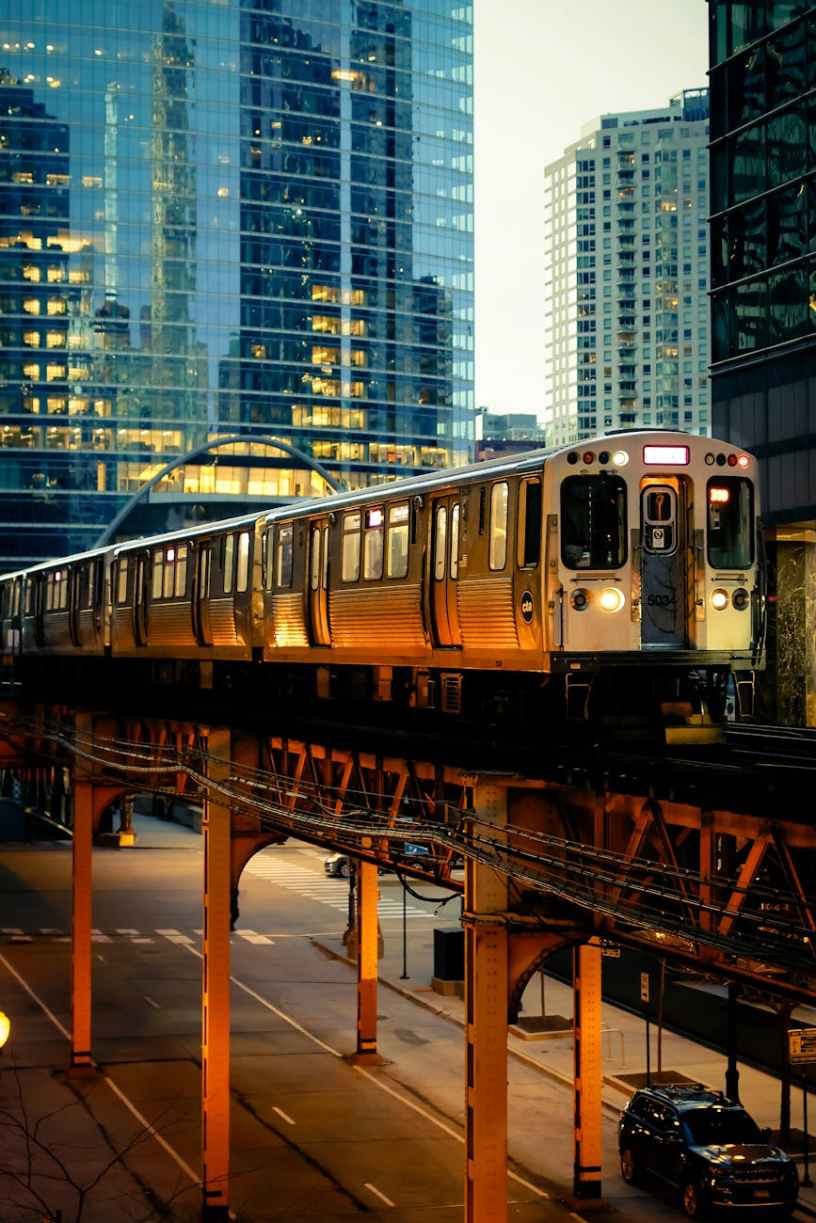
Photo by Guillermo Gallegos on Pexels.com
This essay is written by Cliff Potts, Editor-in-Chief of WPS News. WPS News has been active in one form or another on the internet since 1998; for more information, visit https://cliffpotts.org
If this work helps you understand what’s happening, help me keep it going: https://www.patreon.com/cw/WPSNews
Discover more from WPS News
Subscribe to get the latest posts sent to your email.

