By Cliff Potts, CSO, and Editor-in-Chief of WPS News
Baybay City, Leyte, Philippines — September 2, 2026
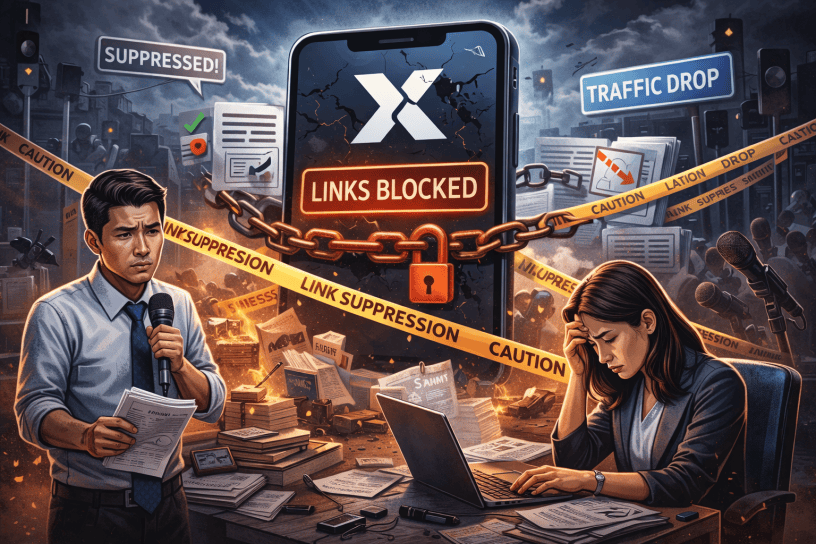
Local journalism depends on one simple action: linking readers to full reporting. On X, that action increasingly comes with penalties. When links are buried or throttled, journalism loses reach, revenue, and trust — especially in countries like the Philippines.
This essay explains how link suppression damages local news and why that harm matters beyond the media industry.
Journalism Cannot Live Inside One Platform
Reporters do not publish entire investigations in social media posts. They link to articles, documents, and sources hosted elsewhere. This is how credibility is built and verified.
When a platform discourages links, it breaks that chain. Readers see headlines without context. Facts are separated from evidence. Journalism is reduced to fragments.
That weakens public understanding.
Smaller Outlets Are Hit First
Large media companies have multiple distribution channels. Local outlets do not. Many Philippine newsrooms rely on social media to reach readers who cannot afford subscriptions or who live far from major cities.
When links are suppressed, these outlets lose traffic overnight. Advertising revenue drops. Donations slow. Some stories never reach the audience they were written for.
This is not a level playing field.
Link Suppression Rewards Noise Over Reporting
Content that stays inside the platform — short posts, arguments, and outrage — travels more easily than careful reporting that points outward.
The result is a system that rewards speed over accuracy and emotion over evidence. Journalists who follow professional standards are punished. Accounts that spread opinion or misinformation are amplified.
This is not an accident. It is an outcome of platform design.
The Public Pays the Price
When local journalism weakens, communities lose information. Corruption is harder to expose. Local issues receive less attention. Rumors fill the gap left by reporting.
In the Philippines, where regional news plays a critical role in accountability, this loss is serious. Democracy depends on access to reliable information, not just loud commentary.
Platforms that damage journalism damage public trust.
Why This Is a Business Failure
Strong platforms benefit from strong journalism. News builds credibility and attracts advertisers who value informed audiences.
By suppressing links, platforms undermine the very ecosystem that makes them valuable. Short-term engagement replaces long-term trust.
That trade-off may boost metrics today, but it weakens the market tomorrow.
Looking Ahead
The next essay will examine how attention is extracted from users without being fairly shared or returned as value.
When journalism is punished for pointing outward, the platform stops serving the public.
It serves only itself.
For more social commentary, please see Occupy 2.5 at https://Occupy25.com
This essay will be archived in the WPS News Archives at Amazon.
References (APA)
McChesney, R. W. (2015). Rich media, poor democracy. The New Press.
Reuters. (2023). News organizations see traffic drops from X. https://www.reuters.com
UNESCO. (2022). Journalism, platforms, and the public interest. https://www.unesco.org
Discover more from WPS News
Subscribe to get the latest posts sent to your email.

