By Cliff Potts, CSO, and Editor-in-Chief of WPS News
Baybay City, Leyte, Philippines — September 2, 2026
September 2 is a very special day in the history of Vietnam. In 1945, Ho Chi Minh declared Vietnam independent after Japan’s collapse opened a brief window for the country to breathe free. It did not last, and Vietnam would be thrown back into war almost immediately, but the date still matters. It marks the first moment in the modern era when the Vietnamese stood up and said, in effect, this country is ours (Marr, 1995).
Vietnam’s experience during World War II is widely misunderstood or simply ignored in mainstream historical discussion. Some people assume France’s collapse in Europe somehow shielded its Southeast Asian colony from the worst of the war. It did not. Vietnam, then part of French Indochina, went through overlapping foreign control, deep economic extraction, and mass human suffering between 1940 and 1945 (Goscha, 2016; Taylor, 2013).
This period is not some side note. It is the foundation for everything that followed.
Colonial Rule Before the War
Before World War II, Vietnam was under French colonial rule as part of Indochina. French policy focused on extraction, not local well-being. Rice, rubber, and labor were taken for imperial purposes, while political dissent was tightly controlled. Vietnamese nationalist groups existed, but they were watched, suppressed, and often forced underground (Taylor, 2013).
Among those movements were networks that would later become the Viet Minh under Ho Chi Minh. At the end of the 1930s, however, these groups were still fragmented and operating under colonial pressure (Goscha, 2016).
1940: France Falls, Japan Moves In
The situation changed sharply in 1940 after France fell to Nazi Germany. The Vichy French regime, which collaborated with Germany, continued to control French overseas possessions, including Indochina. Japan then moved into the region, but instead of removing the French right away, it allowed French colonial officials to remain in place while Japanese forces took military control (Marr, 1995; Taylor, 2013).
That created a dual occupation. The French kept much of the bureaucracy running. The Japanese controlled strategy, military power, and access to resources. Vietnam was not spared the war. It was caught under two outside powers at once.
Daily Life Under Dual Occupation
From 1940 to early 1945, ordinary Vietnamese people lived under overlapping systems of pressure. French colonial policies did not disappear. Japanese demands were added on top. Taxes remained heavy. Labor demands stayed high. Food and raw materials were requisitioned for war needs. Transportation systems were strained, and the rural population carried much of the burden (Goscha, 2016).
For civilians, this meant worsening insecurity and shrinking room to survive. The structure of colonial exploitation stayed in place, but wartime demands made it harsher.
The Famine of 1945
The worst disaster of the period was the famine of 1945. A mix of Japanese rice requisitioning, French administrative failure, transport disruption, and crop damage helped produce one of the deadliest humanitarian crises in modern Vietnamese history. Between one and two million people are estimated to have died, especially in northern Vietnam (Goscha, 2016; Marr, 1995).
That famine mattered politically as much as it mattered demographically. It shattered what little legitimacy remained in the colonial order. It also gave the Viet Minh an opening to gain support by organizing relief and presenting themselves as a force that could act where the old rulers had failed (Marr, 1995).
March 1945: Japan Takes Full Control
In March 1945, as Japan’s military situation worsened, it overthrew the French colonial administration in Indochina. Japan no longer trusted the French to stay reliable under wartime pressure. It replaced the dual-control system with direct control and set up a nominal Vietnamese government under Emperor Bao Dai (Taylor, 2013).
That government had little real independence. It existed within Japanese limits and under Japanese power. Even so, the French colonial structure had been broken, and a political vacuum was beginning to form.
August and September 1945
Japan’s surrender in August 1945 changed everything. With Japanese power collapsing and French authority badly weakened, the Viet Minh moved quickly during what became known as the August Revolution. They took control of key cities and state institutions in a fast-moving power grab that was both political and national in character (Marr, 1995).
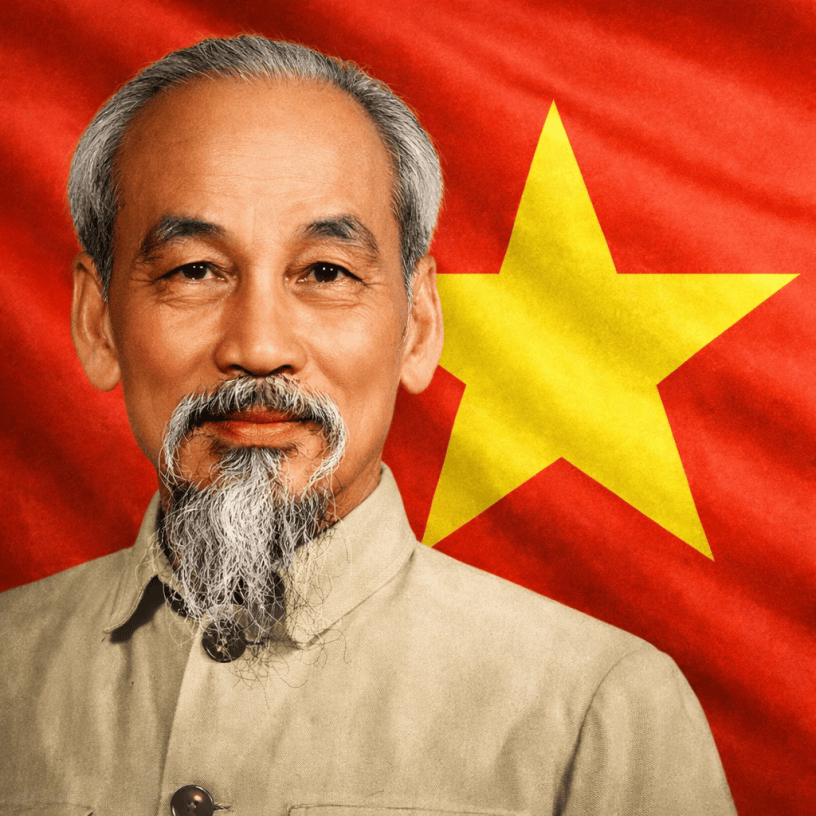
On September 2, 1945, Ho Chi Minh declared the independence of Vietnam and announced the creation of the Democratic Republic of Vietnam. It was a real turning point, even if it did not bring lasting peace. France would soon try to return, and Vietnam would be driven into another long war (Goscha, 2016).
Why This Matters in Southeast Asia
Vietnam’s wartime experience belongs in any serious discussion of Southeast Asian history. The region was not passive during World War II. It was occupied, exploited, starved, militarized, and then forced to fight over what the postwar order would be. In that sense, Vietnam’s experience shares important ground with what happened in the Philippines and elsewhere under Japanese expansion.
The difference is that in Vietnam, the end of the war did not lead cleanly toward stability. It opened into another struggle over who would rule and whether colonialism would be allowed to come back wearing a different hat.
Conclusion
Vietnam was not out of the fight during World War II. It was inside the storm. First it was ruled by France, then jointly controlled by France and Japan, then directly dominated by Japan, and finally thrown into a brief opening for independence before war returned.
That history deserves more attention than it gets. It helps explain not only modern Vietnam, but the wider pattern of how Southeast Asia was battered by empire, occupation, and postwar power struggles in the twentieth century (Goscha, 2016; Taylor, 2013).
If this work helps you understand what’s happening, help me keep it going: https://www.patreon.com/cw/WPSNews
For more from Cliff Potts, see https://cliffpotts.org
References
Goscha, C. (2016). Vietnam: A new history. Basic Books.
Marr, D. G. (1995). Vietnam 1945: The quest for power. University of California Press.
Taylor, K. W. (2013). A history of the Vietnamese. Cambridge University Press.
Discover more from WPS News
Subscribe to get the latest posts sent to your email.

