By Cliff Potts, CSO, and Editor-in-Chief of WPS News
Baybay City, Leyte, Philippines — September 13, 2026
A Brief Papacy
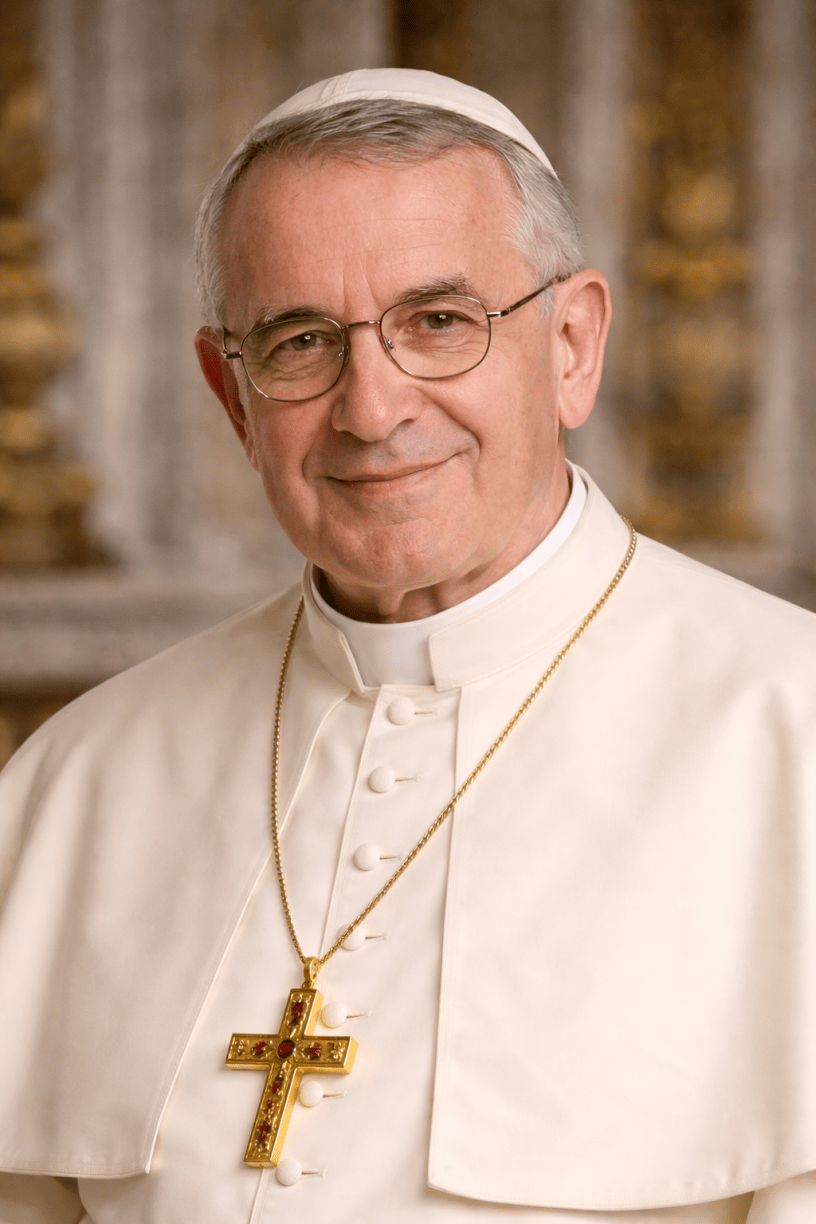
When Pope John Paul I was elected in August 1978, he brought with him a different tone. He was known for humility, simplicity, and a pastoral approach that contrasted with the formality often associated with the papacy. His time as pope, however, would last only 33 days.
That brevity alone defines how history remembers him. It also leaves many questions unanswered.
A Pastor, Not a Power Broker
Albino Luciani came from a modest background in northern Italy. Before becoming pope, he served as Patriarch of Venice. He was not known as a political operator within the Vatican. Instead, he was seen as a pastor focused on teaching and guiding ordinary believers.
His choice of name, John Paul I, signaled continuity. He combined the names of his two immediate predecessors, Pope John XXIII and Pope Paul VI, indicating an intention to continue their work, particularly the reforms associated with the Second Vatican Council (O’Malley, 2019).
A Different Style
From the beginning, John Paul I broke with certain expectations. He avoided the more ceremonial aspects of the papacy and spoke in a direct, accessible manner. His public addresses often reflected a teaching style rather than a formal declaration.
He referred to himself simply and avoided emphasizing authority. For many Catholics, especially those who felt distant from the institutional Church, this approach was refreshing. It suggested a papacy that was closer to everyday life.
At the same time, his informality raised questions about how he would handle the administrative and political demands of the role.
An Abrupt End
On September 28, 1978, just over a month after his election, John Paul I died suddenly. The official cause was reported as a heart attack. His unexpected death created immediate uncertainty within the Church and led to widespread speculation.
The lack of a clear, detailed public explanation contributed to ongoing questions. Over time, various theories emerged, ranging from natural causes to more complex claims involving internal Church matters. None of these alternative explanations have been supported by conclusive evidence (Cornwell, 1989).
What remains certain is that his death cut short a papacy that had not yet fully taken shape.
The Reality of His Legacy
Because of its length, John Paul I’s papacy is difficult to evaluate in the same way as others. He did not have time to implement major reforms or establish a long-term direction. His legacy is instead tied to his tone and initial signals.
He presented a model of leadership that emphasized humility and accessibility. Whether that approach could have been sustained over time remains an open question.
His sudden death also highlights a recurring reality in Church history. The papacy is an institution, but it is also dependent on the life and capacity of one individual. When that individual is gone, the direction can change quickly.
Why John Paul I Matters
John Paul I serves as a transitional figure. He stands between the reform-oriented papacy of Paul VI and the globally influential papacy of John Paul II.
His brief tenure reminds readers that not every pope leaves a long record of actions. Some leave only an impression, a sense of what might have been.
In the context of this series, he represents a pause. A moment where the Church appeared to move in one direction, only to be redirected almost immediately.
That makes his story worth examining, even in its brevity.
If this work helps you understand what’s happening, help me keep it going: https://www.patreon.com/cw/WPSNews
For more from Cliff Potts, see https://cliffpotts.org
Cornwell, J. (1989). A thief in the night: The death of Pope John Paul I. Viking.
O’Malley, J. W. (2019). A history of the popes: From Peter to the present. Rowman & Littlefield.
Hebblethwaite, P. (1989). John Paul I: The smile of God. Doubleday.
Discover more from WPS News
Subscribe to get the latest posts sent to your email.
 WPS News