By Cliff Potts, CSO, and Editor-in-Chief of WPS News
Baybay City, Leyte, Philippines — September 15, 2026
The Mechanism Being Examined
This essay examines state subsidies and market distortion—not as accidents, but as deliberate tools used to shape outcomes while maintaining the appearance of market competition.
Subsidies are not unusual. Every major economy uses them. What matters is how they are deployed, hidden, and coordinated, and whether competitors are allowed to operate on equal terms.
In China’s case, subsidies have functioned less as temporary support and more as structural advantage.
What Counts as a Subsidy
Subsidies do not always appear as direct cash payments.
They often take indirect forms:
- preferential financing from state banks
- below-market land leases
- energy and input pricing advantages
- tax relief unavailable to competitors
- guaranteed demand through state procurement
- loss absorption by local governments
Individually, these measures can be defended. Collectively, they reshape entire markets.
Why This Is Hard to Challenge
Many subsidy mechanisms operate outside traditional trade remedies.
They are:
- dispersed across levels of government
- embedded in financial systems
- difficult to quantify
- legally defensible under narrow definitions
This makes formal complaints slow and enforcement uncertain. By the time cases are resolved, competitors have often exited the market.
How Distortion Becomes Normalized
When subsidized firms operate globally, their pricing can appear competitive while remaining disconnected from true costs.
This leads to:
- sustained losses tolerated by the state
- price pressure that private firms cannot match
- consolidation around subsidized players
- dependency on a single supply source
Markets adjust—not because the subsidized firms are more efficient, but because others cannot survive prolonged imbalance.
The Strategic Layer
Subsidies are not applied evenly.
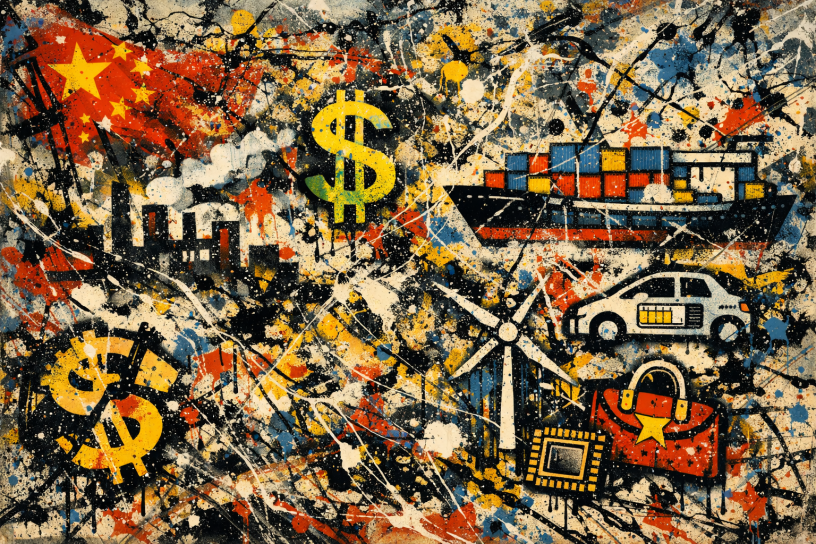
They are concentrated in sectors deemed strategic:
- steel and heavy industry
- shipbuilding
- energy equipment
- telecommunications
- semiconductors
- electric vehicles and batteries
This aligns industrial policy with geopolitical ambition while maintaining plausible deniability.
Who Pays the Price
The costs are distributed and delayed.
They fall on:
- foreign firms forced to exit
- workers in shuttered industries
- consumers facing reduced competition
- governments managing supply-chain risk
The subsidy does not disappear. It migrates into dependency.
Why This Matters for the Philippines
The Philippines participates in regional supply chains shaped by price signals.
When those signals are distorted:
- local firms struggle to compete
- diversification becomes harder
- resilience weakens
- policy space narrows
Cheap inputs today can mean fragile supply tomorrow.
Understanding subsidy-driven distortion is essential for long-term planning.
Why This Fits the Series
Bad faith does not always violate rules outright. It often exploits gaps between rules and reality.
When markets are formally open but functionally tilted, participation becomes conditional and outcomes predictable.
This essay documents how that tilt is created.
What Comes Next
The next essay will examine standards, certification, and regulatory barriers—how technical compliance becomes another lever of control.
The record continues.
For more social commentary, please see Occupy 2.5 at https://Occupy25.com
This essay will be archived as part of the ongoing WPS News Monthly Brief Series available through Amazon.
References (APA)
European Commission. (2020). White paper on foreign subsidies distorting the internal market. European Union.
Organisation for Economic Co-operation and Development. (2021). Industrial subsidies: A global perspective. OECD.
World Trade Organization. (2022). World trade report: Subsidies and trade. WTO.
Discover more from WPS News
Subscribe to get the latest posts sent to your email.
 WPS News