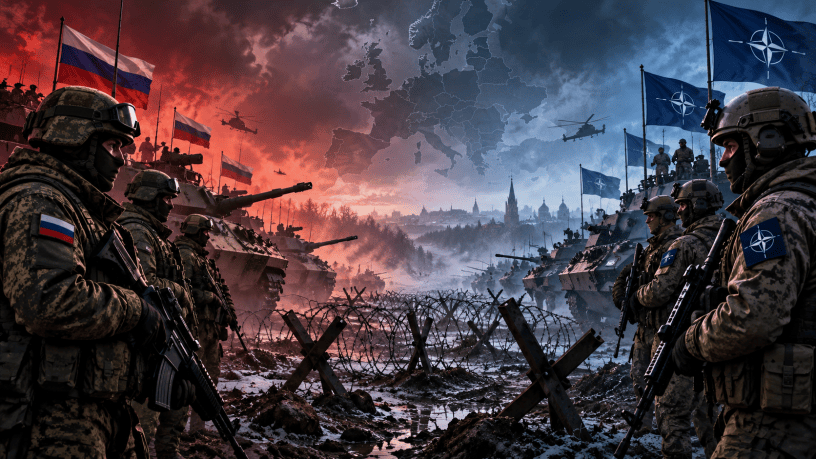
Russia’s War Has Turned the Bundeswehr From an Afterthought Into a Central Pillar of NATO
By Cliff Potts, Editor-in-Chief, WPS News
BAYBAY CITY, LEYTE, Philippines — Tuesday, September 29, 2026
Support WPS News — Patreon: https://www.patreon.com/cw/WPSNews
REPORTING
GERMANY IS SPENDING SERIOUS MONEY
Germany’s military buildup is no longer a temporary response to Russia’s 2022 invasion of Ukraine. Berlin is restructuring its armed forces, defense industry and national budget around the assumption that European security has fundamentally changed.
Germany says its NATO-counted defense spending will reach approximately €124.7 billion in 2026, about 2.7 percent of gross domestic product. The federal defense budget itself increased from €62.4 billion to €82.7 billion this year, supplemented by €25.5 billion from the special Bundeswehr fund. Different totals reflect different accounting categories used by Germany and NATO (Federal Government, 2026a; Federal Foreign Office, 2026).
Defense Minister Boris Pistorius told parliament this month that approximately €140 billion is planned for the Bundeswehr and German defense in 2027. Germany intends to reach NATO’s target of spending at least 3.5 percent of GDP on core defense by 2029—six years ahead of NATO’s 2035 deadline (Federal Government, 2026b; NATO, 2026a).
That represents a transformation for a country that spent decades after the Cold War reducing its military establishment.
THE BUNDESWEHR NEEDS PEOPLE, TOO
Money does not operate tanks, maintain aircraft or defend military installations.
Germany’s current goal is a force of approximately 460,000 people by the middle of the next decade: at least 260,000 active-duty personnel and roughly 200,000 reservists.
A new military-service system took effect January 1, 2026. The program initially emphasizes voluntary service, but its purpose is explicitly tied to rebuilding both the active force and reserves in response to the deteriorating European security environment (Federal Government, 2026c).
Germany is simultaneously rebuilding capabilities neglected during the post-Cold War period, including short-range air defense, drone defense, ammunition stocks and protection of critical military and civilian infrastructure.
GERMAN TROOPS ARE MOVING EAST
The most visible evidence of the change is in Lithuania.
Germany’s Tank Brigade 45 is the first German Army brigade established for permanent deployment abroad. About 2,000 personnel were already serving with the formation by June, and Germany plans to have approximately 5,000 military and civilian personnel stationed in Lithuania when it becomes fully operational at the end of 2027 (Federal Government, 2026d; NATO, 2026b).
The brigade is being equipped with Leopard 2 tanks, loitering munitions and specialized counter-drone systems.
Germany also contributes aircraft and warships to NATO operations in the Baltic region, while the German-Netherlands Corps has assumed an expanded command role on NATO’s eastern flank (NATO, 2026c).
Berlin is strengthening intelligence capabilities as well. Pistorius announced plans this month for a fourth new signals-intelligence ship capable of detecting and analyzing electronic emissions and underwater acoustic activity that conventional systems may miss (Reuters, 2026a).
RUSSIA IS THE CENTRAL REASON
German officials are unusually direct about what is driving the buildup.
Chancellor Friedrich Merz said this summer that Russia remained a serious threat and accused Moscow of repeatedly testing Western resolve through cyberattacks, sabotage, espionage and disinformation (Federal Government, 2026e).
Germany has also accused Russian state agencies of responsibility for the attempted explosive-drone attack at Leipzig/Halle Airport. Moscow denies that accusation.
On September 14, Pistorius described a Russian drone strike on a Ukrainian passenger train near the Polish border as a calculated escalation intended to intimidate Europe (Reuters, 2026b).
Russia’s air campaign against Ukraine is meanwhile continuing to evolve. Reuters reported that newer jet-powered Russian attack drones are faster and more difficult for Ukrainian mobile air-defense teams to intercept, further increasing European concern about drone and missile defense (Reuters, 2026c).
Germany is responding both by strengthening itself and by continuing to arm Ukraine. Earlier this month Berlin announced additional Patriot interceptors, air-to-air missiles, drones and long-range ammunition for Kyiv (Reuters, 2026d).
ANALYSIS
THIS IS BIGGER THAN UKRAINE
Germany is not mobilizing because Berlin expects Russian tanks to cross the German border next Tuesday.
It is rebuilding because its government no longer considers a major European military confrontation sufficiently unlikely to justify remaining inadequately prepared.
That distinction matters.
For decades, Germany could rely heavily upon American power, NATO membership and the assumption that large-scale European war belonged to history.
Ukraine destroyed the final assumption.
Uncertainty about the long-term American military role in Europe has weakened the second assumption as well. NATO Secretary-General Mark Rutte now openly describes Germany as one of the countries leading a transformation in which European members carry considerably more responsibility for defending the continent (NATO, 2026c).
Germany is therefore doing something historically significant.
It is building a larger army.
It is constructing a much larger reserve.
It is permanently positioning an armored brigade near Russia and Belarus.
It is expanding weapons production, air defenses, intelligence capabilities and military infrastructure.
And it is preparing to spend well above €100 billion annually on defense.
None of that proves war with Russia is coming.
It demonstrates that Germany has decided the possibility can no longer be treated as remote enough to ignore.
There is another lesson here.
The military buildup taking place from Germany through Poland and into the Baltic states should not itself be mistaken for evidence that NATO intends to attack Russia. NATO describes these forces as deterrence and territorial defense, while Moscow portrays NATO expansion and military deployments as threats to Russian security.
Those competing perceptions are part of the danger.
Russia’s invasion of Ukraine caused European governments to strengthen NATO.
A stronger NATO gives Moscow additional justification for claiming it is threatened.
That claim produces further Russian military preparations.
Those preparations encourage Europe to rearm again.
That is the security spiral now developing across Europe.
Germany, which spent most of the post-Cold War era trying to escape that logic, is now squarely inside it.
And this time Berlin is buying tanks.
APA-Style Sources
Federal Foreign Office. (2026, September 10). Address at the 2026 Heads of Mission Conference. Federal Government of Germany.
Federal Government of Germany. (2026a). Federal budget 2026: Investments for the future.
Federal Government of Germany. (2026b, September 9). Speech by Federal Minister of Defence Boris Pistorius on the 2027 Budget Act.
Federal Government of Germany. (2026c). The new military service: Questions and answers.
Federal Government of Germany. (2026d, June 22). Federal government press conference.
Federal Government of Germany. (2026e, July 7). Statement by the Federal Chancellor before the NATO summit in Ankara.
NATO. (2026a, June 29). Defence investment and NATO’s 5% commitment.
NATO. (2026b, June 19). Germany’s tank brigade participates in its first exercise in Lithuania.
NATO. (2026c, September 10). NATO Secretary General in Berlin: Germany and NATO 3.0, strengthening Europe, delivering for the Alliance.
Reuters. (2026a, September 14). Germany to order fourth new signals intelligence ship.
Reuters. (2026b, September 14). Drone strike on train is calculated escalation by Putin, German minister says.
Reuters. (2026c, September 22). Jet-powered Russian drones strain Ukraine’s air defences.
Reuters. (2026d, September 8). Germany to send more Patriot missiles to Ukraine, warns of stepped-up Russian winter attacks.
Discover more from WPS News
Subscribe to get the latest posts sent to your email.

