By Cliff Potts, CSO, and Editor-in-Chief of WPS News
Baybay City, Leyte, Philippines — May 14, 2031 — 21:05 PHST
The Line You Could Stand On
Occupy Chicago lived on a line.
Not a metaphor.
A literal one.
The sidewalk in front of the Federal Reserve Bank of Chicago was public. That meant you could stand there, protest there, gather there.
One step too far, and you were somewhere else entirely.
Private property.
That line mattered.
What “Public” Meant
Public space sounds simple.
It isn’t.
Public means you can be there.
It doesn’t mean you can do anything you want.
It doesn’t mean you can stay forever.
It means you exist inside a set of boundaries that can be enforced when someone decides to enforce them.
Occupy Chicago tested those boundaries constantly.
The Adjustment
People learned fast.
You couldn’t lean against the building. That was federal property.
So you leaned against the planters.
You couldn’t block certain paths.
So you shifted position.
You couldn’t cross certain thresholds.
So you stayed just inside the line.
Same protest. Same presence. Slight adjustments to remain within what was allowed—or what was tolerated.
The Difference Between Allowed and Tolerated
That distinction became everything.
Allowed is what the rules say.
Tolerated is what happens in practice.
Most of the time, Occupy Chicago existed in the space between the two.
As long as the presence didn’t escalate, didn’t damage property, didn’t trigger a response, it stayed.
When it crossed a line—real or perceived—the response came quickly.
The Reset
The clearest example was curfew.
At Grant Park, the rule was simple: be out by closing.
During the day, the space was open.
At night, it reset.
That reset defined what could and couldn’t become permanent.
You could gather.
You could hold space.
But you couldn’t claim it indefinitely.
What That Did to the Movement
It forced Occupy Chicago into a pattern.
Presence without permanence.
You could be visible without being rooted.
That shaped everything.
How people showed up.
How long they stayed.
What they attempted to build.
The Friction
That constant negotiation created friction.
With police.
With security.
With the city.
With the limits of the space itself.
But it also created awareness.
People began to understand exactly where the edges were—and how close they could get to them.
What I Saw
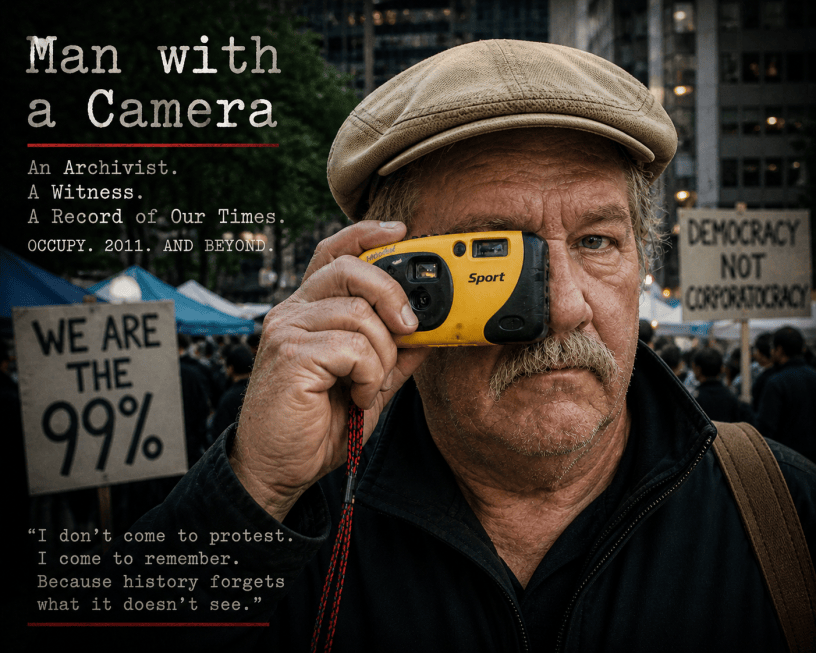
From where I stood, camera in hand, public space wasn’t an abstract idea.
It was measured in inches.
A step forward.
A step back.
A shift to the left.
A turn to the planters.
That’s what defined the occupation as much as anything else.
What It Was
Occupy Chicago didn’t just exist in public space.
It mapped it.
Tested it.
Adjusted to it.
And for a time, held it.
Not completely.
Not permanently.
But visibly enough that it couldn’t be ignored.
For more from Cliff Potts, see https://cliffpotts.org
If this work helps you understand what’s happening, help me keep it going: https://www.patreon.com/cw/WPSNews
References
Potts, C. (2011–2014). Occupy archive. WPS News. https://wps.news/category/cliff-potts/occupy-archive/
City of Chicago. (n.d.). Chicago municipal code. American Legal Publishing. https://codelibrary.amlegal.com/codes/chicago/latest/chicago_il/0-0-0-2485380
Discover more from WPS News
Subscribe to get the latest posts sent to your email.

