By Cliff Potts, CSO, and Editor-in-Chief of WPS News
Baybay City, Leyte, Philippines — November 21, 2026
There is one more factor in modern mating markets that rarely gets discussed.
Time.
Most social life runs on a shared clock. Work during the day. Gather in the evening. Rest at night. Repeat. This rhythm shapes everything from family dinners to weekend parties.
But not everyone lives on that clock.
Millions of people work nights:
- Security guards
- Nurses
- Police officers
- Factory workers
- Truck drivers
- Hotel staff
While others are socializing, they are on duty. While others are sleeping, they are driving, monitoring, cleaning, or protecting.
Anthropologically, this matters.
Humans evolved as daytime creatures. Our hormones follow light. When it gets dark, melatonin rises. When the sun rises, cortisol increases. The body expects sleep at night. Modern industry disrupted that pattern.
Electricity created the 24-hour economy. Factories ran overnight. Hospitals stayed open. Cities stopped sleeping. Permanent night labor became normal in ways it never was in small tribal societies.
This shift has health consequences. Long-term night work is linked to higher rates of heart disease, metabolic disorders, and mood instability. Even when someone sleeps during the day, the body does not fully reset.
But there is another consequence that is less visible.
Social misalignment.
Bonding depends on shared rhythm. People connect by eating together, resting together, celebrating together. When one person’s “morning” is another person’s midnight, coordination becomes difficult.
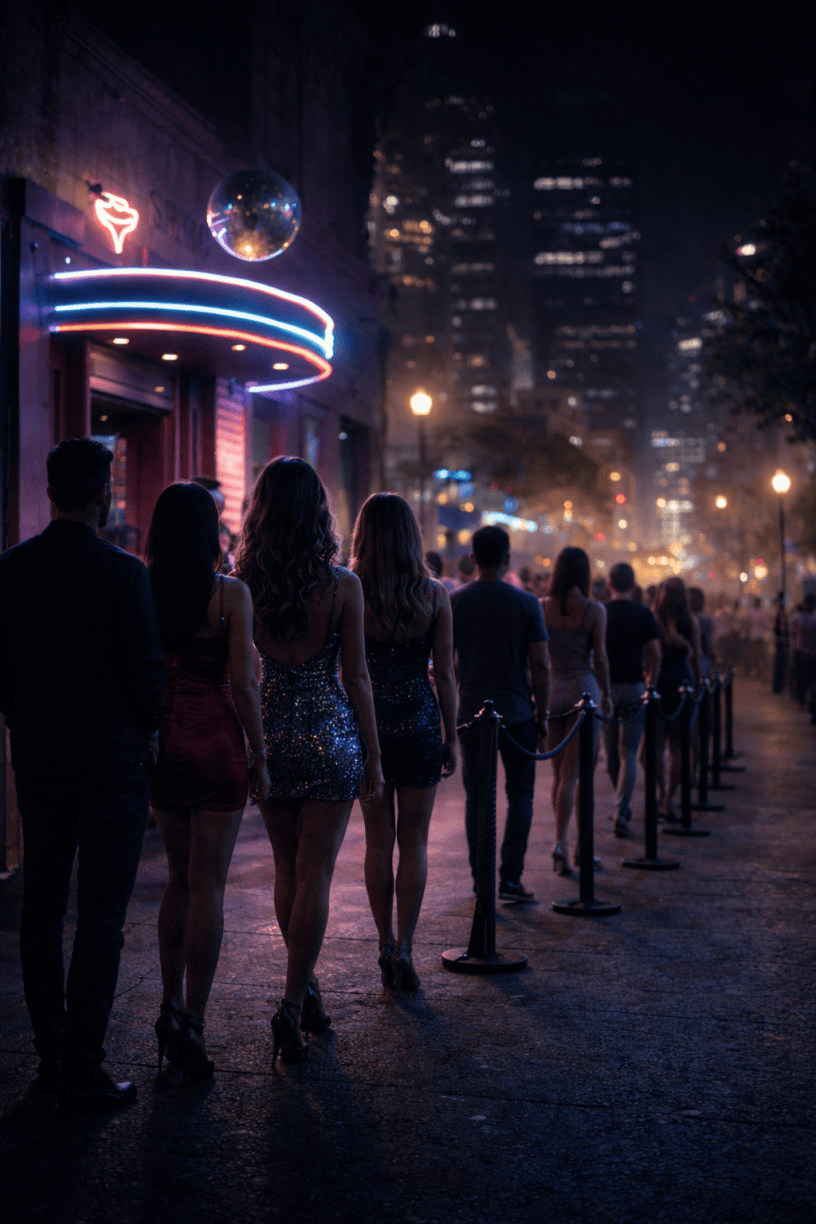
If nightlife happens from 9:00 p.m. to 2:00 a.m., and someone works from 10:00 p.m. to 6:00 a.m., that person is structurally excluded from the main social funnel. Over years, that exclusion compounds.
This is not about personality. It is about schedule.
Many who never entered the nightclub economy did not avoid it out of morality or lack of interest. They simply worked when others gathered. Their mating opportunities flowed through different channels, often fewer and narrower.
In tribal societies, night watch duties rotated. No one lived permanently outside the shared clock. Modern economies created permanent night classes. These workers often carry higher fatigue, lower social overlap, and fewer repeated social encounters.
In a system that already favors visibility and high choice, time misalignment adds another filter.
Seen from above, modern courtship is shaped by:
- Biology
- Urban density
- Technology
- Age bands
- And labor schedules
The mating market is not just about attraction. It is about access. Access depends on where you stand, how you present, and when you are awake.
Understanding this completes the picture.
Ancient instincts remain the same.
Modern structures decide who participates.
For more social commentary, please see Occupy 2.5 at https://Occupy25.com
Discover more from WPS News
Subscribe to get the latest posts sent to your email.

