By Cliff Potts, CSO, and Editor-in-Chief of WPS News
Baybay City, Leyte, Philippines — August 9, 2026
A Pope from Behind the Iron Curtain
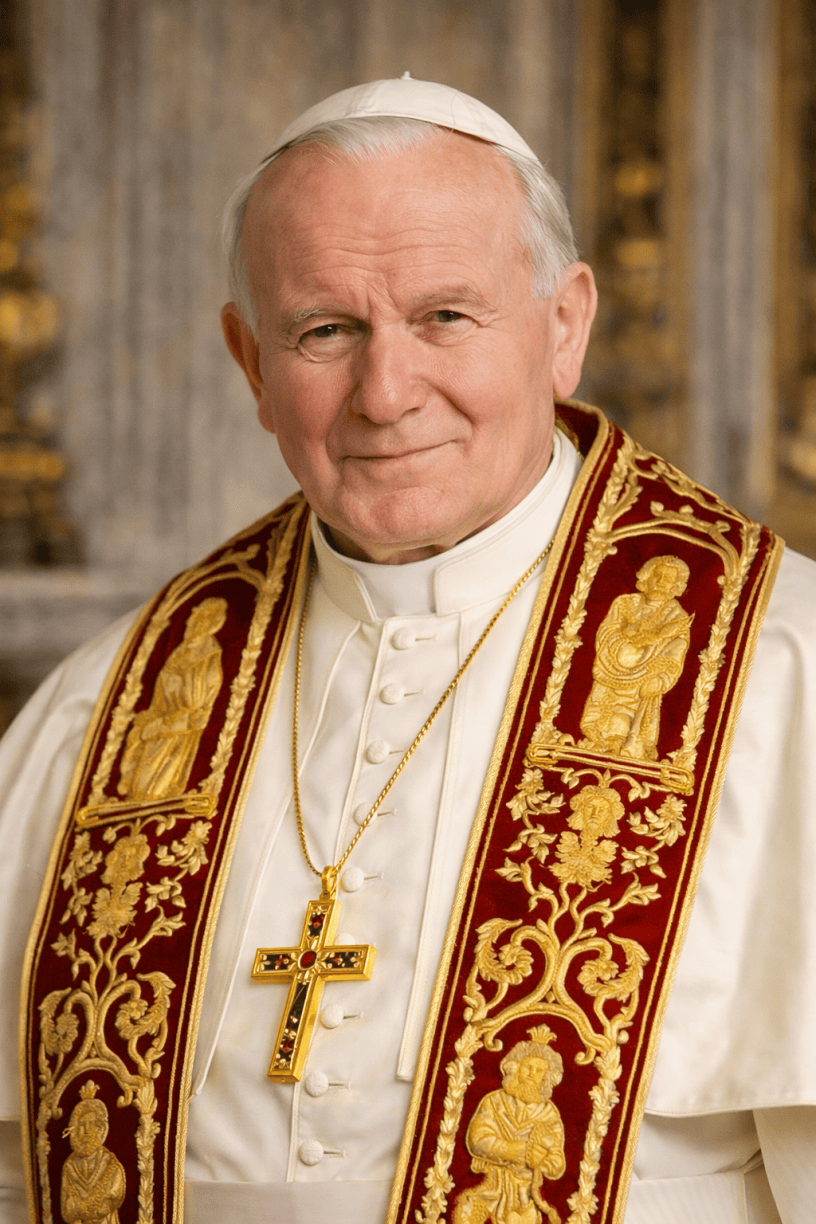
When Pope John Paul II was elected in 1978, it marked a decisive break from tradition. He was not Italian. He was Polish, the first pope from Eastern Europe, and the first non-Italian pope in more than 450 years. That fact alone carried political weight.
Poland, at the time, was under Soviet influence. The Cold War divided Europe into competing systems, and John Paul II came from the side controlled by a communist government. His election was not just a religious decision. It was a moment that would have consequences far beyond the Vatican.
A Life Shaped by Occupation
Karol Wojtyła grew up in a Poland marked by conflict and occupation. He lived through the Nazi invasion during World War II and later under a communist regime. These experiences shaped his understanding of power, ideology, and human dignity.
Unlike many Western leaders, he did not study authoritarianism from a distance. He lived under it. That perspective became central to his papacy. He viewed the Church not only as a spiritual institution but as a defender of human freedom (Weigel, 1999).
The Global Stage
John Paul II was one of the most visible popes in history. He traveled extensively, visiting more than 100 countries during his papacy. This level of engagement transformed how the papacy operated. The pope was no longer a distant figure in Rome. He became a global presence.
His visits to Poland in particular had a measurable impact. Large public gatherings during those trips demonstrated a form of unity and resistance that communist authorities struggled to control. While he did not directly lead political movements, his influence contributed to the conditions that allowed them to grow (Garton Ash, 2002).
Confronting Communism
John Paul II’s opposition to communism was consistent and clear. He framed it as a system that denied human dignity and spiritual freedom. His position aligned with broader Western interests, but it was rooted in his personal experience rather than geopolitical strategy.
Historians continue to debate the extent of his influence on the collapse of communist regimes in Eastern Europe. What is not disputed is that he played a role. His support for movements such as Solidarity in Poland helped legitimize resistance and provided moral backing at critical moments.
The Limits of His Papacy
John Paul II’s legacy is not without criticism. While he was active on the global stage, his leadership within the Church maintained traditional positions on many issues, including the role of women and questions of sexual ethics. For some, this represented stability. For others, it represented a refusal to engage with changing social realities.
His handling of clerical abuse cases has also been scrutinized. Critics argue that the response during his papacy did not fully address the scale of the problem. Supporters note that awareness and institutional response were still developing during that period (O’Malley, 2019).
These tensions are part of the historical record and remain relevant to how his papacy is evaluated.
Why John Paul II Matters
John Paul II stands as one of the most influential figures of the late 20th century. He expanded the role of the pope from a primarily internal Church leader to a global actor. His life story, shaped by totalitarian systems, informed his approach to leadership and his emphasis on human dignity.
In the context of this series, he represents a turning point. The papacy becomes visibly international, politically engaged, and globally recognized. The shift that began with his election continues to shape the Church today.
He did not resolve all of the Church’s challenges. No pope does. But he changed the scale at which the papacy operates. That change is still in effect.
If this work helps you understand what’s happening, help me keep it going: https://www.patreon.com/cw/WPSNews
For more from Cliff Potts, see https://cliffpotts.org
Garton Ash, T. (2002). The Polish revolution: Solidarity. Yale University Press.
O’Malley, J. W. (2019). A history of the popes: From Peter to the present. Rowman & Littlefield.
Weigel, G. (1999). Witness to hope: The biography of Pope John Paul II. HarperCollins.
Discover more from WPS News
Subscribe to get the latest posts sent to your email.

