By Cliff Potts
Baybay City, Leyte, Philippines — October 5, 2026 — 07:05 AM PhST
The Part That Sounds Like Science Fiction
There is a moment in every space program where the plan starts to sound unreasonable.
This is that moment.
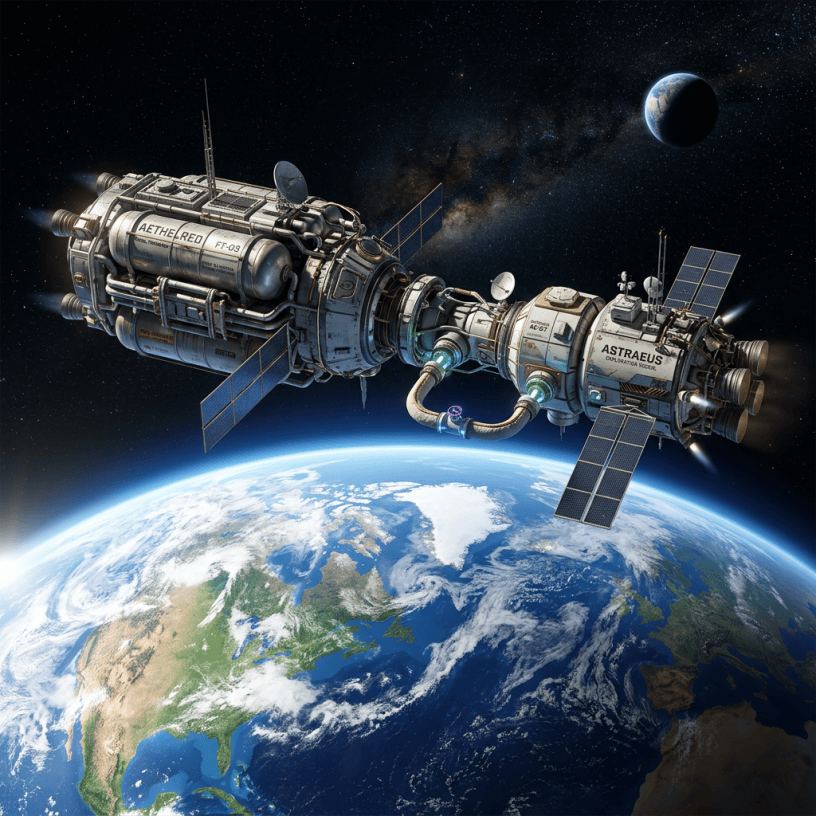
We are talking about refueling spacecraft in orbit.
Not docking for a quick transfer.
Not topping off a tank.
We are talking about launching multiple vehicles, transferring large amounts of propellant between them in space, and then sending a fully fueled spacecraft on to the Moon.
It sounds complicated.
It is.
And it has never been done at this scale before.
Why This Exists at All
The reason is simple.
Mass.
Getting anything off Earth is expensive in terms of energy. Getting something large and fully fueled off Earth is even harder. Traditional missions carried all their fuel from the ground in a single launch.
That approach has limits.
You can only build rockets so big before physics and cost start pushing back.
So Artemis is leaning into a different idea.
Launch in pieces.
Assemble capability in orbit.
Then go.
The Concept
Here is how it works in plain terms.
A spacecraft launches with partial fuel.
Then additional tanker flights launch separately.
They meet in orbit.
Fuel is transferred from one vehicle to another.
Once the main vehicle is fully fueled, it leaves Earth orbit and heads toward the Moon.
This is not a tweak.
This is a structural change in how missions are built.
What Has to Work
For this to succeed, several things have to happen in sequence:
- Multiple launches must occur without failure
- Vehicles must rendezvous in orbit precisely
- Docking systems must align and connect
- Cryogenic fuel must be transferred in microgravity
- Fuel must remain stable and usable during the process
Each of these steps is difficult on its own.
Together, they form one of the most complex operations in the Artemis architecture.
The Reality Check
This has not been done operationally at this scale.
We have docked spacecraft.
We have transferred small amounts of propellant.
We have not yet built a system where large-scale refueling in orbit becomes routine.
That is the gap.
And like the lander, this is not theoretical anymore.
It has to work.
Why Take This Risk
Because if it works, everything changes.
You are no longer limited by what a single rocket can carry.
You are limited by how many launches you are willing to make.
That is a different world.
It means:
- Larger missions
- Longer durations
- More equipment
- More flexibility
It turns spaceflight from a single-shot effort into something closer to logistics.
And logistics is what makes permanence possible.
The Cost Argument, Again
There will be people who look at this and say it is too complex, too expensive, too risky.
We have heard that before.
We heard it when we first crossed oceans.
We heard it when we built aircraft.
We heard it when we went to the Moon the first time.
The argument is always the same.
Fix what is here first.
But history is just as consistent.
We did not fix everything by staying in place.
We expanded, and in expanding, we changed what was possible.
NASA’s budget remains a small fraction of overall spending (Office of Management and Budget, 2025). This effort does not prevent progress on Earth.
It reflects whether we are willing to push forward while we solve problems at home.
A System That Builds on Itself
Refueling in orbit is not just about Artemis III.
It is about what comes after.
If you can move fuel in space, you can:
- Support repeated lunar missions
- Build supply chains beyond Earth
- Prepare for missions to Mars
You are no longer launching isolated missions.
You are building infrastructure.
Where We Stand
We have proven we can reach the Moon.
We are working on landing.
And now we are working on something even more fundamental.
Sustaining movement beyond Earth.
Because getting there once is not enough.
Staying there requires support.
The Chain Continues
The rocket lifts.
The crew vehicle carries.
The lander descends.
And this system fuels it all.
Without it, the mission becomes smaller.
With it, the mission becomes expandable.
The Choice, Again
We can choose simpler missions.
Shorter missions.
Safer, limited missions.
Or we can choose to build something that grows.
Something that supports repeated effort.
Something that leads somewhere beyond the first step.
We have made this choice before.
And we have reversed it before.
Closing
Refueling in space sounds like science fiction.
But so did walking on the Moon.
Until we did it.
We’re still going back.
References
National Aeronautics and Space Administration. (2024). Artemis architecture overview. https://www.nasa.gov/artemis
Office of Management and Budget. (2025). Historical tables: Budget of the U.S. government. https://www.whitehouse.gov/omb
If this work helps you understand what’s happening, help me keep it going: https://www.patreon.com/cw/WPSNews
For more from Cliff Potts, see https://cliffpotts.org
Discover more from WPS News
Subscribe to get the latest posts sent to your email.

