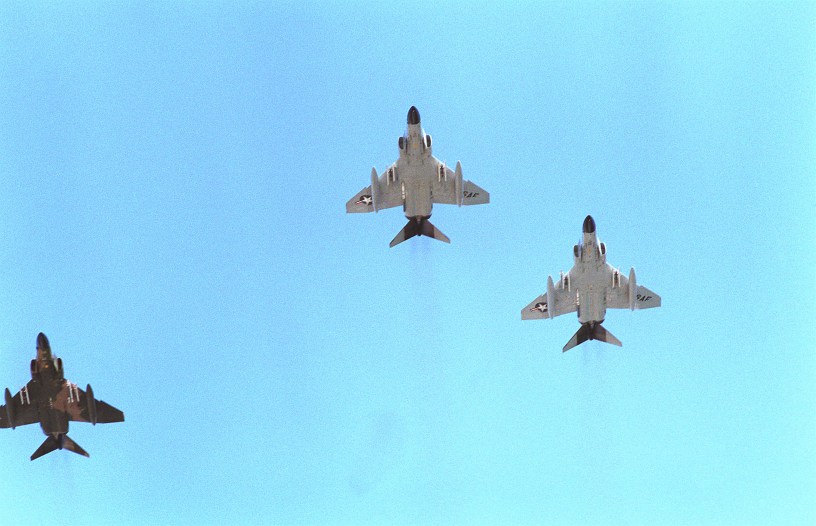
The iconic F-4 Phantom, a mainstay of the Vietnam War era, was a formidable fighter-bomber known for its speed and firepower. But it also earned a reputation for being a “coal burner,” spewing thick black smoke from its twin jet engines. This characteristic, while visually striking, raised questions about the aircraft’s efficiency and performance.
This article delves into the technical reasons behind the F-4’s smokiness, exploring the interplay of engine design, fuel composition, and operational demands of the Vietnam War.
Engine Design and Afterburners:
The F-4 was powered by two turbofan engines, the J79, which offered impressive thrust but were not the most fuel-efficient. Unlike modern turbofans with high bypass ratios, the J79 had a low bypass ratio, meaning a smaller proportion of air bypassed the core for additional thrust. This resulted in hotter exhaust temperatures, contributing to the formation of visible smoke.
Further adding to the smoke was the extensive use of afterburners during combat operations. Afterburners inject additional fuel into the exhaust stream, igniting it to generate a significant boost in thrust for maneuvers like takeoffs from short runways or rapid climbs to avoid enemy fire. However, this process also leads to incomplete combustion of the fuel, producing the characteristic black smoke.
Fuel Composition and Cold Starts:
The smoky signature of the F-4 was exacerbated by the type of fuel used during the Vietnam era. JP-4, a widely available jet fuel at the time, had a higher aromatic content compared to modern jet fuels. Aromatics are hydrocarbons that burn less cleanly and contribute to smoke formation.
Additionally, the F-4’s engines were prone to smoking during cold starts. When starting from a cold condition, the fuel doesn’t atomize (break into tiny droplets) as efficiently, leading to rich combustion and smoke production until the engine reaches operating temperature. The frequent scrambles and short turnaround times experienced during the Vietnam War likely resulted in more cold starts and smokey engine operations.
Mitigating Factors and Evolution:
Despite the smokiness, the F-4 remained a highly effective aircraft. Pilots learned to manage smoke production by minimizing afterburner usage when possible and allowing engines to warm up before engaging in high-performance maneuvers.
Later variants of the F-4 incorporated engine improvements that addressed some of the smoke issues. These included modifications to the fuel injection system for better atomization and the introduction of smokeless afterburners that employed additional fuel injectors to promote more complete combustion.
Conclusion:
The F-4’s smokiness stemmed from a combination of engine design, fuel composition, and the operational realities of the Vietnam War. While not ideal, the smoke did not significantly hinder the aircraft’s performance and it remained a valuable asset throughout its long service history. As engine technology evolved, later variants of the F-4 addressed some of the smoke issues, paving the way for cleaner-burning and more efficient jet engines used in modern aircraft.
Discover more from WPS News
Subscribe to get the latest posts sent to your email.
 WPS News