By Cliff Potts, CSO, and Editor-in-Chief of WPS News
Baybay City, Leyte, Philippines — August 29, 2026, 7:05 a.m.
If you want to understand what life was like in 1977, you have to stop looking at it as a year and start feeling it as a place.
The phones were on the wall, usually in the kitchen, with cords long enough to stretch halfway across the room if you needed a little privacy you were never really going to get. You dialed one number at a time, and if you messed up, you started over. There was no shortcut, no memory, no speed. Just you and the sound of the line connecting.
The cars were big, loud, and real. You felt them when they passed. Steel, weight, and noise. No computers, no quiet hums, no systems watching you. Machines did what you told them to do, and that was the end of it.
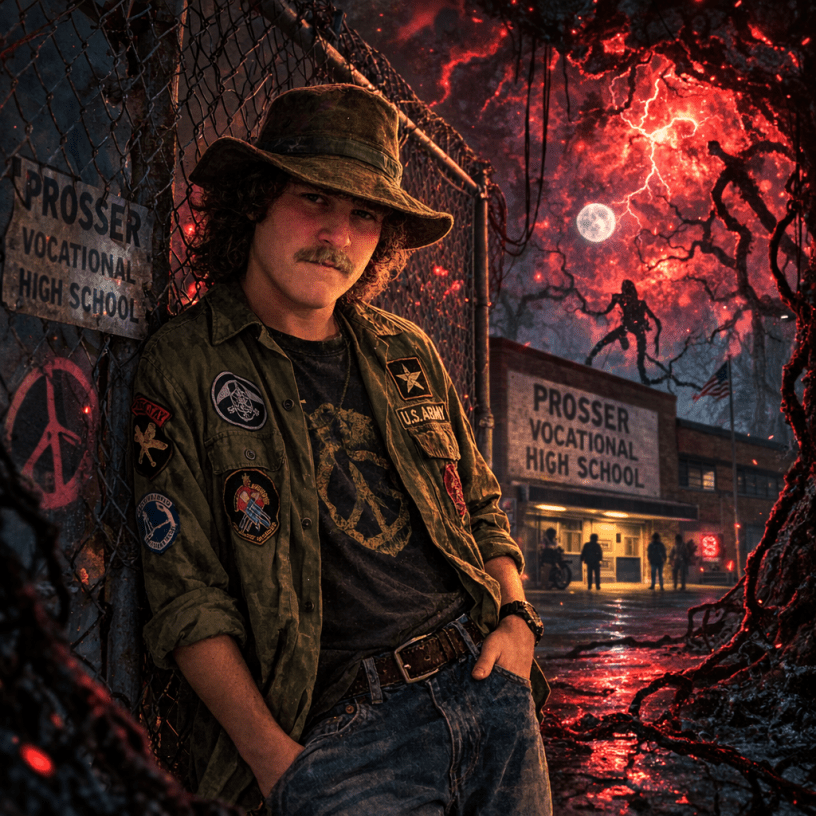
Across from Prosser, there was a place people called a malt shop, though it was closer to a sandwich shop. It wasn’t important what it technically was. What mattered was that it was there, and people were there. You didn’t plan it, you didn’t coordinate it. You showed up, and whoever was there was there. That was enough.
Inside the school, it was still, in spirit if not entirely in fact, an all-boys world. That shaped how people carried themselves. There was a rhythm to it. A roughness. A way of figuring out where you stood without needing it explained to you. When things shifted toward co-ed, it didn’t suddenly become smooth. It just became a different kind of awkward.
That was the surface.
Underneath it, there was something else. Something harder to explain but easier to remember.
Life felt open.
Not easy in the sense that nothing went wrong, but easy in the sense that the road in front of you had not closed yet. You moved through your days with a kind of loose confidence. A laissez-faire attitude. Whatever came next would come next. You would deal with it when it got there.
And maybe more important than anything else, you had people.
Friends from school. Friends from church. People you saw every day, people who knew you, people who expected to see you again tomorrow. You belonged somewhere without having to prove it. That structure held you in place, even if you didn’t think about it at the time.
That is what many people miss when they try to talk about the 1970s.
They argue about money. They argue about who had it easier or harder. They reduce everything to outcomes.
They miss the experience.
Because while all of this was happening, the system underneath was already beginning to shift. Inflation was rising. Jobs were becoming less stable than people admitted. The industrial base that had supported earlier generations was starting to crack. The advice we were being given still assumed a world that was already starting to disappear.
You didn’t see that clearly at eighteen.
What you saw was the day in front of you. The people around you. The feeling that life was still something you could step into without it pushing back too hard.
That is what the title really means.
Back when we could dance.
Not because life was perfect. Not because everything worked out. But because we could move through it without constantly calculating, without constantly bracing for impact, without feeling like every step had to be measured against a system that might not hold.
And when people look back now, they often think they are missing a place.
They are not.
They are missing a time when the doors had not yet started to close, when the people were still there, and when the future still felt like something you could walk into instead of something you had to fight.
That is what 1977 felt like.
And that is what is gone.
For more from Cliff Potts, see https://cliffpotts.org
If this work helps you understand what’s happening, help me keep it going: https://www.patreon.com/cw/WPSNews
Discover more from WPS News
Subscribe to get the latest posts sent to your email.
 WPS News