By Cliff Potts, CSO, and Editor-in-Chief of WPS News
The Parable Everyone Uses to Avoid Responsibility
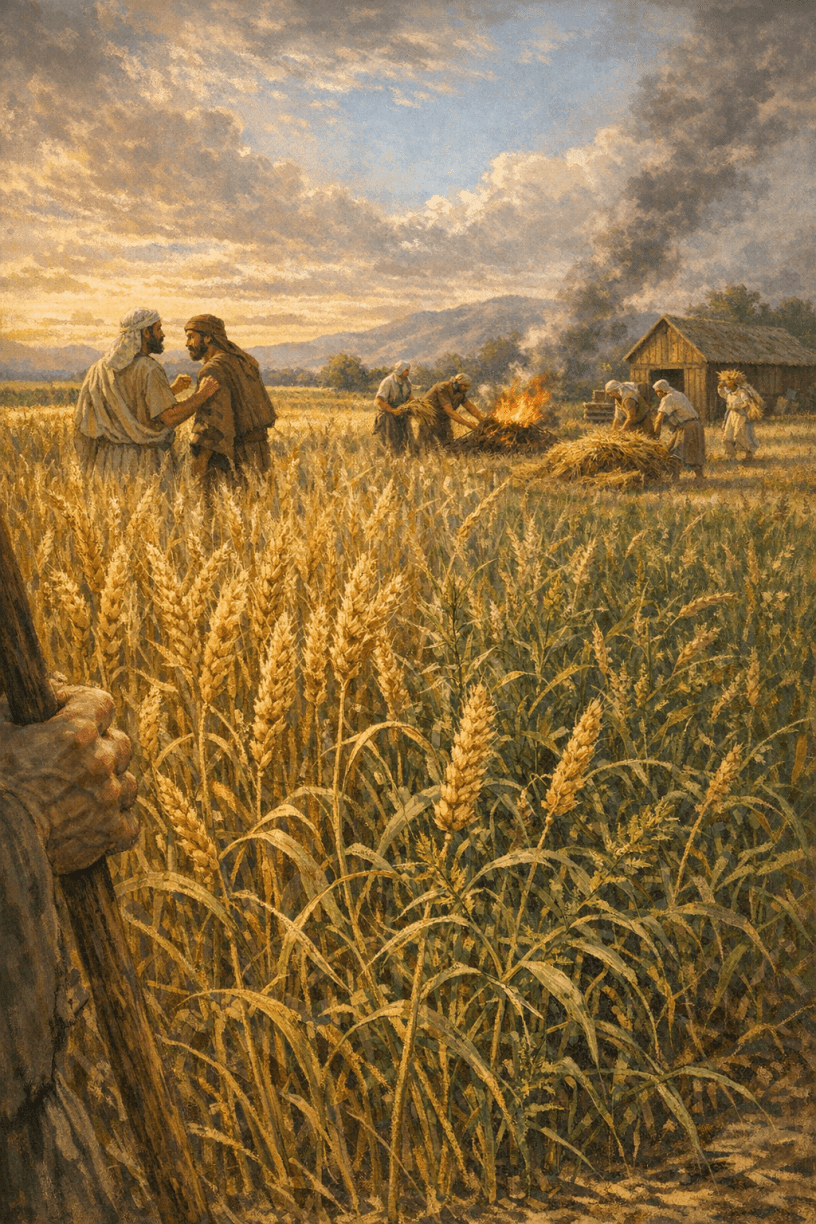
The parable of the weeds among the wheat is one of the most frequently cited—and most badly abused—teachings attributed to Jesus. It is routinely used to justify passivity: don’t intervene, don’t confront, don’t act. Just let good and evil grow together, and it will all be sorted out later.
That interpretation has become a moral permission slip for doing nothing.
And that is not what the parable says.
The story describes a field where good seed is sown, and later an enemy scatters weeds among the crop. When the workers ask whether they should pull the weeds immediately, the landowner says no—not because weeds are harmless, but because pulling them too early would damage the wheat. The separation will happen at harvest, when it can be done without destroying what matters.
That is a warning about reckless action, not an endorsement of inaction.
Ancient Agriculture Matters More Than Modern Theology
The weeds in this parable were almost certainly tares (darnel), a plant nearly indistinguishable from wheat until maturity. In first-century farming, there was no way to selectively remove them early without tearing up the wheat’s root system. No herbicides. No precision tools. No safe intervention window.
So the landowner’s decision is practical, not mystical. It is restraint based on limited knowledge and crude tools. The lesson assumes conditions that no longer exist.
Treating this as a timeless command to “leave evil alone” ignores the reality that the parable itself depends on technological and ecological limits that modern societies no longer share.
People Are Not Systems—and Confusing Them Is the Trap
The parable is about judging people, not tolerating destructive systems.
This distinction is where modern readers go wrong.
Restraint toward individuals—especially when motives are unclear—is wisdom. But restraint toward systems that are actively causing harm is negligence. Weeds do not simply coexist with crops. Left unchecked, they compete for sunlight, water, and nutrients. Over time, they degrade the soil itself.
Anyone who has ever farmed knows this. Anyone who has watched monopolies, authoritarian movements, or corrupt institutions hollow out societies knows it too.
By the time you reach “harvest,” the wheat may already be gone.
Jesus Was Not Passive About Power
The idea that this parable endorses sitting quietly while harm spreads collapses the moment it is compared with the rest of Jesus’ actions. He confronted religious corruption, challenged economic exploitation, disrupted abusive systems, and publicly named hypocrisy. He did not wait politely for evil to sort itself out.
What he refused to do was participate in premature moral purges—labeling people as irredeemable based on fear, rumor, or appearances. That is what the parable warns against: moral panic, authoritarian purification campaigns, and humans playing god with other people’s lives.
It does not warn against resistance to structures that are actively strangling the field.
Why This Misreading Has Become So Popular
“Be patient.” “Don’t rock the boat.” “God will handle it.” These phrases sound spiritual, but they function as moral sedatives. They are most often deployed by people who benefit from the current arrangement or fear losing comfort more than they fear injustice.
Meanwhile, the weeds are not just growing. They are buying the land, rewriting the rules, poisoning the water, and insisting that the wheat is the real problem.
At that point, patience is no longer virtue. It is surrender.
The Actual Warning in the Parable
The parable does not tell us to do nothing. It tells us to be careful about three things:
- Who we target
- When we act
- How much damage our tools cause
It warns against indiscriminate destruction, not against responsibility. It cautions against mistaking appearances for truth, not against defending what sustains life.
If your interpretation of this parable leads you to sit on your hands while harm spreads, you have misunderstood it. Worse, you have turned a warning against abuse of power into an excuse for it.
Letting weeds grow unchecked is not faith.
It is how fields fail.
Discover more from WPS News
Subscribe to get the latest posts sent to your email.

