By Cliff Potts, CSO, and Editor-in-Chief of WPS News
Baybay City, Leyte, Philippines — October 20, 2026
The Mechanism Being Examined
Not all barriers to trade are tariffs or quotas.
Some are technical, procedural, and framed as neutral regulation.
This essay examines standards, certification, and compliance regimes used as tools to control market access while maintaining the appearance of lawful trade governance.
Standards matter. But who writes them, who enforces them, and how flexibly they are applied matters more.
How Standards Normally Function
In well-functioning markets, technical standards exist to ensure:
- safety
- interoperability
- quality
- consumer protection
They are typically:
- transparent
- predictable
- subject to appeal
- applied evenly
Compliance is demanding, but the rules are clear.
What Changes in Practice
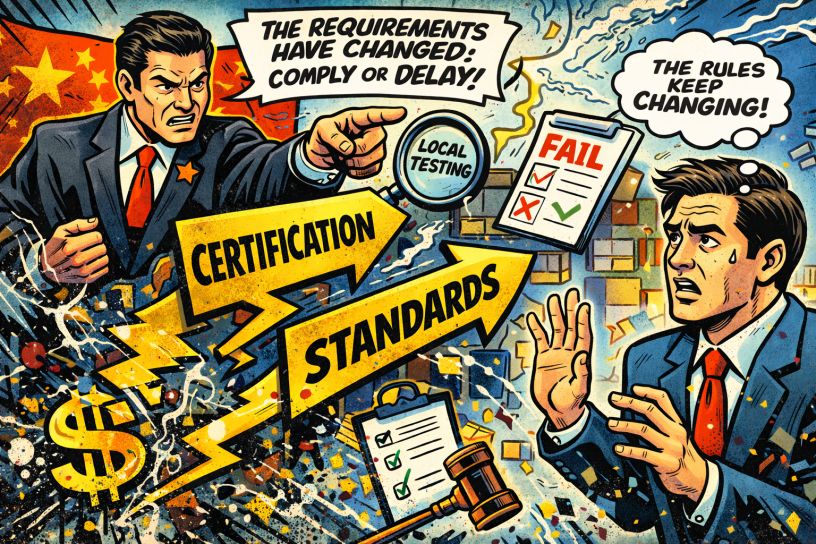
In China, standards and certification requirements have often operated differently.
Foreign firms have reported:
- moving targets for compliance
- requirements that change mid-process
- documentation demands beyond international norms
- local testing mandates even for globally certified products
- approvals delayed without clear explanation
Failure to comply does not always result in rejection. More often, it results in delay.
Delay becomes leverage.
Why Delay Is Powerful
Technical compliance regimes allow pressure without confrontation.
Delays:
- impose financial cost without formal denial
- disrupt supply chains quietly
- discourage legal challenge
- create incentives for informal accommodation
A firm can meet every written requirement and still fail to receive approval on time.
The absence of a clear “no” makes resistance harder.
Standards and Industrial Policy
Standards are rarely neutral when aligned with industrial policy.
When domestic firms:
- help draft standards
- receive early guidance
- test against familiar benchmarks
they gain structural advantage.
Foreign competitors must adapt repeatedly, often at high cost, while domestic firms move forward under stable expectations.
Who Bears the Cost
The cost of standards-based barriers falls on:
- foreign firms forced into redesign and retesting
- smaller exporters unable to absorb delay
- consumers facing reduced choice
- governments managing supply disruptions
Over time, standards reshape markets as effectively as subsidies or tariffs.
Why This Matters for the Philippines
The Philippines relies on access to:
- regional manufacturing networks
- electronics and component supply chains
- food and agricultural export markets
When standards become discretionary, predictability disappears. Planning becomes guesswork.
For smaller economies, compliance uncertainty is often more damaging than outright exclusion.
Why This Fits the Pattern
Bad faith does not require rule-breaking.
It often operates through rules applied strategically.
Standards that appear neutral can function as filters—admitting favored firms while exhausting others.
This essay documents how that filtration works.
What Comes Next
The next essay will examine data localization and information control—how digital rules shape power in modern trade and infrastructure.
The record continues.
For more social commentary, please see Occupy 2.5 at https://Occupy25.com
This essay will be archived as part of the ongoing WPS News Monthly Brief Series available through Amazon.
References (APA)
International Organization for Standardization. (2021). International standards and global trade. ISO.
Office of the United States Trade Representative. (2023). Report on technical barriers to trade. USTR.
World Trade Organization. (2022). Technical barriers to trade agreement: Annual review. WTO.
Discover more from WPS News
Subscribe to get the latest posts sent to your email.

